
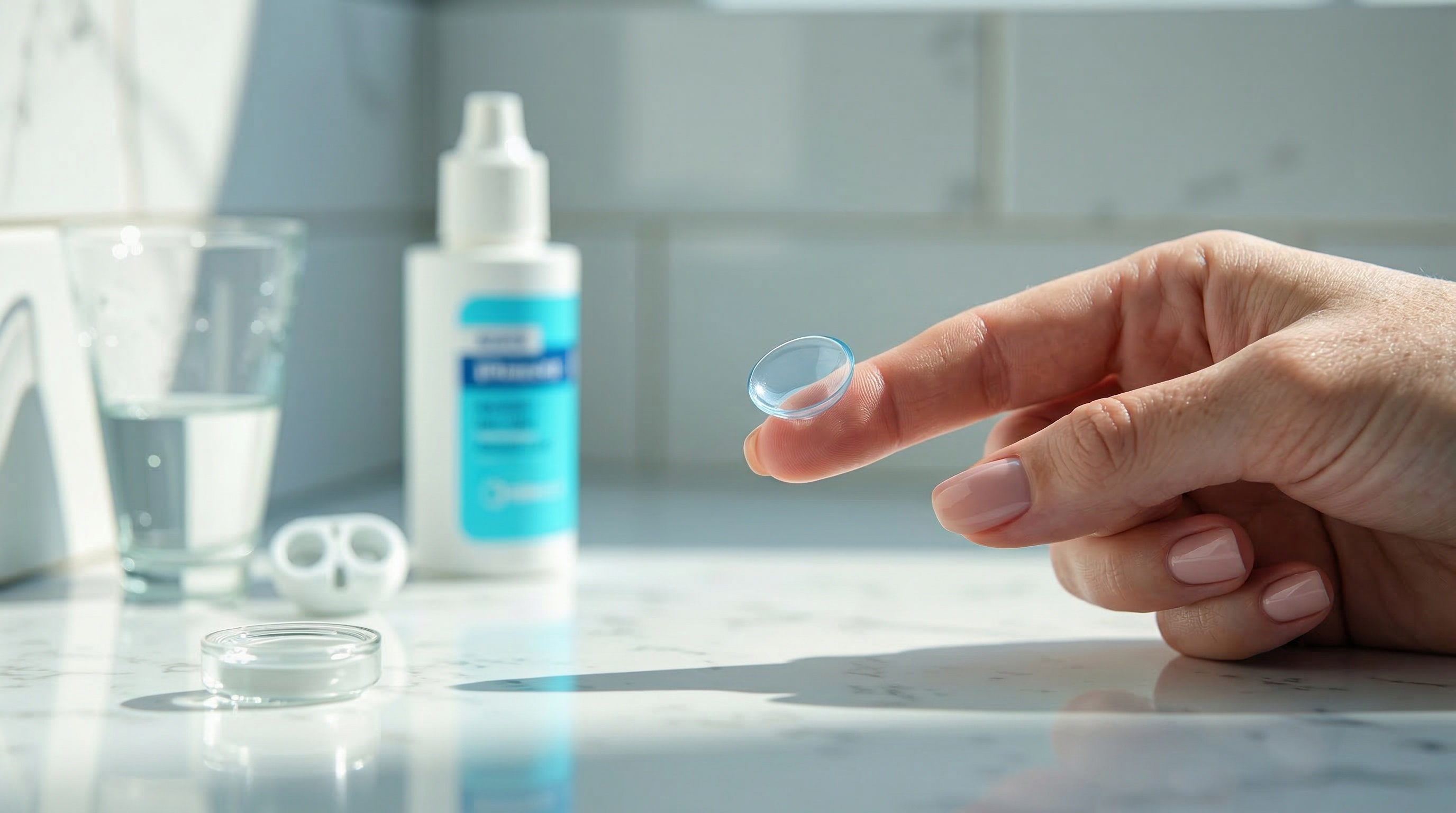
Searching for alternatives to contact solution at the time you've run out might seem practical, but most substitutes put your eye health at serious risk. Household items such as tap water, saliva, or homemade mixtures can introduce dangerous bacteria to your eyes. Many contact lens wearers wonder what can i use instead of contact solution or whether is contact solution the same as saline solution. The answer requires understanding what's in contact solution and why a substitute for contact solution provides adequate protection rarely. This piece explains the differences between proper contact lens solutions and unsafe alternatives and identifies the only safe emergency option that protects your vision.
What Is Contact Solution and Why It Matters
Key Ingredients in Contact Solution
Contact solution contains multiple active ingredients working together to maintain lens safety and comfort. Each component serves a purpose in your lens care routine.
The formula has:
- Disinfectants: Kill bacteria, fungi, and microorganisms that cause infections like keratitis
- Preservatives: Extend shelf life by breaking down pathogens and protein deposits, such as polyquaternium and polyaminopropyl biguanide
- Surfactants: Remove debris from lens surfaces without causing damage to the lens material
- Wetting agents: Keep lenses moistened, hydrated, and comfortable during wear
- Antibiotics: Clean and soothe irritated eyes, with boric acid being a common example
- Saline: A mixture of sodium chloride and water that stabilizes other ingredients
These ingredients create a complex formula designed for contact lens materials. Generic or store-brand solutions may have been formulated for older lens materials and might not be compatible with newer chemical compositions.
How Contact Solution Protects Your Eyes
Contact solution performs multiple functions beyond simple storage. The disinfection process kills harmful germs that accumulate on your lenses throughout the day. Cleaning removes protein, lipid, and environmental debris that your eyes produce naturally or that lenses pick up from your surroundings.
Your lenses sit on your cornea and create a perfect environment for bacteria to transfer. These pathogens can cause severe eye infections without proper disinfection. The surfactants in contact solution loosen deposits while wetting agents maintain lens hydration and flexibility.
The wrong solution creates multiple problems. You might experience redness and inflammation, dry or burning sensations, excessive tearing, or protein deposits on lenses. The solution you choose affects your comfort and safety. Some formulas contain preservatives or additives that can irritate sensitive eyes or interact poorly with certain lens materials.
Multipurpose solutions clean, rinse, disinfect, and store lenses in one product. Hydrogen peroxide-based systems provide deeper disinfection and are recommended for those allergic to multipurpose solutions. Each system has different storage capabilities. Some multipurpose solutions allow storage for up to one month in a tightly closed case, while certain hydrogen peroxide systems require re-disinfection after just 24 hours.
The Difference Between Saline and Contact Solution
Saline solution is not the same as contact solution. This difference is critical for your eye health.
Saline consists of salt and water, creating a simple pH-balanced saltwater rinse. It contains no disinfecting agents, no cleaning components, and no preservatives. Contact solution actively disinfects lenses and removes protein buildup.
Saline can rinse lenses after proper disinfection with another care system. Some hygiene regimens require rinsing lenses with saline after they've been in contact solution and before insertion to remove lingering particles. Saline should never replace multipurpose or disinfecting contact solution.
Storing lenses in saline allows bacteria to multiply and puts you at risk of eye infection. Saline does not kill bacteria, fungi, or parasites. Relying on saline alone for storage or cleaning creates ideal conditions for bacterial growth and increases your chance of corneal infections and inflammation.
Contact solution maintains sterility and hydration when lenses are not in use, whereas saline simply rinses. This fundamental difference makes saline unsuitable as a contact solution alternative for storage or disinfection purposes.
Why Common Household Substitutes Are Dangerous
Running out of contact solution doesn't make household items a safe backup option. Grabbing tap water or using saliva might seem convenient, but the consequences can threaten your vision for good.
Tap Water and Acanthamoeba Risk
Tap water harbors a microscopic organism called Acanthamoeba that lives in pools, lakes, ponds, oceans and household plumbing. This tiny parasite becomes very dangerous when trapped between your contact lens and cornea. Contact lens users account for an estimated 85% of Acanthamoeba keratitis cases in the United States.
The infection rate sits at about one to 33 cases per million contact lens wearers. Research on water samples found that 10% were contaminated by Acanthamoeba. The risk jumps in older properties, those in older urban areas and homes where bathroom taps connect to water tanks. Older plumbing and poorly managed water storage tanks create ideal breeding grounds for this organism.
Water exposure creates a double threat to your eyes. Tap water lacks the salt balance of your natural tears. This causes contact lenses to absorb excess water and swell. As your lens expands, it pulls on your cornea and creates microscopic openings. These tiny wounds allow Acanthamoeba and other microorganisms direct access to your eye tissue.
The infection itself causes intense pain, redness and blurred vision. Treatment can require a year or more. Severe cases may need corneal transplants or result in blindness. Even clear, drinkable tap water contains these organisms that remain harmless when swallowed but devastating when they contact your eye.
Saliva: A Direct Path to Infection
Your mouth contains many bacteria that serve beneficial purposes in your digestive system but become harmful elsewhere. Using saliva to wet or clean contact lenses transfers these germs directly onto the lens surface. These bacteria can cause serious infections that require medical intervention once on your eye.
Saliva offers zero disinfecting properties. The bacteria that live in your mouth will contaminate your lenses and potentially lead to corneal infections. This substitute for contact solution creates unnecessary risk with no actual benefit.
Bottled and Distilled Water Concerns
Bottled water appears clean but lacks the sterility contact lenses require. Research on bottled water samples purchased from grocery stores revealed concerning contamination levels. Twenty percent of samples exceeded acceptable sanitation limits. Another 17% contained lower but still present levels of microbes.
Testing identified coliforms, mold, amoebas and algae in various samples. Many of these organisms can infect the eye. Bottled water is not sterile, which makes it unsuitable for contact lens care.
Distilled water presents the same problem. While purified, it still isn't sterile and can contain live Acanthamoeba. No type of water provides adequate protection for your lenses or eyes.
The Problems with Homemade Contact Solution
Creating your own saline solution at home introduces serious infection risks. Homemade mixtures lack the sterility that manufactured solutions provide through controlled production environments. Using non-sterile saline can lead to infections.
Acanthamoeba gets on your lens when you use homemade lens solutions to rinse or store your lenses. These DIY alternatives cannot replicate the precise pH balance, disinfecting agents and quality control that commercial solutions undergo. The risk is nowhere near worth any perceived cost savings.
The Only Safe Emergency Alternative: Sterile Saline
Sterile saline offers the only acceptable short-term option if you're caught without proper contact solution. This applies to commercially prepared, sterile saline purchased from stores or provided by healthcare professionals. No other household liquid qualifies as a safe contact solution alternative.
What Sterile Saline Can and Cannot Do
Sterile saline keeps your lenses hydrated and prevents them from drying out overnight. The formula consists of purified water with a balanced salt concentration that resembles your natural eye fluids. You can use it to rinse lenses before insertion. Some hydrogen peroxide-based cleaning systems recommend saline as a final rinse step.
Saline lacks cleaning agents and cannot disinfect your lenses. The CDC states this: saline solution does not disinfect contact lenses. Saline is sterile at purchase, but it contains no antimicrobial agents or preservatives that kill germs. Any bacteria, fungi, or harmful organisms on your lenses remain alive once placed in saline. Bacteria multiply during overnight storage and create a breeding ground for infection.
How to Use Saline as a Temporary Solution
Use sterile saline for one night only as an emergency measure. Purchase commercial preparations approved for contact lens use if your eye care provider suggests saline as part of your routine. Never attempt homemade mixtures. These have been linked to serious corneal infections. Homemade saline is never safe for use in your eyes, whatever you believe about its cleanliness.
Store your lenses in a clean case filled with sterile saline if you have no access to proper multipurpose solution. This method keeps them from drying out but provides zero disinfection. The environment inside your case becomes warm, dark and moist during storage. These are perfect conditions for microorganisms to thrive.
Critical Steps After Emergency Storage
Clean and disinfect your lenses with proper contact solution before wearing them again. Topical rinsing won't remove the bacterial and fungal load that accumulated during saline storage. Soak lenses in multipurpose disinfecting solution for at least six hours. This kills microorganisms that multiplied overnight.
Some eye care professionals recommend discarding any pair stored in saline. The bacterial load may grow too large for overnight cleaning to handle. You only get one pair of eyes that cannot be replaced. The risk of infection is not worth saving a few dollars on replacement lenses. If you use saline as your emergency substitute for contact solution overnight, think about replacing those lenses rather than attempting to salvage them.
Understanding Hydrogen Peroxide Contact Lens Systems
Hydrogen peroxide systems represent a different approach to contact lens care. They rely on chemical reactions rather than preservative-based formulas. These solutions contain 3% hydrogen peroxide that breaks down proteins coating your lenses during extended use.
How Neutralization Works
Hydrogen peroxide is toxic to your cornea. Complete neutralization is required before lens wear. Without this step, you'll experience pronounced stinging, excessive tearing and redness. Possible corneal damage may occur.
Most systems use a one-step process where neutralization happens during disinfection. You place your lenses in a special case containing a platinum-coated disk. This disk triggers a redox reaction (reduction and oxidation) that converts hydrogen peroxide into water and oxygen. Small bubbles form during this process and actively clean your lenses.
The transformation takes 6-8 hours to complete. After this period, the hydrogen peroxide becomes an eye-safe saline solution. Two-step systems require a separate neutralization step. You add a catalase or sodium pyruvate solution after disinfection.
The platinum-coated disk loses effectiveness over time. You must replace it. Each bottle comes with its own case, so replace the case every time you finish a bottle. An old case won't neutralize properly and may cause severe discomfort.
Why It Provides Superior Cleaning
Hydrogen peroxide penetrates microbial films and creates a deeper clean than multipurpose solutions. This makes these systems more effective at curbing acanthamoeba keratitis, the rare infection that can cause blindness.
These solutions contain zero preservatives. People allergic or sensitive to preservatives in multipurpose solutions will find hydrogen peroxide a better choice. Some researchers found that peroxide users maintain better contact lens care practices compared to multipurpose solution users.
But one-step systems neutralize faster, which may reduce effectiveness against acanthamoeba cysts. Once neutralization completes, no residual disinfectant remains. Contamination can occur if you open the case.
Important Safety Rules for Peroxide Systems
Never rinse lenses directly with non-neutralized hydrogen peroxide. The red cap on bottles serves as a warning to read instructions before use. Follow these critical steps:
- Only use the case provided with each new bottle
- Soak lenses for the full recommended time, usually 6-8 hours
- Never mix fresh solution with old solution
- Replace your lens case every 2-3 months
- Store hydrogen peroxide separate from other lens solutions
If non-neutralized solution contacts your eyes, flush with sterile saline or artificial tears immediately.
Essential Contact Lens Care Habits That Protect Your Eyes
Proper lens care extends beyond choosing the right solution. Your daily habits determine whether you maintain healthy eyes or increase infection risk.
The Rub and Rinse Method
Wash your hands with soap and water before touching your lenses. Dry them with a lint-free towel to prevent transferring oils or fragrances to your contacts. Remove one lens and place it in your palm. Apply multipurpose solution and rub the lens for 2 to 20 seconds on each side, depending on your solution's instructions. This physical rubbing removes deposits and microorganisms that reduce complications.
Rinse the contact lens with multipurpose solution for 5 to 10 seconds on each side. Even "no-rub" solutions require this step for safest lens wear. Place the cleaned lens in a fresh, dry case filled with new solution.
Daily Case Cleaning and Replacement
Rinse your contact lens case with fresh solution after inserting your lenses. Empty all excess solution and dry it with a clean tissue. Store the case upside down on a fresh tissue with caps off to prevent germ buildup. Never rinse your case with water, as this leaves harmful bacteria behind.
Replace your contact lens case every one to three months. Contaminated cases link to serious eye disorders like keratitis. Discard your case right away if you notice cracks, discoloration, or residue that won't wash away.
When to Consult Your Eye Doctor
Remove your contacts if you experience redness, pain, or discharge. Contact your eye doctor for evaluation. Annual contact lens exams allow your doctor to detect early signs of conditions and review proper care techniques.
What to Do If You've Already Used Water
Remove water-exposed lenses right away. Discard daily disposable lenses and use a fresh pair only after your eyes feel normal. For reusable lenses, clean and disinfect them overnight before thinking over wearing them again. Never sleep in a lens exposed to water without first cleaning and disinfecting it.
Conclusion
Your contact lenses deserve the same level of care you give your vision. The two are inseparable. Household items like tap water or saliva might seem convenient when you're desperate, but they expose you to serious infections that proper contact solution prevents.
Sterile saline works as your only emergency backup for one night only. After that, you must clean and disinfect your lenses with multipurpose or hydrogen peroxide solutions before wearing them again.
Stock extra bottles of contact solution at home, work, or in your travel bag. This habit eliminates the temptation to use dangerous alternatives and keeps your eyes healthy.