
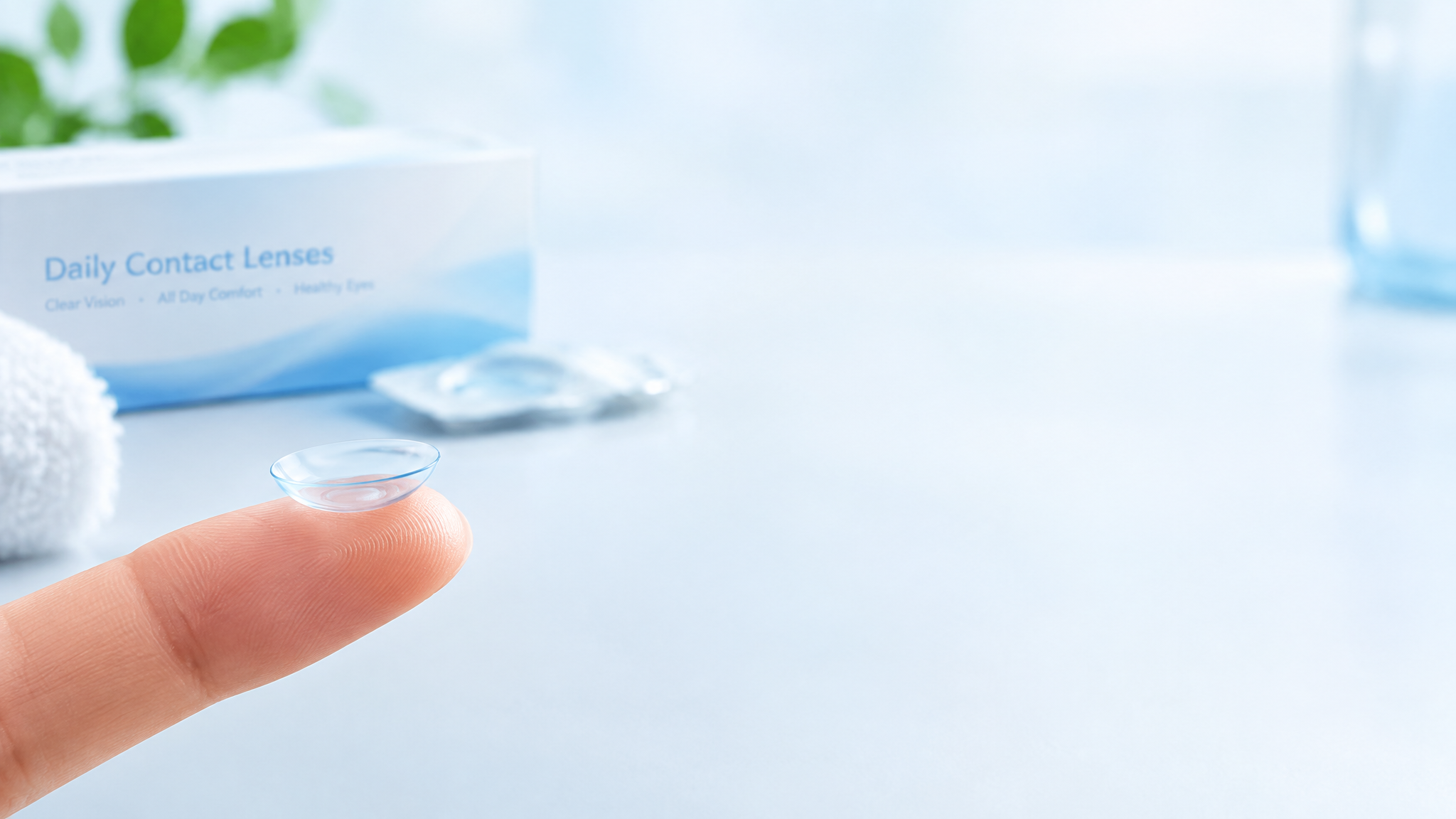
The best daily contact lenses provide more than just clear vision. They bring convenience and hygiene to your eyes. Daily disposable contact lenses have become popular due to their ease of use and comfort, especially for people with specific needs such as dry eyes or astigmatism. Just as important, the best contact lenses for dry eyes feature moisture retention and breathability. The best contacts for astigmatism and dry eyes combine stability with comfort. This piece will help you find the most comfortable daily contact lenses available and compare top brands that offer the best value for your lifestyle.
Understanding Daily Contact Lenses
What Are Daily Contact Lenses
Daily contact lenses are soft contacts designed to be worn once and discarded at the end of each day. Each lens comes sealed in its own sterile, individual package. You insert a fresh pair each morning and throw them away before bed, with no cleaning or storage routine required.
These single-use lenses are made from advanced materials that allow oxygen to reach your eyes, making them one of the safest options available for contact lens wearers. The lenses are thinner than monthly options, designed for one-day use. Federal law requires a valid prescription, professional eye exam, and proper fitting before you can purchase or wear daily disposable contacts in the U.S..
You should wear each pair for 12 to 16 hours per day only. Never sleep in daily disposables unless your eye doctor instructs otherwise, as overnight wear increases infection risk by a lot. You must replace them with a new pair when you remove these lenses during the day for any reason, whatever the time they were in your eyes. The thin design causes natural deposits from your eyes to build up more quickly when lenses are used longer than their recommended duration.
Benefits of Daily Disposable Contact Lenses
Starting each day with a sterile lens lowers your risk of eye infections by a lot. Allergens and lipids do not have time to accumulate on the lens surface, which reduces your risk of developing irritation and other lens-related complications like corneal ulcers. Studies show daily disposable contacts have infection rates that are by a lot lower compared to monthly lenses.
The convenience factor simplifies your routine. You won't need to purchase cleaning solutions or storage cases. Your eyes won't be exposed to lens care solutions, which can be irritating for some. Each lens is moist and thin, providing a more comfortable wearing experience. The increased moisture helps keep your eyes hydrated throughout the day and reduces the likelihood of dryness and discomfort.
Daily lenses work well for specific groups. The small portable packs are easy to take anywhere when you play sports, travel often, or have a busy schedule. They're often recommended for young contact lens wearers because they eliminate complex cleaning routines. Dailies provide a practical solution without ongoing maintenance for occasional wearers who only need contacts a few days each week.
Daily vs Monthly Contact Lenses
Daily disposables are maintenance-free, unlike monthly or bi-weekly lenses that require daily cleaning and storage. Monthly lenses must be cleaned and stored every time they're removed, adding steps to your routine.
The cost difference is notable. Daily lenses work out to be under or close to $1.00 per lens, with prices ranging from $25.00 to $40.00 for a box of 30, and $55.00 to $90.00 for a box of 90 lenses. Daily contacts have a higher upfront cost, but you save money by not purchasing lens solutions and cases. The overall cost is the same as monthly lenses when you only wear contacts 3-4 times per week.
Daily contacts are made of thinner materials, which may increase the risk of tearing. Therefore, carrying a spare set of lenses and backup glasses is recommended. Monthly lenses are thicker and more durable, designed to last the entire month. Monthly lenses can increase your risk of developing an eye infection when you overwear them or don't care for them the right way, though.
Types of Daily Contact Lenses for Different Vision Needs
Best Daily Contacts for Nearsightedness and Farsightedness
People with nearsightedness typically need lenses with a negative prescription to bring distant objects into clearer focus. Daily disposable lenses with advanced moisture technologies can be a comfortable choice for people who spend long hours working on screens or focusing on detailed tasks. Some designs use a water-gradient surface to create a smooth, hydrated layer across the outer lens, while others are engineered to stay centered on the eye for stable vision throughout the day. Moisture-retaining technologies can also help maintain a comfortable lens surface during extended wear.
For higher levels of myopia, standard lens powers may not provide enough correction. Extended-range soft contact lenses are available in a wider prescription range and can accommodate stronger negative powers. People with both high myopia and astigmatism may need specialized toric designs that combine extended prescription options with features that help keep the lens properly oriented.
For farsightedness, plus-powered lenses help move the focal point onto the retina for clearer vision. Daily lenses designed for hyperopia are available in different materials and moisture systems, including options intended to support breathability and all-day comfort. Some high-plus lenses are manufactured with extended prescription ranges for stronger hyperopic corrections. Rounded edges and moisture-focused materials may also help reduce lens awareness during longer periods of wear.
Best Daily Contacts for Astigmatism and Dry Eyes
Toric contact lenses are designed specifically for astigmatism. Unlike standard spherical lenses, they use different powers across the lens to compensate for the irregular shape of the cornea. Because clear vision depends on the lens staying properly aligned, rotational stability is an important factor when choosing a toric lens.
Modern daily toric lenses may use specialized stabilization designs to reduce unwanted rotation and help maintain consistent vision when you blink or move your eyes. Moisture-management technologies can also help keep the lens surface comfortable throughout the day. Some newer designs incorporate advanced optics intended to improve visual clarity and reduce the appearance of halos or glare, particularly in low-light environments.
For people with dry eyes, daily disposable lenses can offer a practical option because a fresh lens is used each day. This reduces the buildup of deposits, proteins, and other substances that can accumulate on lenses over time. Silicone hydrogel materials also allow more oxygen to reach the cornea than many conventional hydrogel materials, which can support corneal health during lens wear.
People with severe dry eye symptoms may require a different approach. Scleral lenses are larger-diameter lenses that rest on the white part of the eye rather than directly on the cornea. They create a fluid reservoir between the lens and corneal surface, helping provide continuous hydration for selected patients.
Best Daily Wear Contact Lenses for Presbyopia
Multifocal contact lenses use multiple prescription zones to provide clearer vision at near, intermediate, and far distances. They can be especially useful for people with presbyopia who want to reduce their dependence on reading glasses.
Daily multifocal lenses are available with different optical designs and moisture technologies. Some use a highly hydrated lens surface to improve comfort, while others use progressive optical systems designed to balance vision across different distances. For people who wear lenses for many hours, comfort, visual stability, and performance at both near and intermediate distances are important factors to consider.
Daily Lenses for Myopia Control in Children
Specialized daily disposable lenses are also available for children with myopia. These lenses are designed not only to provide clear vision but also to help slow the progression of nearsightedness.
Myopia-control lenses typically use a combination of central correction and specially designed peripheral treatment zones. Clinical research has shown that certain multifocal or dual-focus daily lens designs can slow myopia progression in children when used as directed.
Because children's eyes are still developing, myopia-control contact lenses should be prescribed and monitored by an eye-care professional. Proper fitting, wearing time, lens hygiene, and regular follow-up are all important parts of successful treatment.
Top Daily Contact Lens Brands and Their Key Features
Daily disposable contact lenses use different materials, surface treatments, and optical technologies to address common concerns such as dryness, comfort, breathability, and visual clarity. Understanding these features can make it easier to compare lenses based on your individual needs.
Water-Rich Surface Technology
Some daily lenses use an advanced surface technology that creates a highly hydrated outer layer while keeping the lens core relatively low in water content. The moisture-rich surface can help maintain a comfortable tear film during wear and reduce the sensation of dryness.
These lenses are often made from silicone hydrogel materials that allow high oxygen transmission while maintaining a smooth, flexible surface. Some models also include UV-blocking capabilities, although the level of protection varies by lens and should not be considered a replacement for sunglasses.
Water Gradient Technology
Water-gradient lenses are designed with different water levels across the lens structure. The core contains less water and provides the structural support needed for oxygen transmission, while the outer surface contains a much higher percentage of water.
This creates a soft, hydrated surface that can feel particularly comfortable during longer periods of wear. Some water-gradient designs also use additional tear-compatible ingredients to support surface lubrication and help maintain moisture throughout the day.
Tear-Inspired Hydration Technology
Some daily disposable lenses are engineered to work more naturally with the eye's tear film. Their hydration systems may incorporate molecules designed to support lubrication and maintain moisture on the lens surface.
This approach can help reduce lens awareness and improve comfort during extended wear, especially for people who experience occasional dryness or spend significant time looking at digital screens. Certain daily lenses in this category also provide UV filtration for additional protection from ultraviolet exposure.
Low-Silicone Silicone Hydrogel
Silicone hydrogel lenses can deliver high oxygen transmission while remaining thin and flexible. Newer material technologies aim to use less silicone while creating efficient pathways for oxygen to reach the cornea.
Lower silicone content can allow manufacturers to balance oxygen permeability with softness and wettability. Molecular-level wetting technologies may also help the lens retain moisture without relying entirely on a surface coating.
Moisture-Enhanced Next-Generation Materials
Some newer daily lenses use advanced silicone hydrogel materials combined with blends of moisturizing ingredients, electrolytes, or other components intended to support hydration.
These formulations are designed to slow moisture loss during wear while maintaining high oxygen transmission. Certain lenses also incorporate high-definition optical designs that help reduce visual distortions such as spherical aberration across different prescription powers.
High-Water Hydrogel Materials
High-water-content daily lenses are designed to provide a soft, hydrated wearing experience from the moment they are placed on the eye. Some materials contain around 70% or more water and are formulated to maintain moisture throughout a typical day of wear.
Certain high-water materials are designed to mimic aspects of the eye's natural tear film, including the way moisture is maintained at the lens surface. These lenses can be appealing to wearers who prioritize softness and comfort, although individual comfort depends on factors such as tear production, wearing time, fit, and prescription.
When comparing daily contact lenses, look beyond water content alone. Oxygen transmission, surface wettability, lens design, prescription range, UV filtration, and how the lens fits your eyes can all affect the overall wearing experience. An eye-care professional can help determine which material and lens design are appropriate for your vision and eye health needs
How to Choose the Most Comfortable Daily Contact Lenses
Material Type and Oxygen Permeability
Silicone hydrogel represents the gold standard in modern contact lens materials. Your cornea has no blood vessels and relies on oxygen absorption from air and tears to stay healthy. Oxygen permeability, measured as Dk/t, determines how much oxygen reaches your cornea at the time a contact lens sits on your eye.
Silicone hydrogel lenses transmit oxygen through the lens material itself, not just through water. Your cornea receives consistent oxygen throughout the day, whatever the environmental dryness. Modern silicone hydrogel dailies offer Dk/t values five to six times higher than conventional hydrogel. The practical result? Less redness and reduced end-of-day fatigue. Your eyes feel comfortable at 7 PM, not just 7 AM.
Water Content and Moisture Technology
Higher water content does not mean more comfort. Low water content lenses (below 50%) retain moisture more effectively in dry environments. Mid-water content lenses (50-60%) offer balanced profiles suitable for most wearers. High water content lenses (above 60%) can worsen dryness by drawing moisture from your tear film to maintain hydration as the day progresses.
Your tear film stability matters at the time of matching water content to your eyes. An experienced optometrist will assess your dry eye profile before recommending a lens. The water content must work with your eyes.
UV Protection Features
Contact lenses with UV protection fall into two FDA categories. Class I lenses block more than 90% of UV-A and more than 99% of UV-B radiation. Class II lenses block more than 70% of UV-A and more than 95% of UV-B.
But a contact lens covers your cornea only. The lens provides zero protection to your eyelids and surrounding skin, both vulnerable to UV damage that can contribute to cataracts and macular degeneration.
Lens Design and Stability
Toric lenses for astigmatism rely on rotational stability to maintain clear vision. Design features including prism ballast and thin zones use lid pressure to counter rotation during blinks. Predictable orientation keeps cylinder power on target.
Cost Considerations and Finding Value in Daily Contacts
Average Cost per Day for Popular Brands
Daily disposable contacts generally cost more per lens than biweekly or monthly lenses because you use a fresh pair every day. For full-time wearers, the annual cost can vary significantly depending on the prescription, lens material, and whether you need specialized designs for astigmatism or presbyopia.
Standard daily lenses may cost roughly $0.70 to $1.30 per lens, while premium materials and specialty designs can cost more. Toric and multifocal daily lenses are typically more expensive because they require additional optical design and stabilization features.
When estimating your yearly contact lens budget, consider both the price per lens and how many days you wear contacts each month. Occasional wearers may find daily lenses particularly convenient because there is no need to maintain a long-term supply of opened lenses.
Manufacturer Rebates and Other Ways to Save
Promotional rebates can help reduce the overall cost of daily disposable contacts. Depending on the product and promotion, manufacturers or retailers may offer discounts on annual supplies, new prescriptions, or qualifying purchases.
Before buying, check the current rebate terms carefully. Offers may have specific eligibility requirements, minimum purchase amounts, expiration dates, and documentation rules. Keeping your receipt and order confirmation can make the claim process easier.
You can also compare prices between authorized retailers and look for seasonal promotions or discounts on larger purchases. Pricing varies by prescription and retailer, so comparing the final cost per lens is often more useful than looking only at the advertised box price.
Balancing Comfort and Affordability
The higher upfront cost of daily lenses can be offset by their convenience. Because each pair is discarded after use, you generally do not need contact lens solution, storage cases, or the cleaning routine required for reusable lenses.
For eligible purchases, contact lenses may also qualify as medical expenses under certain tax-advantaged accounts, such as an FSA or HSA in the United States. Check your plan rules before using these funds.
Buying multiple boxes at once may lower the average price per lens, but there is little benefit in stocking up beyond your prescription validity or expected wearing needs. The best value comes from balancing lens performance, comfort, replacement frequency, and total annual cost rather than choosing solely by the lowest price.
Conclusion
Your choice should balance your prescription requirements with your lifestyle demands. Whether you need correction for astigmatism or dry eyes, fresh sterile lenses each morning deliver clear vision without compromise. Choose wisely by consulting your eye care professional, and your eyes will reward you with all-day comfort.