
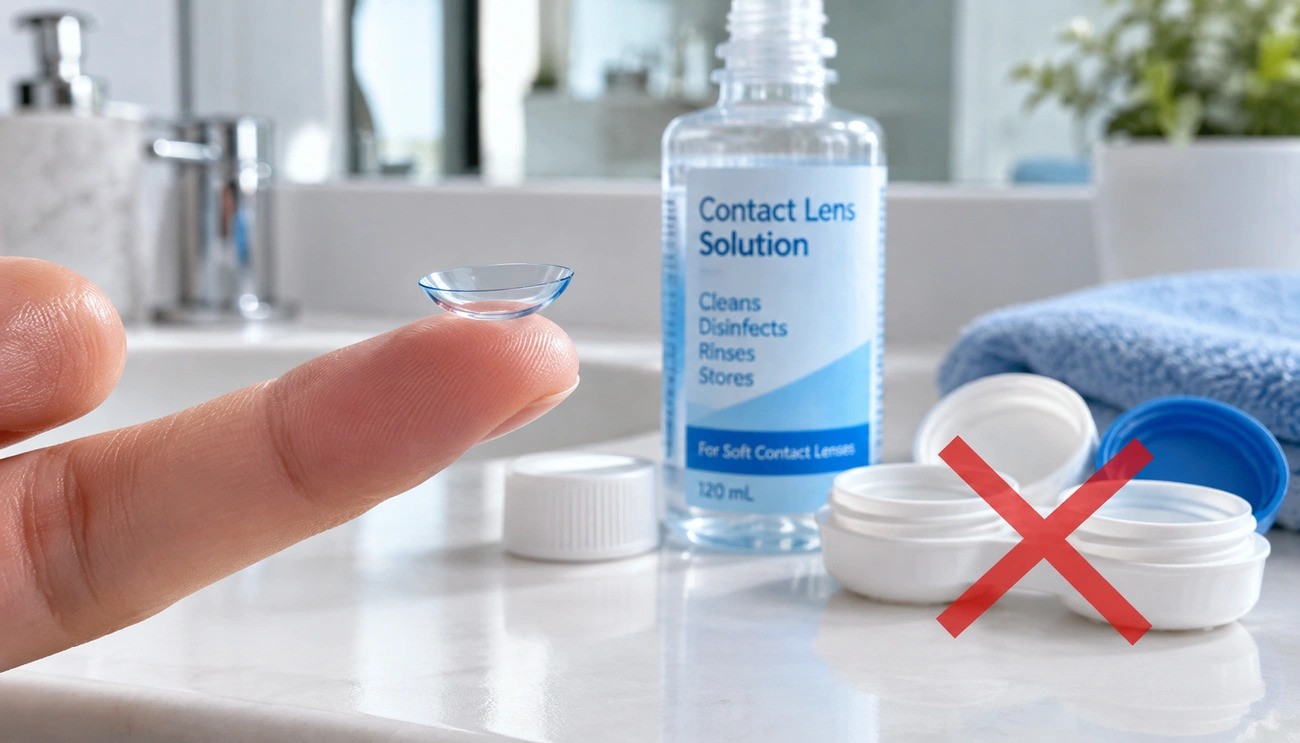
Can you put daily contacts in solution overnight to wear them again the next day? Many contact wearers wonder about this, especially when trying to save money or when they've run out of fresh lenses. The answer might disappoint you: daily disposable contacts are designed for one day of use only and cannot be reused, even with solution. Storing them overnight might seem harmless, but daily lenses use ultra-thin materials that make them comfortable yet fragile. This piece explains why you can't wear daily contacts more than once and what happens if you do. You'll also find out whether you need contact solution for daily contacts, how long you can wear daily contacts safely, the health risks of reusing them, and budget-friendly alternatives that protect your vision.
Can You Put Daily Contacts in Solution Overnight?
The Short Answer: No, Never Store Daily Contacts
Daily disposable lenses must be thrown out after each use, even if you've only worn them for a short time. You cannot let them soak in solution, whatever the duration. Once you remove a daily lens from your eye, the safest move is to discard it and switch to glasses or use a fresh pair later.
Some confusion arises because "daily wear" lenses exist among "daily disposable" lenses. Daily wear lenses can be stored in contact lens cleaning solution when not in use, as long as you follow your replacement schedule. But daily disposables operate under different rules.
Why Daily Contacts Are Different from Extended-Use Lenses
Daily disposables are thinner than other lenses and use material not made to resist bacteria and buildup. This thin design prevents cleaning because attempting to clean or disinfect these lenses can break down the lens material. Think of a daily disposable lens like a paper plate. After food is served on one, food particles get absorbed deep into the material instead of staying on the surface. Running it through a dishwasher doesn't achieve the desired effect of reusing it.
Extended-use lenses feature thicker construction and materials engineered to withstand nightly disinfection. Their design allows them to maintain structural integrity through repeated cleaning cycles, whereas daily lenses lack this durability.
What Happens When You Put Dailies in Solution
You create serious contamination risks when you place daily contacts in contact lens solution overnight. One study found contamination on 95% of users' lenses who stored daily disposable lenses in saline overnight. The lenses were contaminated mostly with staph bacteria, which can cause pink eye and other infections.
Daily disposable users often lack experience cleaning lenses intended for reuse. They may not own proper disinfecting solution or cases, and the plastic container with teeny amount of saline the disposables came in won't cut it. The thin design makes these lenses more susceptible to damage during any cleaning process and increases the risk that the lens can rip and come apart in your eye.
Why You Can't Reuse Daily Contacts
Thin Material and Fragile Construction
Daily contacts use materials engineered for comfort during short-term wear, not durability. The lenses are thinner than monthly or bi-weekly options, which creates a breathability advantage but sacrifices structural strength. Contact lens cleaning solution weakens the material rather than keeping it stable when the lens gets exposed to it. Micro-tears that aren't visible to your eye can develop from soaking overnight. The lens may tear or break apart while in your eye during subsequent wear because of these structural compromises.
Moisture Loss and Comfort Problems
Your daily lenses start losing moisture the moment you put them in. Air conditioning, heating systems, extended screen time and wind all pull water from the lens material and accelerate this process. Much moisture has evaporated by the time you remove them. Sterile saline solution for contacts doesn't restore their original properties when you attempt to rehydrate dried lenses. The lens may look soft again, but surface and shape changes remain. A dehydrated lens adheres more closely to your cornea and creates discomfort while making removal difficult.
Bacteria and Protein Buildup on Daily Lenses
Your tears deposit proteins and lipids onto contact lenses throughout the day as a natural response to a foreign object. Bacteria, allergens and microorganisms also collect on the lens surface. Daily disposables have low resistance to these deposits, unlike monthly lenses that use complex woven materials designed to prevent buildup. Both Pseudomonas aeruginosa and Staphylococcus aureus bacteria adhere to daily disposable materials, research shows. Acanthamoeba parasites attach to these lenses in a similar way.
How Long Can You Wear Daily Contacts in One Day
Safe wear time ranges from 8 to 16 hours per day. Most eye care professionals recommend 12 to 16 hours as the maximum. Your corneas receive oxygen from air, not blood vessels. Contacts worn beyond recommended hours reduce oxygen supply and can cause corneal swelling.
Health Risks of Reusing Daily Contacts
Eye Infections and Corneal Damage
Reusing daily contacts results in nearly 1 million doctor visits each year for contact lens-related eye infections. Keratitis, an infection of the cornea, ranks as the most common complication from contact lens wear. This condition can scar your cornea and affect your vision for life. You may need a corneal transplant to restore clear vision in severe cases.
Bacterial keratitis develops when germs invade your cornea, especially when you have lenses worn too long or cleaned the wrong way. The infection can cause blindness if left untreated. Acanthamoeba keratitis presents a serious threat, as this parasitic infection resists standard treatment and often gets misdiagnosed as bacterial or viral keratitis. Pain out of proportion to visible symptoms can suggest this infection.
Corneal ulcers represent another severe complication. These open sores on your cornea's outer layer result from bacterial contamination on reused lenses. Ulcers leave permanent scars that blur vision without aggressive treatment. Conjunctivitis, or pink eye, also occurs from improper lens hygiene and reuse.
What Happens If You Wear Daily Contacts More Than Once
Extended use beyond one day triggers a cascade of problems. Your cornea receives less oxygen as deposits accumulate on the lens surface. This oxygen deprivation can cause neovascularization, where blood vessels grow into your clear cornea. The changes become permanent once these vessels form and may limit your future contact lens options.
Giant papillary conjunctivitis develops when protein buildup causes an allergic reaction in your upper eyelid. Bumps form on the inside of your eyelid, making lens wear uncomfortable or impossible for weeks or months.
Warning Signs Your Eyes Are in Trouble
Remove your lenses right away if you experience:
- Moderate to severe pain that persists after lens removal
- Bright redness around the cornea or bloodshot appearance
- Light sensitivity or difficulty opening eyes in normal lighting
- Yellow, green, or white discharge from the eye
- Sudden vision changes, blurring, or cloudiness
- White or gray spots visible on the cornea
Same-day urgent care becomes necessary if you have intense pain unresponsive to pain relievers, vision loss, or any combination of pain and light sensitivity with decreased vision.
Proper Care Tips and Money-Saving Alternatives
Do You Need Contact Solution for Daily Contacts?
You don't need contact lens solution if you wear true daily disposables. Daily wearers spend zero dollars annually on solution, while monthly lens wearers spend roughly $100 per year. Even if you keep solution on hand for emergencies, you should never use it to store dailies overnight.
Switch to Monthly or Bi-Weekly Lenses
Monthly contacts cost $20 to $65 per month compared to dailies at $43 to $100. To name just one example, everyday wearers find better value in monthly lenses despite solution costs. Monthly lenses operate on a calendar limit, not a usage limit. Once you open the package, you have 30 days before replacement, whatever how often you wear them.
Bi-weekly lenses offer a middle ground. They require less maintenance than monthlies and cost less than dailies for frequent wearers.
Use Backup Glasses Between Contact Days
If you wear contacts only 3 to 4 times per week, the overall cost becomes the same as monthly lenses. Then dailies make more financial sense for part-time wearers. You pay only for what you use, and there's no risk of forgetting to clean lenses that sit unused for days.
When Daily Contacts Are Worth the Cost
Daily contacts cost $1 to $2 per day. Athletes and travelers with inconsistent schedules benefit most from the convenience. You eliminate cleaning routines and reduce infection risks through fresh lenses each day.
Conclusion
Daily disposable contacts are designed for single-use only and should never be stored in solution overnight. The temptation to reuse them might save money short-term, but the health risks outweigh any savings by far. Bacterial infections, corneal damage, and potential vision loss make reusing dailies a dangerous gamble with your eyesight.
You have several economical alternatives. Monthly or bi-weekly lenses offer better value for everyday wearers. Part-time contact users can stick with dailies and supplement with glasses between wear days. Choose the option that matches your lifestyle and budget, but always prioritize your eye health over convenience.