
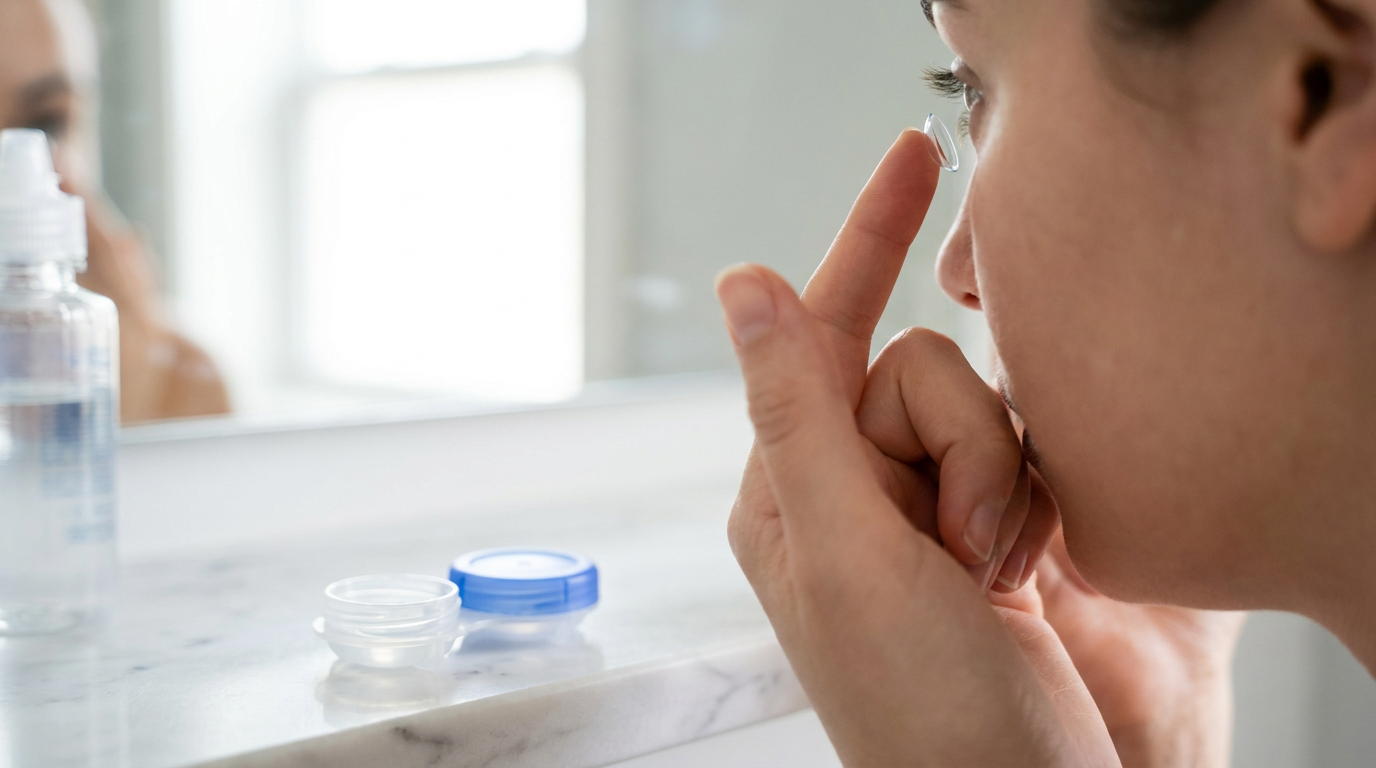
How to remove gas permeable contacts seems challenging at first, but it becomes straightforward once you understand the techniques. New wearers often worry whether a lens can slip behind the eye, but this cannot happen. Each removal method relies on gentle pressure and positioning to release the lens from your eye. Preparation matters most: you need to wash and dry your hands really well with a fluff-free towel before handling your lenses. Always work over a clean, flat surface with all the supplies you need ready.
This piece walks you through proven methods to remove RGP contact lenses and troubleshooting tips for proper aftercare.
Essential Preparation Before Removing Your Gas Permeable Contacts
Preparation determines whether your lens removal goes smoothly or becomes frustrating. Much of contact lens complications stem from poor hand hygiene, with up to 50% of wearers failing to follow proper handwashing procedures. One in 3 contact lens wearers experience a complication requiring further care, and 1 in 5 cases of contact lens-related infections result in corneal damage.
Washing and drying your hands properly
Your hands contact hundreds of surfaces daily and collect bacteria that can transfer directly to your lenses and eyes. While 88% of contact lens wearers understand that bacteria on fingers can transfer to eyes during lens handling, 41% still don't wash their hands before insertion.
These steps should be followed every time you handle your RGP lenses:
- Wash with antibacterial soap and warm water for at least 20 seconds and scrub really well to eliminate bacteria and oils
- Rinse under running water and ensure no soap residue remains
- Pat your hands dry with a lint-free towel rather than rubbing to avoid leaving fabric particles on your fingers
- Verify your hands are dry before touching your lenses, as wet fingers make grabbing the lens difficult
Soaps containing lanolin, moisturizers, fragrances or deodorants should be avoided, as these substances can contaminate your contacts and cause eye irritation. Hand sanitizer works as a last resort if soap and water aren't available, but wait several minutes for the alcohol to evaporate before handling your lenses.
Setting up your workspace
Work in front of a well-lit mirror, one with slight magnification to help you see your eye clearly during removal. Position yourself over a clean, flat surface where you can comfortably rest your hands.
Cover the drain if you're working over a sink, or place a light-colored towel beneath your work area to catch dropped lenses. RGP lenses are small and can slip down a drain or become difficult to locate on dark surfaces. A clean tissue or towel on your workspace surface provides a safe landing spot if the lens falls during removal.
Gathering necessary supplies
Prepare everything before starting the removal process. You'll need your lens case emptied of old solution and filled with fresh multipurpose solution in each compartment. Never reuse yesterday's solution, as this creates an environment where bacteria can multiply.
Keep conditioning solution nearby for post-removal cleaning. Have sterile alcohol swabs, Hylo-Forte solution and a rigid suction cup lens remover available if you plan to use the plunger method. Note that keeping your fingernails trimmed and smooth prevents scratching your cornea or tearing the lens material.
Understanding your lens type
RGP contacts differ by a lot from soft lenses in both material and handling. These rigid lenses aren't labeled as disposable and can be reused for multiple months when cared for the right way. First-time contact lens wearers should complete in-person training with an eye doctor to learn proper insertion and removal techniques.
Check your lenses for scratches, chips or cracks before removal, as damaged areas provide surfaces for bacteria to grow. Always remove the same lens first (the right lens works best) to avoid confusion. Your right lens may be marked with a purple indicator and the left with blue to help distinguish them.
3 Proven Methods to Remove Gas Permeable Contact Lenses
Three distinct techniques work reliably to remove RGP lenses. Each suits different comfort levels and dexterity. Your eye doctor may recommend one method over another based on your lens design, as some RGP lenses feature roll-polished edges that make them more comfortable but harder to remove.
The blink method (easiest for beginners)
This approach uses a quick blink to pop the lens out of your eye. You should position yourself over a clean towel or flat surface, as the lens may come out quickly. Look straight ahead and open your eyes as wide as possible. You can place your middle or index finger at the outer corner of your eyelid. Pull the skin toward your ear and keep your eyelids tight against your eye. The edge of your eyelid should press against the eyeball beneath the lens.
Blink hard until your lens pops out. The lens will fall onto your cheek, into your cupped hand, or onto the prepared surface below. You should cup your hand close to your eye to catch the lens as it releases. If the lens doesn't come out on the first attempt, relax and blink several times, then try again.
The two-finger eyelid pressure method
This technique relies on applying pressure with your eyelids at precise points along the lens edge. You can place the fingertip of one hand on your upper eyelid near the lashes while positioning a fingertip of your other hand on your lower eyelid. The edge of your upper lid should rest above the contact lens, with the lower lid edge positioned below it.
You should press both eyelids gently against your eye, then tuck them under the edges of the lens at the same time. Push the eyelids together toward your nose and wedge the lens out. You can also slide both eyelids outward while maintaining pressure to dislodge the lens. The lens should fall out onto a towel placed in front of you.
The plunger suction cup method
A small suction tool removes the lens without direct eye contact. Wet the tip of the suction cup with conditioning solution or saline before use. Look straight ahead and open your eyelids wider than the lens diameter. Line up the suction cup so it positions parallel to the lens center.
You should press the moistened plunger onto the center of the lens and avoid your eye surface at all times. Apply gentle pressure until you feel the suction adhere. Pull the lens away from your eye in a smooth motion. Remove the lens from the suction cup by sliding it sideways rather than pulling straight off, which can damage the material. You should clean the plunger with a sterile alcohol swab after each use.
Choosing the right removal method for you
Start with the blink method if you're new to RGP lenses, as it requires minimal contact with your eye. The two-finger method works better if you have strong eyelid control and prefer more tactile feedback during removal. Use the plunger method if manual techniques feel difficult or if you have lenses with roll-polished edges. Add rewetting drops if the lens feels stuck before attempting any removal technique.
What to Do When Your RGP Lens Moves Off-Center
RGP lenses float on a tear film and move freely within your eye, though they should re-center with each blink. During the adaptation period, your lenses may move onto the white of your eye more often. A displaced contact lens needs removal without delay, though no fixed time limit exists.
Locating a displaced lens
Your lens cannot go behind your eye. The lens has either moved off-center or fallen out if you cannot see clearly from one eye. Cover your other eye and check whether the uncovered eye sees clearly. Clear vision confirms the lens sits on your eye in front of the pupil.
A mirror helps you locate your lens. RGP lenses have a handling tint, making them easier to spot once they move to the white part of your eye. Close your eye and massage your upper eyelid with your fingertips to feel for the lens outline if you cannot see the lens in the mirror. A lens lodged under your upper eyelid creates a noticeable bump you can detect through gentle touch on the closed lid skin.
Re-centering the lens safely
Avoid touching the lens with your finger once it moves off-center. Look in the opposite direction from where the lens has moved. The lens sits under your upper eyelid? Look down toward the floor. The lens rests in the outer corner of your eye? Look toward your nose.
Your fingertips can position the edge of your eyelid next to the edge of the lens, then nudge it back into position as you move your gaze toward the lens[162]. You can also push the lens through your closed eyelid to guide it back to center. Hold your top eyelid open while placing one or two fingers on your lower eyelid margin to push the lens back onto the cornea if the lens has moved below the cornea.
Artificial tears or sterile saline can re-lubricate your eye if the lens feels stuck. This adds moisture and helps the lens move more freely on the tear film.
When to remove and reinsert
Remove the lens to inspect and clean it rather than attempting to reposition it with your finger. The fit needs reexamination if the lens stays in a good position briefly then slides down. Press on the eyelid margin near the contact lens to move it over the pupil, or remove the lens and reinsert it.
The suction cup method can remove an off-center lens if manual techniques prove difficult. Massage the lens down through your closed eyelid until it becomes visible, then remove it using your preferred removal method.
Common Removal Problems and How to Solve Them
Removal difficulties happen often during your first weeks with RGP lenses. Patience and proper technique solve most problems without needing professional help.
The lens won't come out
Repeat your preferred removal method several times if the lens resists coming out. Rehydrating a stubborn lens can take several attempts and up to 15 minutes before it becomes rehydrated and moves freely. Blink often each time you attempt removal. Stop trying if your eye becomes red or painful and contact your eye doctor right away.
Apply rewetting drops or sterile saline before each removal attempt to add lubrication. Wait a few seconds after applying drops and try your removal technique again. Both lubrication problems and lens fit issues cause removal difficulties. Your eye doctor can show you how to use a suction device called a plunger if manual methods fail consistently.
The lens feels stuck
A stuck RGP lens means your eye needs more moisture. Add artificial tears or sterile saline, close your eyes and blink several times with your eyes closed to help dislodge the lens. Never massage your eyelid when wearing gas permeable lenses. The hard edges can scratch your cornea and cause a painful corneal abrasion.
If the lens feels suctioned to your eye in the morning, this signals a fit problem that needs attention right away. Contact your eye care professional the same day.
Dealing with discomfort during removal
Stinging, burning or pain during removal means you should stop right away. Rinse your eye with preservative-free saline, wait until the discomfort subsides and try again. Your eye may feel irritated after removing the lens, which is normal. Use sterile saline solution or artificial tears to moisten it for comfort.
Persistent redness, pain or light sensitivity after lens removal requires same-day professional evaluation. See your eye doctor right away if you have broken pieces of a gas permeable lens in your eye.
Tips for first-time users
New wearers often drop lenses during removal. Place a paper towel over the sink drain and lean forward so fallen lenses land on a clean surface rather than the floor. Keep your eye open wider than the lens diameter throughout the removal process. Add rewetting drops before removal to prevent the lens edge from jabbing your cornea. Practice makes removal faster, so expect original attempts to take longer than experienced wearers need.
Proper Care After Removing Your Gas Permeable Lenses
Clean your lenses the moment you remove them from your eyes. This eliminates microbes and deposits that accumulated during wear. Never delay cleaning until morning. Doing so reduces disinfectant effectiveness.
How to clean gas permeable contact lenses right after removal
Put the lens in your palm. Apply two or three drops of RGP-specific cleaning solution. Use your little finger to rub the lens with a back-and-forth motion for about 30 seconds. This digital cleaning removes dirt and debris from both sides of the lens.
Once you finish rubbing, rinse the lens really well with saline solution. Rub it between your thumb and forefinger. This removes any loosened debris and remaining cleaning solution.
Storing lenses in the correct solution
Fill your storage case with fresh conditioning solution. Place the lens into the correct compartment. Never reuse old solution or top off the liquid in the case. Store your lenses in a case with ridges on the bottom. This prevents suctioning and potential chipping.
Cleaning your lens case daily
Empty the case right after you insert your lenses. Rinse it with saline and wipe it clean. Leave it open to air dry. Scrub the case each week with a dedicated clean toothbrush using saline.
When to replace your supplies
Replace your contact lens case each month. Discard opened solution bottles after 28 days.
Conclusion
Gas permeable contacts might feel awkward to remove during your first few attempts, but the process becomes second nature with practice. Choose the removal method that feels most comfortable for you, whether that's the blink technique, two-finger approach, or plunger method. As shown above, proper hand hygiene and workspace preparation make each removal safer and easier.
Note that patience matters more than speed when you're learning. Most removal difficulties stem from dry eyes or improper technique, both solved with rewetting drops and repeated practice. Clean your lenses right after removal and store them in fresh solution every time.
Follow these guidelines consistently and you'll become skilled at RGP lens removal within days while maintaining healthy, comfortable eyes for years to come.
FAQs
Q1. Can a gas permeable contact lens get stuck behind my eye? No, this cannot happen. The anatomy of your eye makes it impossible for a contact lens to slip behind your eyeball. If you can't see your lens, it has either moved to the white part of your eye or fallen out completely.
Q2. Why won't my RGP lens come out even after multiple attempts? A stubborn lens usually means your eye needs more moisture. Apply rewetting drops or sterile saline, wait a few seconds, then try your removal technique again. It can take several attempts and up to 15 minutes for a dry lens to rehydrate and move freely. If your eye becomes red or painful, stop and contact your eye doctor.
Q3. How should I clean my hands before removing gas permeable contacts? Wash your hands with antibacterial soap and warm water for at least 20 seconds, rinse thoroughly, and dry with a lint-free towel. Avoid soaps containing moisturizers, fragrances, or lanolin as these can contaminate your lenses. Make sure your hands are completely dry before touching your contacts.
Q4. What should I do immediately after removing my RGP lenses? Clean your lenses right away by placing them in your palm, applying 2-3 drops of RGP-specific cleaning solution, and rubbing gently for about 30 seconds. Rinse thoroughly with saline solution, then store them in fresh conditioning solution in a clean case. Never delay cleaning until morning or reuse old solution.
Q5. Which removal method is best for beginners? The blink method is easiest for new wearers. Position yourself over a clean surface, open your eyes wide, place your finger at the outer corner of your eyelid, pull firmly toward your ear, and blink hard until the lens pops out. This technique requires minimal eye contact and becomes natural with practice.