
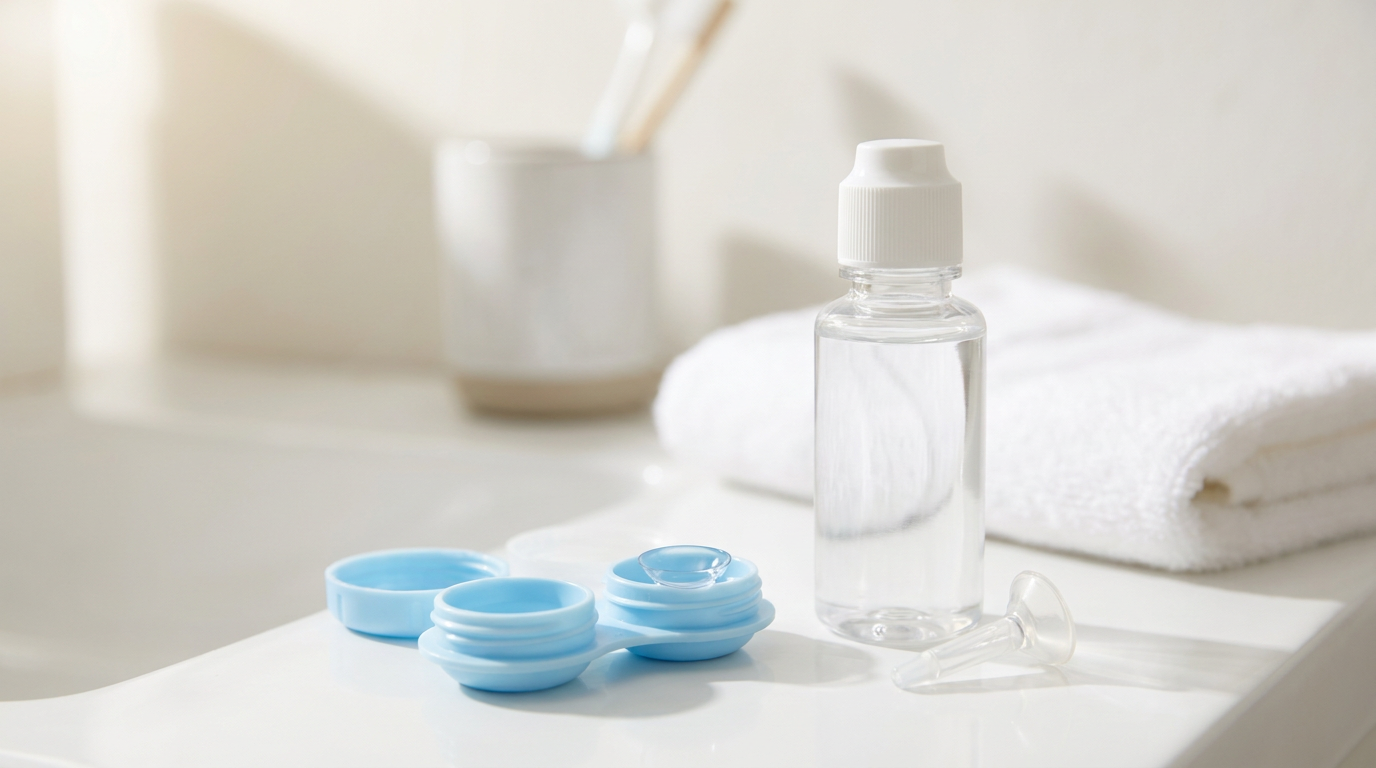
About 11% of contact lens wearers use rigid gas permeable lenses. Finding the right RGP contact lens solutions isn't as simple as grabbing any product off the shelf. But using proper hard contact lens solution is vital. The risk of infection remains very low at only 2 cases per 10,000 RGP wearers, compared to 25.4 cases per 10,000 for monthly disposable soft contact lens wearers. This piece walks you through everything you need to know about contact lens solutions for gas permeable lenses. You'll learn about multi purpose contact solution options and proper cleaning techniques while discovering common mistakes to avoid.
What are RGP contact lenses
Rigid gas permeable lenses are made from firm, oxygen-permeable plastic polymers that maintain their shape on your eye. Soft contact lenses use flexible hydrogel or silicone hydrogel materials that contain water. RGP lenses differ because they're crafted from silicone-containing compounds that don't absorb moisture. This fundamental difference in material composition affects everything from how you clean them to which contact solution works best.
How RGP lenses differ from soft contact lenses
The structural differences between RGP and soft lenses go beyond just rigidity. Soft contact lenses account for approximately 93% of all contact lens fits in the United States. They cover the entire cornea and even extend onto the sclera (your eye's white part). RGP lenses are smaller in diameter and cover only most of the cornea.
This size difference creates distinct functional advantages. RGP lenses float on a thin layer of tears and shift slightly with each blink. This pumps oxygen-containing tears under the lens. Soft lenses conform to the shape of your cornea with minimal movement, so little to no tears circulate underneath them. The tear exchange beneath RGP lenses helps flush away debris and delivers fresh oxygen to your cornea.
The rigid surface of RGP lenses provides another key advantage. The lens maintains a smooth, stable shape rather than flexing or dehydrating like soft lenses can. It creates a uniform optical surface. The tear film fills the tiny gap between the lens and cornea and acts like a liquid cushion that masks surface irregularities. This combination produces crisper, higher-contrast vision, especially with moderate to high astigmatism or irregular corneas.
Why RGP lenses need special solutions
Most contact lens cleaning solutions at drugstores are formulated for soft, disposable lenses. They won't clean and disinfect RGP lenses well enough to be safe. The material differences between hard contact lens solution requirements and soft contact lenses solution needs are substantial.
RGP lenses don't absorb water like soft lenses do. They interact differently with cleaning agents and preservatives. Soft contact solution contains ingredients designed to work with hydrogel materials. Using these products on gas permeable contact lenses can reduce cleaning effectiveness or damage lens coatings.
RGP and scleral contact lenses are replaced much less often than soft lenses (yearly to every few years, depending on the patient). Keeping the contact lens surface clean of debris and protected against infections, chips and scratches becomes paramount. Both comfort and clear vision depend on this.
Benefits of using rigid gas permeable contact lenses
RGP lenses offer sharper vision than soft lenses because their rigid surface doesn't fluctuate in shape. This stable optical performance proves especially valuable with astigmatism, keratoconus, or high prescriptions where soft lenses might provide inconsistent clarity.
Durability stands out as another major advantage. RGP lenses resist tearing and can last much longer than soft lenses. A single pair can last one to two years or longer with proper care. This makes them more cost-effective over time despite higher upfront costs.
The smooth, non-porous surface of RGP lenses resists protein and lipid deposits more effectively than soft contact lenses. Your tear film contains proteins and lipids that deposit onto lenses. RGP materials don't contain water, so these substances don't adhere as readily. This deposit resistance contributes to clearer vision throughout the day and reduces irritation.
Custom fitting capabilities give RGP lenses an edge with difficult-to-fit eyes. Each lens can be crafted to match your specific corneal shape and accommodate vision needs that standard soft lenses can't address. This customization makes them viable when you can't wear regular contacts because of irregular corneal shapes or other fitting challenges.
Types of RGP contact lens solutions
Choosing the right RGP contact lens solution is essential for keeping your rigid gas permeable lenses clean, comfortable, and performing well. Unlike soft contact lenses, RGP lenses require specific care products designed to remove protein deposits, maintain lens surface quality, and protect your eyes.
RGP lens solutions generally fall into four main categories:
- Multi-purpose RGP contact lens solutions
- Hydrogen peroxide-based solutions
- Daily cleaning solutions
- Conditioning and storage solutions
Each type serves a different purpose, so understanding how they work can help you build the right lens care routine.
Multi-Purpose RGP Contact Lens Solutions
Multi-purpose solutions are the most convenient option because they combine several steps into one product. They are designed to clean, disinfect, rinse, and store RGP lenses without requiring multiple bottles.
Boston SIMPLUS Multi-Action Solution
Boston SIMPLUS Multi-Action Solution is one of the most popular all-in-one options for RGP lens wearers. It helps remove protein deposits and surface buildup while simplifying daily lens care.
A typical routine includes:
- Place lenses in the solution overnight
- Rub and rinse lenses before wearing
- Insert clean lenses in the morning
This makes it a practical choice for users who prefer a simple maintenance routine.
Tangible Clean Solution
Tangible Clean is designed for both RGP and soft lenses, but it is especially beneficial for lenses with Tangible Hydra-PEG coating.
Hydra-PEG is a surface coating that improves lens wettability, reduces dryness, and enhances wearing comfort. Because this coating is delicate, harsh cleaners and abrasive products may damage it.
If your RGP lenses have Hydra-PEG coating:
- Avoid abrasive deposit removers
- Never rinse lenses with tap water
- Use only compatible cleaning products
Protecting the coating helps maintain comfort and extend lens performance.
Unique pH Solution
Unique pH uses a tear-like pH balancing approach designed to improve comfort. The solution adjusts its characteristics to better match your natural tear environment.
This adaptive formula may help provide:
- Improved lens comfort
- Better surface moisture
- More stable vision throughout the day
It is a good option for RGP wearers who experience sensitivity or dryness.
Hydrogen Peroxide-Based RGP Contact Lens Solutions
Hydrogen peroxide systems provide a deeper cleaning process compared with many multi-purpose solutions. They are often recommended for people with sensitive eyes because the solution becomes preservative-free after neutralization.
ClearCare / AOSEPT PLUS with HydraGlyde
ClearCare, also known as AOSEPT PLUS with HydraGlyde, is a hydrogen peroxide-based system suitable for both RGP and soft lenses.
The cleaning process typically involves:
- Apply the recommended amount of solution to the lens
- Gently rub the lens with clean fingertips
- Rinse according to product instructions
- Place lenses into the special case with neutralizing disk
The neutralization process usually requires at least 6 hours or overnight. During this time, the catalyst disk converts hydrogen peroxide into water and oxygen, making the solution safe for your eyes.
Important Safety Tips
Never place lenses directly into your eyes before neutralization is complete.
Unneutralized hydrogen peroxide can cause:
- Intense burning or stinging
- Eye irritation
- Possible corneal injury
Also, because the solution becomes preservative-free after neutralization, avoid storing lenses in the case for extended periods. Most manufacturers recommend replacing stored lenses after several days.
Daily Cleaning Solutions for RGP Lenses
Daily cleaners are designed specifically for removing stubborn deposits such as proteins, oils, and debris that build up on RGP lenses.
Boston Advance Cleaner
Boston Advance Cleaner uses fine cleaning particles to remove deposits from the lens surface.
The general cleaning process includes:
- Apply a few drops of cleaner to the lens
- Rub gently between your fingers for about 20 seconds
- Rinse thoroughly
- Store lenses in a conditioning solution
Unlike multi-purpose solutions, daily cleaners require an additional storage solution.
Important Note for Coated Lenses
Daily abrasive cleaners should not be used on lenses with Tangible Hydra-PEG coating, as they may damage the protective surface treatment.
Always check your lens manufacturer’s recommendations before choosing a cleaner.
RGP Storage and Conditioning Solutions
Conditioning solutions are designed to store, disinfect, and improve lens comfort between uses.
Boston Advance Conditioning Solution
Boston Advance Conditioning Solution works together with Boston Advance Daily Cleaner as the second step in a traditional RGP care system.
Its benefits include:
- Disinfecting lenses during storage
- Improving lens wettability
- Helping lenses maintain moisture on the eye
- Supporting clearer and more comfortable vision
For effective disinfection, lenses typically need to soak for several hours before use.
A properly conditioned lens surface can help reduce dryness and improve wearing comfort throughout the day.
How to Choose the Best RGP Contact Lens Solution
The best RGP contact lens solution depends on your lens material, coating, eye sensitivity, and daily habits.
Consider these factors:
Choose a multi-purpose solution if:
- You want a simple one-step routine
- Your lenses do not require special coatings
- You prefer convenience
Choose hydrogen peroxide solution if:
- You need deeper cleaning
- Your eyes are sensitive to preservatives
- You want a more thorough disinfecting system
Choose daily cleaner + conditioning solution if:
- Your lenses collect heavy deposits
- You need stronger cleaning performance
- Your eye doctor recommends a multi-step routine
How to clean and store your RGP lenses
Your RGP lenses require proper maintenance each time you remove them to prevent bacterial buildup and keep your vision sharp. The cleaning and storage process is different from soft contact solution routines, so following the correct steps protects both your lenses and your eye health.
Daily cleaning routine
Wash your hands really well with soap and dry them with a lint-free towel before touching your lenses. Place the lens in your palm and apply a few drops of RGP-specific cleaning solution. Rub both sides of the lens for at least 10 seconds on each side. Some eye care professionals recommend rubbing for up to 30 seconds to remove oils, proteins and microbes from the lens surface.
Hold the lens between your index and middle fingers, then use your thumbs to rub from the center outward to the edge. This motion dislodges deposits that accumulate during wear. Turn the lens over onto your index finger and repeat the process on the other side. Never skip this rubbing step, even if your multi purpose contact solution label says "no rub."
Proper storage methods
Place the lens in a clean case filled with fresh conditioning solution once you finish cleaning. Solutions get contaminated with bacteria or other infectious agents over time, so long term storage in solution is not a good idea. Always use fresh solution each night and never top off or reuse old solution from previous days.
Your lenses need at least 4 hours of soaking for complete disinfection, though overnight storage works best. Avoid overfilling the storage case wells, as excess solution can cause lenses to float up and chip or crack when you snap the lid closed. Store them dry in a clean case if you won't wear your lenses for an extended period. Clean dry-stored lenses with lens cleaner and rinse with saline before wearing them again.
Rinsing techniques
Rinse the lens with sterile saline solution or an RGP-compatible rinsing fluid after cleaning. Rub the lens between your thumb and forefinger during rinsing to remove any loosened debris and remaining cleaning solution residue. This second rubbing step will give all traces of the daily cleaner a wash away before storage.
When to replace your lens case
Replace your contact lens case monthly to prevent bacterial buildup. It also helps to scrub your case with a dedicated clean toothbrush on a weekly basis using saline, then let it air dry. Empty the case after inserting your lenses each morning, rinse it with fresh solution, wipe with a clean lint-free cloth and leave it open to air dry. Cases that don't get the chance to air dry create environments where germs can grow. Replace your case right away if you notice cracks, warping or any contamination concerns.
Choosing the best solution for contact lenses
Only use rgp contact lens solutions approved by your eye doctor. If you switch products or modify your recommended cleaning routine without consulting your optometrist, you may experience discomfort or allergic reactions. What works best depends on your lens type and your unique needs.
Factors to think about for your eyes
Your lens material dictates which contact solution options will work safely. Never clean or store your rigid gas permeable lenses with soft contact lenses solution. These products function differently and won't clean and condition your RGP lenses properly. If you have sensitivities or allergies to specific ingredients in multi purpose contact solution products, your eye care provider will prescribe an alternative formula.
Eye sensitivities matter when selecting a solution. Some people experience stinging or redness when using solutions containing certain preservatives. Hydrogen peroxide based systems provide preservative-free options after neutralization, which helps sensitive eyes. Preservative-free or sensitive-eye formulas could make a noticeable difference, especially if you have allergies or chronic dryness. This depends on your individual reaction patterns.
Understanding preservatives in solutions
Modern preservatives include polyquaternium-1 (PQ-1) and polyhexamethylene biguanide (PHMB). Both are effective against bacteria, less so against fungi, and not effective against Acanthamoeba. Hydrogen peroxide solutions work well against all common ocular microbes, including Acanthamoeba. If you expose your lenses to water, hydrogen peroxide systems are preferred because they're the only solution category effective against this dangerous organism.
PQ-1 and PHMB may cause ocular adverse events, with equal risk between the two preservatives. Your eye care provider should monitor you when using solutions containing these preservatives and switch you to an alternative if adverse events develop.
Solutions to avoid with coated lenses
Lenses with Tangible Hydra-PEG coating need specific care to preserve the surface treatment. Cleaning-only solutions may strip HydraPEG coating from GP contact lenses and should not be used. Never use abrasive deposit removers or extra-strength cleaners, as these will damage the coating.
Common mistakes beginners make
Despite having proper rgp contact lens solutions, improper handling creates serious risks. New RGP wearers make preventable errors that compromise eye safety and lens integrity.
Never use tap water with your lenses
Tap water contains Acanthamoeba, a microorganism that causes severe eye infections and corneal damage. Studies show tap water removes cleaning debris from RGP surfaces effectively, but researchers advise against this practice because tap water isn't sterile. The infection risk outweighs any cleaning benefits. Never rinse your lenses with tap water or saliva. Avoid showering or swimming while wearing your lenses.
Don't mix soft contact solution with RGP lenses
RGP solutions contain stronger chemicals than soft contact lenses solution formulations. Using soft lens solution on your rigid gas permeable lenses won't disinfect them, raising infection risks. Soft lenses absorb the toxic preservatives from hard contact lens solution, which can damage your cornea and potentially cause permanent vision loss. Each lens type requires its formulated rgp solution or soft contact solution.
Avoid skipping the cleaning step
Clean your lenses every time you remove them. Skipping this step allows microbes and deposits to accumulate and creates breeding grounds for bacteria even during storage. Manual rubbing removes debris that soaking alone cannot eliminate.
Not following recommended soaking times
Hydrogen peroxide systems require at least 6 hours to neutralize completely. Removing lenses earlier exposes your eyes to un-neutralized peroxide and causes painful stinging. Other conditioning solutions need minimum 4-hour soaking to disinfect adequately.
Using expired solutions
Contact solution expiration dates indicate when disinfecting ingredients maintain effectiveness. Expired solutions lose their power to kill bacteria, increasing risks of microbial keratitis. The pH level destabilizes and compromises cleaning power. Replace bottles within 90 days of opening.
Conclusion
Proper care for your RGP lenses starts with understanding which solutions work best for your specific lens type. Using the right rgp contact lens solutions protects your eye health and extends the life of your lenses at the same time. Rigid gas permeable lenses just need specialized cleaning products and dedicated maintenance routines, unlike soft contact lenses.
Consult your eye care provider before switching solutions or changing your cleaning routine. Follow their recommendations and avoid common mistakes like using tap water or soft contact solution. Replace your storage case monthly. Your RGP lenses will deliver crisp vision and comfortable wear for years with proper care using the correct products.