
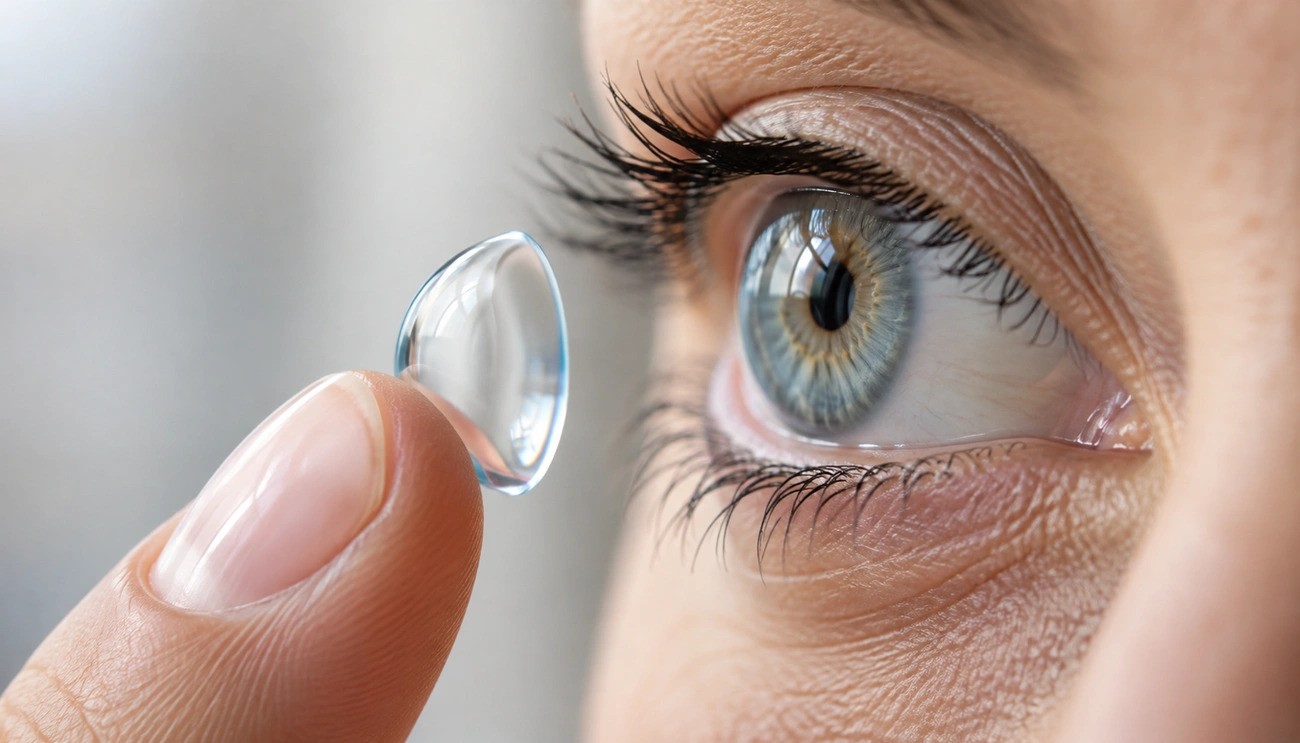
Blurry peripheral vision or poor clarity in low-light conditions can be frustrating. An aspheric contact lens might be the solution you need. Unlike traditional spherical lenses, aspheric lenses can correct optical defects and provide sharper vision in the dark and at dusk because light can penetrate and meet at one focal point instead of at multiple points. Aspheric lens design uses aspheric optics to reduce distortion and boost visual quality. This piece covers what aspheric contact lenses are, their advantages and disadvantages, who benefits most from aspheric multifocal contact lenses, and how they compare to standard options.
What Are Aspheric Contact Lenses?
Aspheric Lenses Meaning and Design
Your contact lens curvature determines how well light focuses on your retina. Aspheric contact lenses don't have a spherical shape that's perfect. This type of lens has a changing curvature across the surface instead. It creates a gradual change in power from the lens center to the edge. The edges are flattened rather than curved in a uniform way.
Aspheric lens design features varying curvatures across the lens surface that include a flatter area. This is different from traditional soft lenses with a spherical design, where the base curvature value remains the same at any point on the lens. The surface can be formed freely and allows the avoidance or reduction of aberrations that are unavoidable with spherical lenses.
The lenses can be better adapted to the curvature your eye requires. Aspheric contacts are designed to better match the cornea's shape and create a wider field of view. This more complex shape means the curve changes from the lens center to the edge.
How Aspheric Optics Work
An aspheric contact lens's curvature deflects light rays in a way that corrects spherical aberration. Parts of your eye including the tear film, cornea and crystalline lens can induce aberrations. Contact lenses induce a level of aberration in the lens that is inversely equal to the amount of natural spherical aberration inherent in your eye.
Aspheric lenses excel in focusing light to a precise point. This results in minimal blur and improved image quality. Aspheric lenses ensure that all incoming light rays join to a single focal point by shaping the lens with care. This minimizes spherical aberration and improves image quality. Blur reduces, depth perception improves, contrast sensitivity gets better and vision becomes clearer.
Aspheric lenses provide more precise light guidance than spheric contact lenses. This becomes clear in the marginal areas of the lenses, where light is directed to the visual aid's focal point. This results in a clearer, brighter image and a less restricted visual range for you, as more of the lens can be used for viewing.
Spheric vs. Aspheric Contact Lenses
Spherical contact lenses have a constant curvature and power across the lens surface. They conform to the cornea's shape and add to the spherical aberration present in your eye, owing to the natural shape of the cornea and crystalline lens. Aspheric contacts can correct spherical aberration and reduce the blurring of vision in contrast.
But whether aspheric lenses benefit you depends on the amount and type of spherical aberration you experience. People with prescriptions between +3 and -6 are unlikely to benefit from aspheric lenses. Using aspheric lenses on these prescriptions may even lead to an over-correction of spherical aberration and worsening of visual acuity. Aspheric lenses can benefit people with high refractive errors by reducing visual blur. The aspheric design may also benefit patients with low levels of astigmatism and correct low astigmatism of up to -0.75.
Benefits of Aspheric Contact Lenses
Sharper Vision and Better Image Quality
Aspheric contact lenses provide sharper, clearer vision and a better optical image compared to traditional spherical lenses. The design creates a better fit for your cornea's natural shape, which often results in sharper vision. You may notice immediate improvements in visual clarity when you switch to aspheric lens design.
A multi-center study of 171 contact lens wearers (all with at least some experience) found notable results. Patients tried aspheric contact lenses for one week. 75% stated that the aspheric design provided superior vision, and 77% reported a reduction in glare and halos. Your vision becomes clearer and brighter. The visual range becomes less restricted as more of the lens can be used for viewing.
Reduced Spherical Aberration
Spherical aberration causes incident light rays to focus at different points when forming an image, creating blur. Aspheric lenses focus light to a small point and create almost no blur, improving image quality. This correction happens because the varying curvature deflects light rays so all meet at a single focal point.
Aspheric lenses minimize aberrations that traditional spherical lenses cannot avoid. Studies have showed that the application of aspheric optics can improve low-contrast and mesopic acuity and decrease glare. Patients have cited an improvement in the subjective quality of vision with an aspheric optical correction. You get reduced blur and improved depth perception and contrast sensitivity.
Improved Peripheral Vision
Aspheric lenses excel in providing improved peripheral vision compared to spherical counterparts. You experience clarity not just in the central field but also towards the edges, contributing to overall visual comfort and safety. The wider usable lens surface improves peripheral vision and gives you a broader field of view during daily activities.
This becomes especially clear in the marginal areas of the lenses, where light is directed to the focal point more precisely. So your visual range becomes less restricted and allows you to see more clearly across the entire lens surface.
Improved Low-Light Performance
Aspheric contact lenses improve vision in low-light conditions by a lot. The design can help you see better when driving in the dark or spending time in poor lighting conditions. Aspheric lenses can correct optical defects and provide sharper vision at dusk because light penetrates and meets at one focal point instead of multiple points.
Do you work or study in dim lecture halls or conference rooms? Do you drive before dawn or after dusk? These factors indicate that an aspheric contact lens could improve your quality of vision. You may find your eyes feel less tired after a long day at work in front of screens. The improved visual acuity results in less eye strain, which becomes noticeable after extended use.
Who Should Wear Aspheric Contact Lenses?
Not everyone benefits equally from aspheric contact lens designs. Your prescription strength, visual demands, and lifestyle activities determine whether this lens type suits your needs.
People with High Prescriptions
Aspheric lenses work especially when you have severe ametropia. Spheric lenses have brilliant imaging properties, but aspheric surfaces perform better in severe ametropia because they provide more precise light guidance. The flatter curve than other contacts improves clarity for people with high lens prescriptions. Standard soft contacts are available up to -12.00 diopters generally, but aspheric designs reduce the distortion that's common with high-powered lens prescriptions.
Manufacturers can design aspheric contact lenses to correct for both the spherical aberration associated with the sphere power of the contact lens and the spherical aberration of your eye. Spherically surfaced negative lenses generate negative spherical aberration. Spherically surfaced positive lenses generate positive spherical aberration in direct proportion to the sphere power. You may find that your vision is wider, clearer, and brighter if you have severe ametropia and have been prescribed aspheric lenses.
Aspheric Contact Lenses for Astigmatism
Several anecdotal clinical accounts exist of aspheric lenses masking low to moderate amounts of corneal astigmatism. These lenses can be helpful for those with low levels of astigmatism during sports or work with computers. Such masking of astigmatism is possible optically (yet unlikely) only if the lens doesn't conform to the corneal surface and creates a tear lens, like a gas-permeable lens.
But research rejects the hypothesis that soft aspheric contact lenses mask astigmatism via an optical correction. Studies found no evidence that aspheric lenses correct astigmatism optically. Reports of increased acuity with soft aspheric lenses likely result from a reduction of spherical aberration rather than astigmatism correction.
Multifocal Contact Lens Wearers
Practitioners have used aspheric lenses for a long time to increase the depth of focus of your eye through multifocal designs. Aspheric multifocal contacts feature a gradual change in viewing from far to near, with no visible lines in the lenses. The design resembles progressive eyeglasses, with prescription strength changing from the center of the lens to the periphery.
Presbyopic contact lens wearers offer incredible opportunities, as patients in the presbyopic age range may make up more than half of all soft contact lens prescriptions. But only about 60% of contact lens wearers in the presbyopic age range wear a contact lens that addresses both their near and distance visual needs. Aspheric lenses can help correct presbyopia, an age-related eye condition that makes it hard to see clearly up close.
Computer Users and Digital Device Users
Biofinity Energys and MyDay Energys are designed for digital device users. DigitalBoost technology is an innovative single vision aspheric lens design that delivers a +0.3D digital boost, which helps reduce eye tiredness associated with digital eye strain. Study data demonstrates that device users have a smaller change in accommodative micro-fluctuations when wearing this DigitalBoost technology. This suggests reduced ciliary muscle stress when reading on a smartphone or other devices at a close distance.
Some eye care patients prefer aspheric lenses after trying them because they feel more comfortable, most likely related to improved visual acuity resulting in less eye strain. You may notice a difference in how tired your eyes are after a long day at work in front of screens.
Active Lifestyle and Sports Enthusiasts
The aspheric lens design can help you see better when doing things like playing sports that require you to change focus quickly. Contact lenses provide a wider field of view without the limitations of eyeglass frames, which is especially beneficial in sports that require constant awareness of the surroundings, such as basketball or soccer. Contact lenses sit on the cornea and provide a more natural field of vision that can improve depth perception, which is vital in sports like golf or baseball where judging distances accurately matters.
Types of Aspheric Contact Lenses Available
Soft Aspheric Contact Lenses
Soft aspheric contact lenses dominate the market with multiple options and replacement schedules of all types. CooperVision offers a complete portfolio of monthly, bi-weekly and daily lenses designed with aspheric optics.
Avaira Vitality lenses are breathable, bi-weekly replacement lenses designed with the same Aberration Neutralizing System as the Biofinity family. MyDay daily disposable lenses provide optimal vision combined with UV blocking and great comfort all day long. The MyDay daily disposable is available in sphere, toric and multifocal options. The clariti 1 day contact lenses have aspheric optics and provide silicone hydrogel at a comparable price to some hydrogel lenses. The clariti family offers sphere, toric and multifocal options. It is an ideal entry-level contact lens for new wearers.
Gas-Permeable Aspheric Lenses
Gas-permeable options provide excellent visual acuity for specific eye conditions. ASANA offers a complete, customizable gas permeable portfolio that includes spherical, aspheric, toric, multifocal, multifocal toric, reverse geometry and keratoconic lenses. These lenses are designed to provide excellent visual acuity and contrast sensitivity. The rigid material resists protein and fatty deposits. This helps maintain clarity and comfort.
Aspheric Multifocal Contact Lenses
Aspheric multifocal contacts feature a gradual change in viewing from far to near with no visible lines in the lenses. A variety of aspheric multifocal contacts are now available, and these types of lenses are disposable in many cases.
Daily, Bi-Weekly, and Monthly Options
Replacement schedules vary based on your lifestyle needs. Daily contacts offer the highest level of convenience and hygiene. Bi-weekly contacts require daily wear but need cleaning and storage each night. Monthly contacts last longer but require diligent cleaning and care.
Disadvantages and Limitations of Aspheric Contact Lenses
Higher Cost Compared to Spherical Lenses
Aspheric lenses require greater precision during production, with more steps and labor than traditional lenses. This manufacturing complexity makes them more expensive, though aspheric designs are accessible to more people and often priced as with standard lenses. Some premium aspheric or aberration-controlled lenses cost more. The price and comfort serve as reasonable tie-breakers when the optical payoff proves modest and unpredictable.
Adjustment Period for New Wearers
Your brain needs time to adapt to the new visual input from aspheric optics. Vision can feel off at the edges during this period. More complex designs like those for astigmatism or presbyopia require more patience. Most people find that by the end of the second week, they no longer feel the lenses in their eyes and their vision is crisp and stable.
Not Suitable for Everyone
Some people don't benefit from the aspheric lens surface because their eyes depend on spherical aberrations to ensure optimal vision. Ophthalmologists don't usually recommend wearing aspheric lenses if your hyperopia has been corrected by laser eye surgery.
Limited Astigmatism Correction
Aspheric lenses can correct low astigmatism up to -0.75. But research found no evidence that aspheric lenses correct astigmatism optically. Most aspheric lenses don't correct for the spherical aberration of the lenses or of the eye optically.
Conclusion
Aspheric contact lenses offer most important advantages over traditional spherical designs: sharper vision, reduced spherical aberration, and better performance in low-light conditions. These lenses work best if you have high prescriptions, presbyopia, or spend a lot of time using digital devices.
Aspheric lenses cost a bit more and require an adjustment period. But the visual clarity they provide makes them worth thinking about. The technology has become accessible to more people across daily and monthly replacement options, so you can find a design that fits your lifestyle.
Consult your eye care professional before making the switch. They can determine if aspheric lenses match your vision needs and prescription requirements.