Best Colored Contacts for Astigmatism Online
Color contact lenses for astigmatism can seem contradictory because vision correction and changing your eye color may feel like separate goals. Toric colored contacts handle both through precise engineering.
Can you wear colored contacts with astigmatism safely? Yes, if you use prescription colored contact lenses for astigmatism that are fitted properly. This piece explains how colored toric lenses work, what will be available in 2026, and how to choose and buy them, then care for them properly.
Can You Wear Colored Contacts With Astigmatism?
Astigmatism changes how light travels through your eye, which directly affects whether standard colored lenses will work for you.
What astigmatism does to your vision
Light normally passes through a round cornea and lens and forms one sharp point on your retina. Astigmatism occurs when your cornea or eye's lens has an oval, football-like shape rather than a basketball-like curve. Light does not bend evenly in an eye with this shape, so it focuses at two separate points rather than one. This causes blur at every distance, not only close up or far away. Objects may also appear doubled, stretched, or shadowed. Headaches, eyestrain, and poor night vision can occur as well.
Astigmatism is nowhere near as rare as many people think. About 47% of people have 0.75D or more of astigmatism in at least one eye. Correction methods differ within this group: 68% wear glasses, 22% use spherical contact lenses, and only 10% wear toric contact lenses. This difference matters because spherical lenses only mask astigmatism. They do not correct the two uneven curves that cause it, so some blur remains.
How toric colored contacts correct vision and change eye color
A toric lens gets its name from a torus, which has the shape of a doughnut. Imagine cutting a thin slice from the doughnut's side. The curved piece has two different curvatures at right angles to each other: one flatter and the other steeper. This lens shape provides different focusing power across the vertical and horizontal planes, which matches an astigmatic eye's uneven curves.
Colored toric contacts place a tint within the lens material over this corrective shape. The color remains in one area of the lens while the toric zones correct vision beneath it. A toric lens looks similar to a spherical lens from the outside because the naked eye cannot see its two curvatures. This design lets one lens change your eye color while correcting blur.
The lens works only if its cylinder power lines up with your astigmatism's exact axis. Manufacturers add stabilizing features such as thin-thick zones, ballasting with extra weight at the bottom, and truncation. Truncation slightly cuts off the bottom edge to keep the lens from spinning. Toric colored lenses are available in daily and other disposable schedules, so you can choose a replacement routine that suits you.
Why lens rotation can cause blur
Toric lenses must remain in a specific rotational position to correct your vision, but they can move after you put them in. About one-third of a toric lens's cylinder power goes uncorrected for every 10 degrees it rotates out of place. Consider a lens with -1.75DC of cylinder power. A rotation of only 10 degrees removes more than 0.50DC of correction. Your vision may drift in and out of focus throughout the day as a result.
Several factors can cause rotation, such as a poor fit, eyelid pressure during blinking, dryness, or an old lens. Eye doctors check lens position with a slit lamp and read the lens's alignment marks. They can account for consistent rotation with LARS, which means left add and right subtract. Toric colored contact lenses for astigmatism require a proper fitting rather than a generic try-on for this reason. An incorrect axis can turn a clear, colored lens into a blurry one.
What Colored Contacts for Astigmatism Are Available in 2026?
Finding colored contact lenses that also correct astigmatism can be challenging. While cosmetic contacts offer a wide range of colors and designs, most are made for people who do not need astigmatism correction. Understanding how toric lenses work, which prescription details matter, and what to check before buying can help you make a more informed choice in 2026.
Why Are Colored Toric Contact Lenses So Hard to Find?
Colored contact lenses and toric contact lenses serve different purposes. Cosmetic lenses change the appearance of your eyes, while toric lenses correct astigmatism by compensating for differences in the curvature of the cornea or lens.
Combining these features requires more specialized lens engineering. A colored toric lens must provide the desired cosmetic effect while maintaining stable positioning, consistent vision correction, and adequate oxygen transmission.
Several factors make these lenses less widely available:
-
Specialized manufacturing: Toric lenses require carefully designed optical zones and stabilization features to maintain the correct orientation on the eye.
-
Pigment placement: Color pigments must be incorporated into the lens without compromising its optical performance, comfort, or oxygen permeability.
-
Limited prescription combinations: Each combination of color, sphere power, cylinder power, and axis increases manufacturing and inventory complexity.
-
Individual fitting requirements: Even when a lens is available in the correct prescription, its fit and rotational stability must be suitable for the wearer's eyes.
These challenges help explain why the selection of colored contacts for astigmatism remains more limited than that of standard cosmetic lenses. Availability can also change as manufacturers update their product lines, so shoppers should verify current specifications rather than rely on older product listings.
How Your Prescription Affects Your Options
Before shopping for colored contacts for astigmatism, it is important to understand the main values on your contact lens prescription.
Sphere power, cylinder power, and axis
A toric contact lens prescription typically includes three key measurements:
-
Sphere (SPH): Corrects nearsightedness or farsightedness.
-
Cylinder (CYL): Indicates the amount of astigmatism correction required.
-
Axis: Specifies the orientation of that correction, usually expressed as a value from 1 to 180 degrees.
Cylinder power is commonly available in increments of 0.50 diopters for many standard toric lenses, although available ranges vary by product. People with higher levels of astigmatism may need specialized prescriptions or custom-made lenses.
Axis is equally important. Two lenses with the same sphere and cylinder values may not provide equivalent correction if their axis values differ. A lens available only in a limited range of axes may therefore be unsuitable for someone with a different prescription.
When evaluating colored contacts, check every prescription parameter rather than choosing a lens based only on its color or advertised power range. A qualified eye care professional can determine whether a particular lens design is appropriate for your eyes.
Daily, Monthly, and Yearly Colored Contacts: What Should You Know?
Replacement schedules are another important consideration when comparing cosmetic lenses. Daily disposable lenses, monthly lenses, and longer-replacement-cycle lenses differ in their maintenance requirements and intended use.
Daily disposable lenses
Daily disposable lenses are designed for one day's use and should be discarded after removal. They eliminate the need for routine lens cleaning and storage, making them a convenient option for occasional cosmetic wear.
However, colored daily toric lenses are not as widely available as many standard daily disposable lenses. Confirm that the specific product is designed for both cosmetic use and your astigmatism prescription before purchasing.
Monthly replacement lenses
Monthly lenses are designed for use over a specified replacement period, provided they are cleaned, disinfected, and stored according to the manufacturer's instructions. They may suit people who wear contact lenses regularly and want a reusable option.
The replacement schedule does not mean a lens can be worn continuously for a month. Follow the prescribed daily wearing schedule and never extend the approved replacement period.
Longer-replacement-cycle lenses
Some colored contacts are marketed with replacement schedules extending beyond one month. These products require particular attention to their approved wearing period, cleaning instructions, material properties, and local regulatory status.
Do not assume that every colored lens advertised as lasting six months or a year is suitable for continuous use over that period. Actual safe use depends on the product's labeling and professional fitting recommendations.
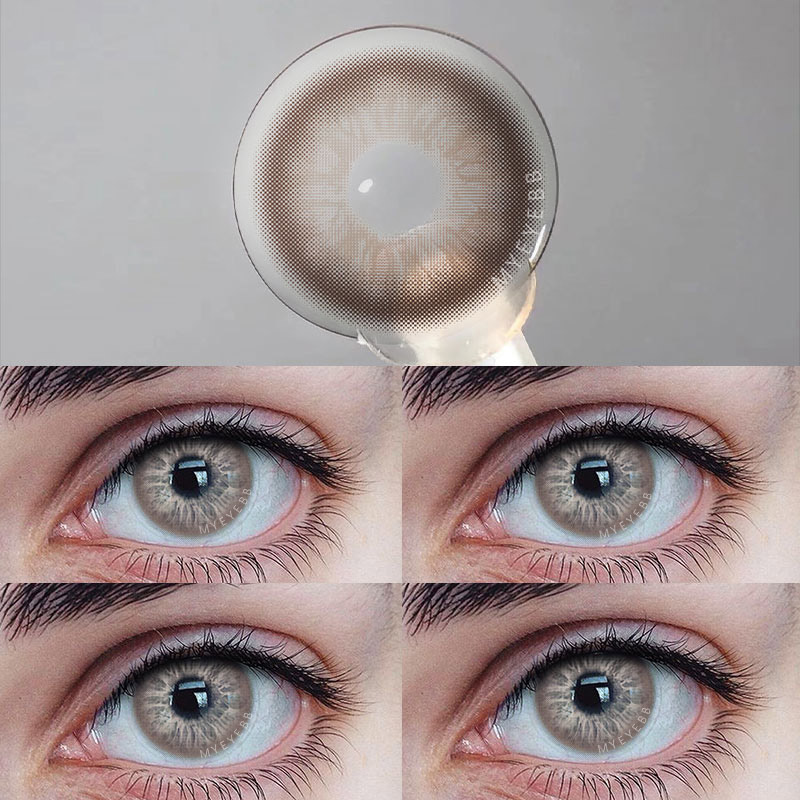
For shoppers exploring cosmetic styles, Myeyebb offers a range of colored contact lens designs for different eye-color preferences and visual effects. Explore our colored contacts collection to compare available styles and find inspiration for your preferred look. Remember that cosmetic lenses do not automatically provide astigmatism correction. Always check the specific product's prescription parameters and intended use before purchasing.
Ready-Made vs. Custom-Made Colored Toric Lenses
Colored toric lenses generally fall into two broad categories: ready-made lenses with predefined prescription options and custom-made lenses produced for more specific requirements.
Ready-made colored toric lenses
Ready-made lenses are manufactured in established prescription combinations. They can be more straightforward to order when the available sphere, cylinder, and axis values match your prescription.
The main limitation is selection. You may find a color you like but discover that the lens is unavailable in your required cylinder power or axis. Before ordering, confirm the exact prescription range, replacement schedule, base curve, diameter, and fitting requirements.
Custom-made colored toric lenses
Custom-made lenses may offer more flexibility for people whose prescriptions fall outside standard ranges. Depending on the manufacturer, customization may cover sphere power, cylinder power, axis, color, or other lens parameters.
However, custom manufacturing can involve longer production times, higher costs, and additional fitting requirements. Not every custom cosmetic lens is available in every prescription, and customization does not automatically guarantee a better fit or clearer vision.
If your astigmatism is moderate to high, or your axis falls outside common options, consult an eye care professional before deciding whether a custom lens is appropriate.
How to Choose Colored Contacts Safely in 2026
When comparing colored contacts for astigmatism, prioritize prescription compatibility and eye health over appearance alone.
-
Get an up-to-date contact lens prescription. A glasses prescription is not interchangeable with a contact lens prescription. Contact lenses require an appropriate fitting.
-
Confirm toric correction. Make sure the product is specifically designed to correct astigmatism if you need cylinder and axis correction.
-
Check the full specification. Review sphere, cylinder, axis, base curve, diameter, material, and replacement schedule where applicable.
-
Verify product information. Look for clear manufacturer details, usage instructions, and applicable regulatory information. Do not rely solely on marketing claims.
-
Choose a suitable color and design. Consider your natural eye color, the intended visual effect, and how the lens's graphic pattern may appear on your eyes.
-
Follow proper lens hygiene. Wash and dry your hands before handling lenses, use the recommended disinfecting solution for reusable lenses, and never share contact lenses.
-
Stop wearing lenses if irritation develops. Redness, pain, light sensitivity, or blurred vision can indicate a serious problem. Remove the lenses and seek prompt professional eye care.
Colored contact lenses are medical devices in many jurisdictions, even when they are purchased for cosmetic purposes. Appropriate fitting and prescription compatibility remain essential.
Explore Colored Contact Lens Styles at Myeyebb
Choosing colored contacts involves balancing your preferred appearance with the vision correction and wearing requirements your eyes need. At Myeyebb, you can explore different colored contact lens styles, compare shades, and learn more about available designs. If you have astigmatism, confirm whether a specific lens is available in a suitable toric prescription before purchasing.
A well-informed choice starts with accurate measurements, reliable product information, and a lens that suits your eyes, not just your preferred color.
How to Choose the Best Colored Contacts for Astigmatism
Color contact lenses for astigmatism require a short checklist before you look at any shade cards. Fit comes first, comfort follows, and color comes after both.
Start with a lens your eye care professional can fit
Set color swatches aside at first and focus on fit. A toric lens that rotates or sits off-center will not provide stable vision, no matter how good the tint looks in a photo. Your eye doctor maps your cornea's shape, tests trial lenses on your eye, and checks how each lens settles before discussing color. Think of the fitting as a filter. Once a lens passes, you can choose from the available shades.
Compare lens materials and comfort needs
Lens material affects how your eyes feel at the end of the day. Silicone hydrogel lets up to five times more oxygen reach your cornea than conventional hydrogel lenses. This matters if you wear contacts for long periods or already deal with dry eyes. MPC-coated lenses can add comfort because the coating mimics natural cell membranes, resists protein and lipid buildup, and retains moisture. Some toric colored contacts still use HEMA, an older hydrogel material. Ask your eye care professional which material is appropriate for your eyes, especially if you experience dryness or discomfort during lens wear.
Choose subtle enhancement or a full color change
Toric colored contacts usually come in three tint categories. Knowing the difference can help you avoid ordering the wrong look:
- Visibility tints add a faint color that makes a dropped lens easier to find. They do not create a cosmetic change.
- Enhancement tints deepen your natural eye color without covering it. They work well if you have lighter eyes.
- Opaque tints cover more of your natural iris and create a more noticeable color change, depending on the lens design.
Find shades that show up on dark eyes
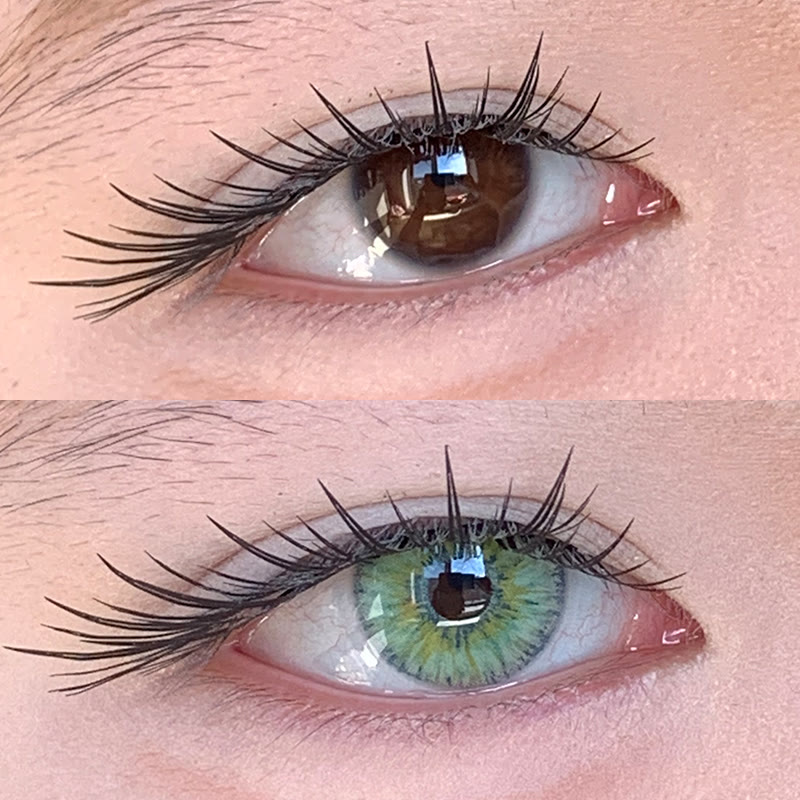
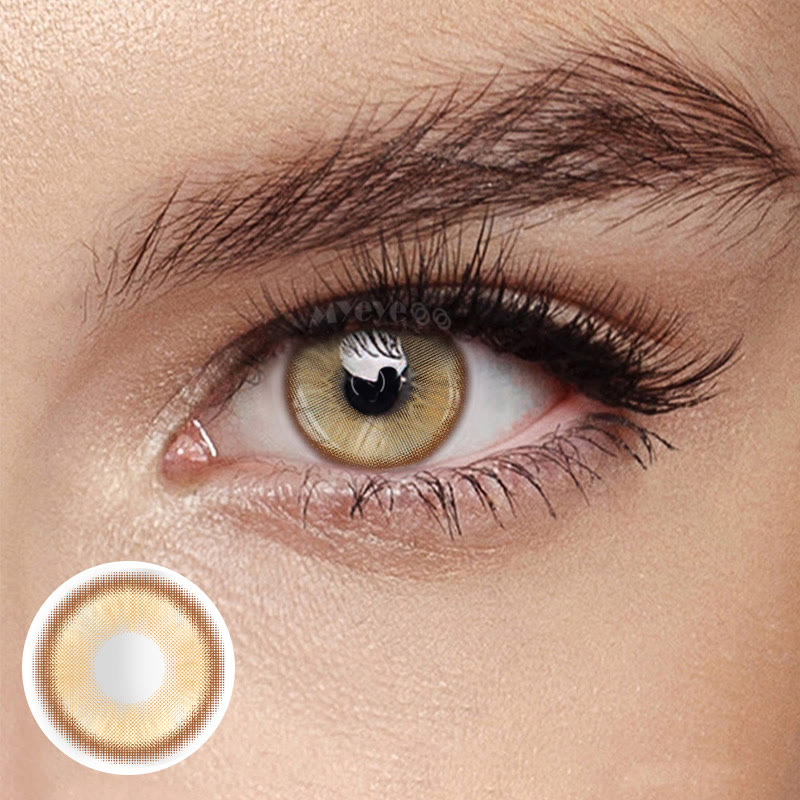
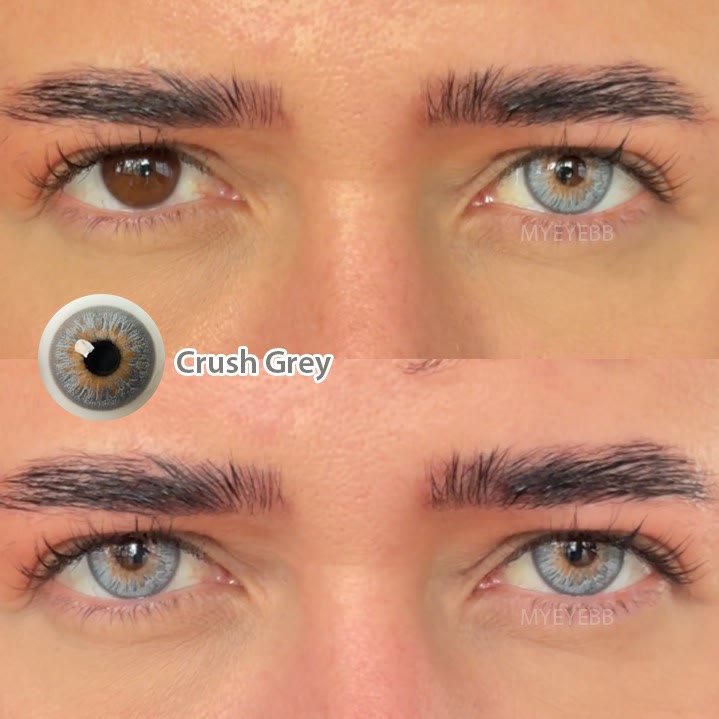
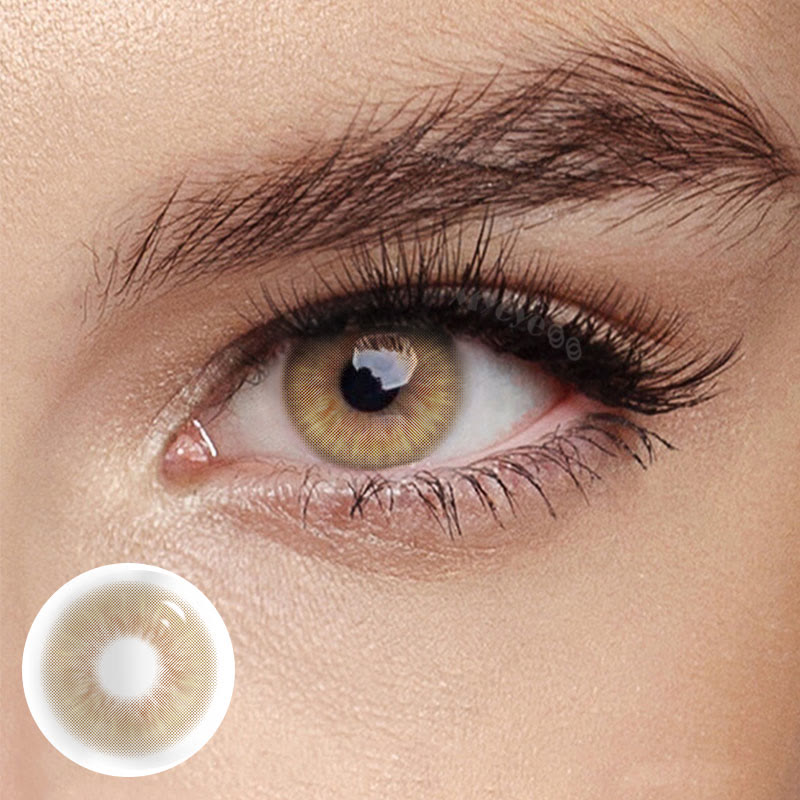
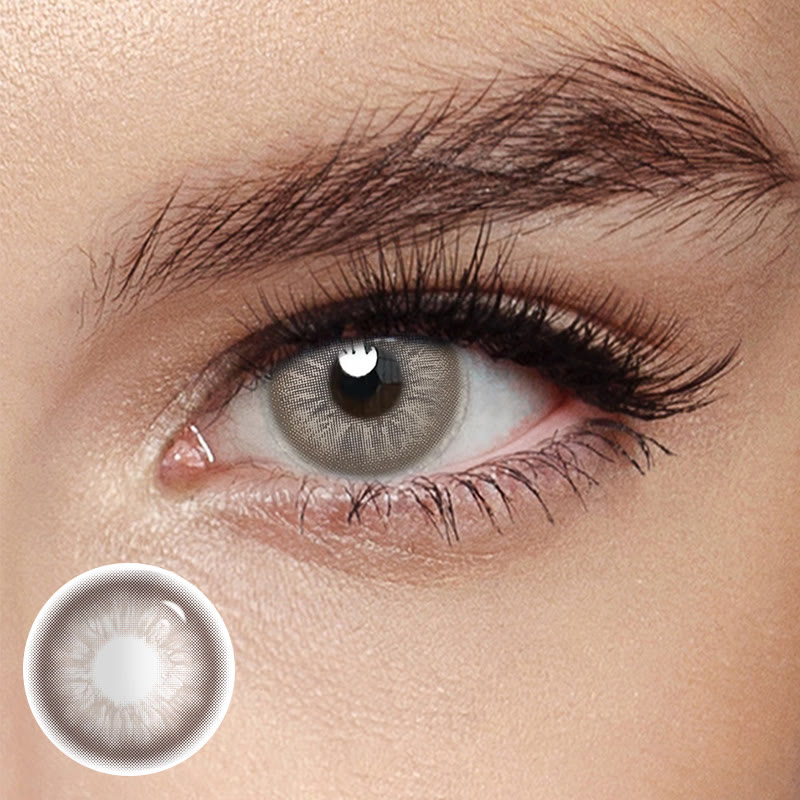
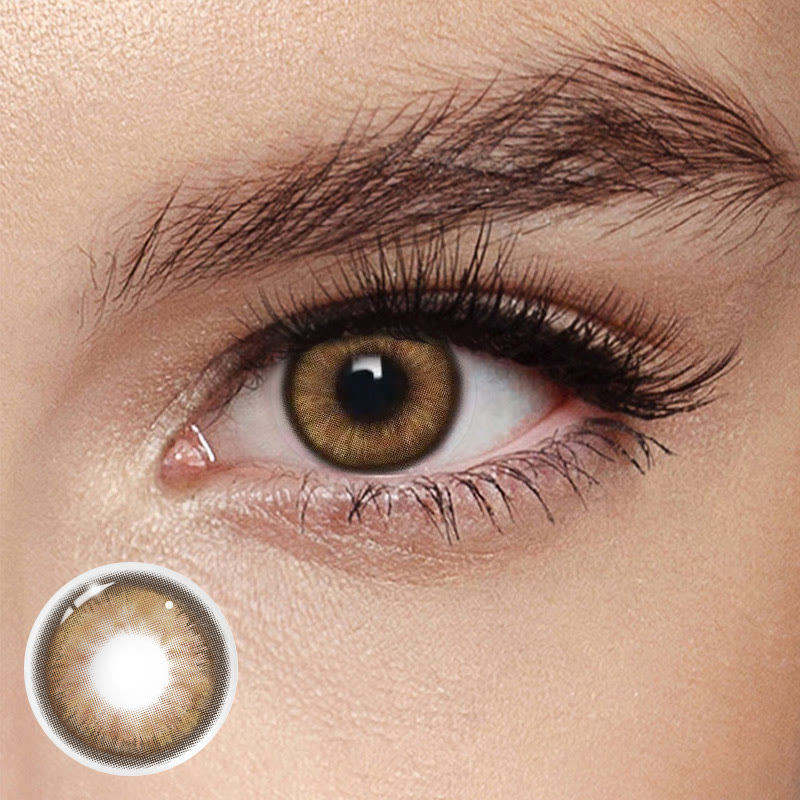
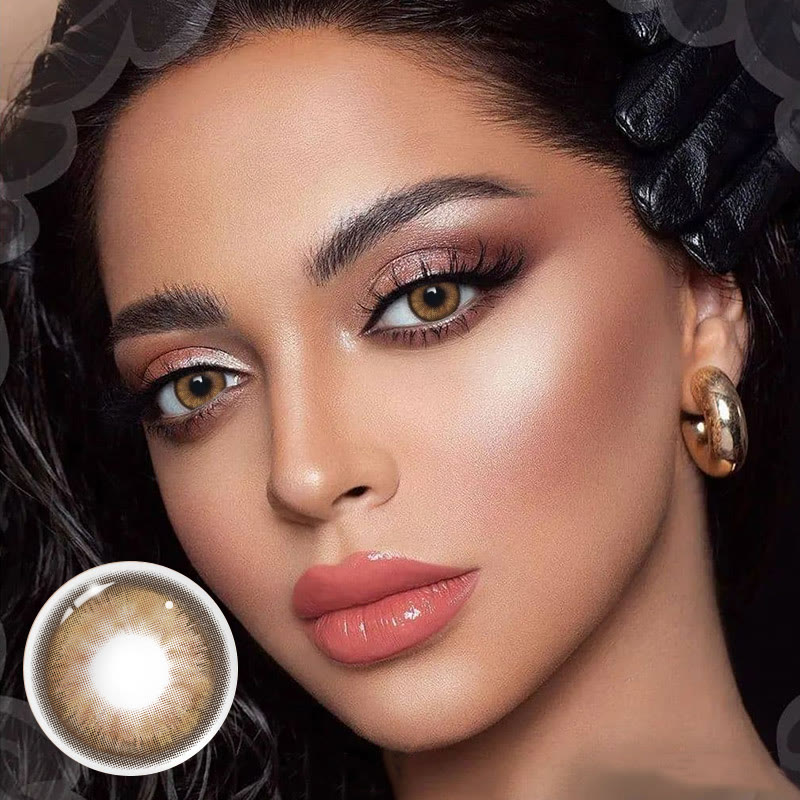
Dark irises need stronger pigmentation and layered patterns for a more noticeable color change. When choosing colored contacts, consider how different shades may appear against your natural eye color. Explore light blue lenses for a cooler, brighter effect, or compare grey shades for a subtle or more defined transformation. If you prefer a warmer, more natural-looking result, brown contacts are another option to consider. The final appearance depends on your natural iris color, lens pigmentation, and design. If you need astigmatism correction, confirm that the specific lens is suitable for your prescription before ordering.
Understand circle lenses for astigmatism and their limits
Circle lenses have a larger graphic diameter, usually between 13.0 mm and 14.2 mm. Bold limbal ring designs create a larger, more defined appearance. Toric versions are available for astigmatism correction, but not every circle lens design comes in a toric option. Heavily patterned costume styles, including cat-eye and sharingan effects, usually are not made in toric form. Traditional soft lenses may not be suitable for some cases of severe astigmatism. Scleral or hybrid lens designs may be considered by an eye care professional when appropriate.
How to Get a Prescription and Buy Colored Toric Lenses
Getting toric colored contacts requires paperwork before you can start shopping. Skipping these steps is where many buyers run into trouble.
Book a contact lens fitting, not just a glasses exam
A glasses prescription cannot be used as a substitute for a contact lens prescription. Contacts sit directly on your eye, while glasses sit in front of it, so each requires different measurements. Schedule a dedicated contact lens exam and fitting with your eye doctor instead of assuming your current glasses prescription will work.
Understand sphere, cylinder, axis, base curve, and diameter
Your prescription lists sphere (SPH) to show nearsightedness or farsightedness, cylinder (CYL) to show the degree of astigmatism, and axis to show the correction angle from 1 to 180 degrees. Base curve and diameter are measured in millimeters and help determine how the lens fits your eye. A sample prescription for one eye may read SPH -2.50, CYL -1.25, AXIS 180. Prescription validity varies by location, so check the requirements where you live.
Check the exact product's regulatory status in your country
Regulations for decorative and colored contact lenses vary by country. Before ordering, verify the specific product's regulatory status and whether a prescription is required in your location. Do not assume that a brand's general claims apply to every product in its catalog.
Choose a seller that provides clear product information
Buy from sellers that provide transparent product specifications, usage instructions, and information about prescription requirements. Avoid choosing lenses based only on appearance or price, and consult your eye care professional before wearing a new lens design.
Confirm fit and vision before stocking up
Have trial lenses assessed on your eyes for fit and visual acuity before committing to a full supply.
How to Wear and Care for Toric Colored Contacts
Safe use of toric colored contacts depends on following your eye doctor's schedule and treating cleaning as essential.
Follow your prescribed wear time and replacement schedule
Wear daily disposable colored contacts once, then discard them at the end of the day. They do not require cleaning or storage. Reusable lenses need disinfection between uses and should be replaced according to the manufacturer's specified schedule. Replace your lens case at least every three months, or as recommended by your eye care professional.
Clean reusable lenses with approved solution and keep water away
Clean and disinfect reusable lenses using a compatible contact lens solution and the manufacturer's instructions. Never add fresh solution to old solution. Do not use tap water, saliva, or saline alone to disinfect lenses. Water exposure from showers, pools, or hot tubs can increase the risk of eye infections, including Acanthamoeba keratitis.
Avoid sleeping in or sharing your lenses
Do not sleep in your lenses, even during short naps, unless your eye care professional has confirmed that the specific lenses are approved for extended wear. Never share contact lenses with another person.
Remove lenses and seek prompt care for pain, redness, or sudden blur
Remove your lenses immediately if you have persistent redness, pain, light sensitivity, discharge, or blurred vision, then contact your eye doctor promptly.
Conclusion
Color contact lenses for astigmatism are no longer a contradiction once you understand the toric engineering beneath the tint. A correct fit and proper axis alignment, supported by a verified prescription, separate a lens that only looks good from one that provides clear, stable vision.
Safety and comfort depend on proper fitting and consistent care, so never skip the exam or cut corners on cleaning. Choose wisely, and you'll get the color and correction you need.