
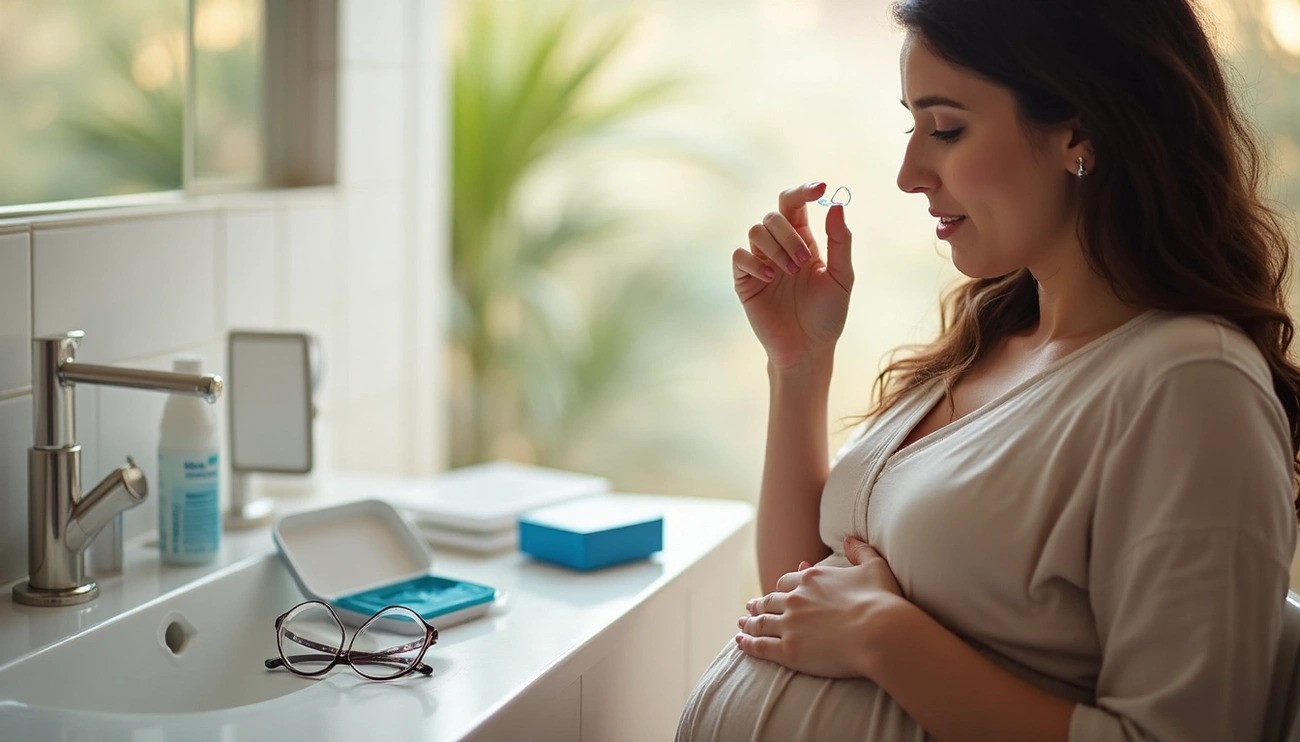
You might be surprised to learn that vision problems affect up to 14% of pregnant women. Pregnancy changes your body in countless ways, yet vision changes rarely get much attention. Many expectant mothers ask "can you wear contacts while pregnant?" - and that's a valid question.
Your body pumps out more progesterone and estrogen during pregnancy, which affects your corneal thickness and tear production. These hormonal changes can leave your eyes feeling dry and sensitive, and sometimes your vision might get blurry. But don't worry - you won't need to give up your contact lenses just yet. Future moms want to know about wearing contacts during labor, whether contacts might make them nauseous, and if they can keep their lenses in during a C-section.
The chances of getting eye infections from contact lenses while pregnant stay pretty low. Still, you should know how pregnancy might change your contact lens experience. About five to eight percent of pregnancies can trigger conditions like preeclampsia with dangerous high blood pressure that affects vision. The good news? Most pregnancy-related vision changes aren't serious enough to need a new prescription.
Can I Wear Contact Lenses While Pregnant?
You can wear contact lenses throughout your pregnancy. Most expectant mothers find wearing contacts completely safe. In spite of that, pregnancy creates unique problems for contact lens wearers that need extra attention.
What the experts say
Eye care professionals say you can stick to your existing contact lens routine during pregnancy with a few key changes. You can keep using your current prescription, but getting fitted for new contacts during pregnancy isn't a good idea. Your vision changes during this time could make new prescriptions inaccurate.
Regular eye exams should be part of your pregnancy journey. These visits help doctors check your corneal health and make sure your eyes get enough oxygen. Your eye health needs even more attention if you develop gestational diabetes or preeclampsia during pregnancy.
Eye specialists stress that proper hygiene becomes vital when handling your lenses during pregnancy. You should wash your hands before putting in or taking out your contacts and never sleep while wearing them.
When it might be uncomfortable
Pregnancy hormones can affect your contact lens comfort by a lot. Your body's changes might make wearing contacts tough in several ways:
- Dry, irritated eyes - Hormone changes often cut down tear production, which makes your eyes dry and contacts uncomfortable
- Swelling and shape changes - Your cornea retains fluid just like other body parts
- Lens fit issues - Changes in your cornea can stop contacts from fitting right
Your corneal sensitivity might decrease during pregnancy, which changes how contacts feel. You might want to try preservative-free artificial tears made for contact lens wearers if discomfort increases.
Common pregnancy stress can lead to eye inflammation and fluid buildup, making contacts less comfortable. Health issues like preeclampsia or gestational diabetes that show up during pregnancy can make vision and contact lens wear more complicated.
Why prescriptions may not be accurate
You probably don't need to update your prescription because of pregnancy-related vision changes. Eye specialists strongly suggest avoiding new prescriptions during pregnancy because:
- Hormone changes temporarily alter your corneal shape and thickness
- Fluid retention distorts vision by changing your eye's physical properties
- These changes usually go away after pregnancy
Blurry vision or changes in visual clarity might make you want to get updated prescriptions. Eye doctors recommend waiting until several weeks after giving birth instead of getting new contacts. Your eyes will likely return to normal after pregnancy.
Your current prescription might feel slightly off if your vision changes enough. This can frustrate you, but these changes almost always go away on their own unless you notice other concerning symptoms.
Why Pregnancy Affects Your Eyes
Pregnancy changes your body in countless ways—and your eyes are no exception. Your contact lenses might start feeling strange once you're pregnant. The science behind pregnancy's effect on your vision and eye health is fascinating.
Hormonal changes and fluid retention
Your hormone levels surge throughout pregnancy. Estrogen starts rising around week 9 and peaks between weeks 31-35. Your progesterone levels climb from week 20 and keep going up until your third trimester ends.
These hormone changes affect your eyes in several ways:
- Your corneal cells produce more hyaluronic acid from estrogen, which leads to more hydration and fluid retention
- Your tear production changes because of progesterone, which might leave you with dry eyes
- Your testosterone-binding protein goes up, which reduces free serum testosterone
- Your DHEA levels drop by about half, and this affects how well your tear glands work
So these hormone changes explain why 14% of pregnant women notice vision changes and can't wear their contacts comfortably. Just like other parts of your body, your eyes hold onto extra fluid during pregnancy. This makes many women ask if they can wear contacts while pregnant.
Changes in corneal shape
Your cornea—the clear front part of your eye that helps you see clearly—goes through some of the biggest changes during pregnancy. This happens especially when you have reached your second and third trimesters:
Your cornea gets thicker. Pregnancy hormones make your corneal tissue hold more fluid. Think of it as similar to the swelling you might notice in your hands and feet.
The curve of your cornea also changes. These changes to its shape and thickness can make your vision blurry or distorted for a while. Contact lenses might not fit right because of these changes.
The good news is that these corneal changes usually go away after you have your baby. That's why eye doctors tell you to wait before getting new contacts or laser eye surgery during pregnancy.
Increased eye pressure and blood flow
Your eye pressure actually drops during pregnancy, even though other pressures in your body go up. Studies show it falls by about 2-3 mmHg, and by your third trimester, it's about 10% lower.
This pressure drop happens because:
Your pregnancy hormones help fluid flow better in your eyes. Your body's tissues become more stretchy, which makes your eye's outer layer less rigid. Your blood vessels also relax, which lowers pressure in the veins around your eyes.
Your blood volume nearly doubles in some cases during pregnancy. This big change affects your retina and sometimes makes blood vessels leak fluid, which can make your retina swell.
Your eye pressure and other changes typically return to normal a few months after giving birth. Knowing what to expect helps you understand why your contacts might feel different and why your vision might change during pregnancy.
Common Eye Symptoms During Pregnancy
Pregnancy changes your eyes in many ways. These changes often lead to temporary symptoms that can make wearing contact lenses uncomfortable. Research shows that dry eye disease affects about 40.8% of pregnant women, and this number goes up as the pregnancy moves forward.
Dry eyes and irritation
Your eyes might not produce enough tears—or the right kind of tears—to stay comfortable during pregnancy. This annoying condition happens because pregnancy hormones decrease tear production.
You might notice these symptoms if you have dry eyes:
- Redness and soreness
- Burning or stinging sensations
- Grittiness or feeling like something is in your eye
- Trouble wearing contact lenses
- Mucus around the eyes
Both eyes usually show these symptoms, though sometimes just one eye gets affected. Dry eyes make wearing contacts much more uncomfortable. Studies show that evaporative dry eye, where tears evaporate too quickly, happens more often than aqueous deficient dry eye, where not enough tears are produced during pregnancy.
Blurry vision
Blurry vision stands out as one of the most common eye problems during pregnancy. This happens because fluid retention changes your cornea's thickness and curve.
Objects far away might look hazier than usual as your vision becomes temporarily nearsighted. These changes show up most during the second and third trimesters.
Contact lens wearers face a special challenge with blurry vision. Your cornea's shape changes during pregnancy, so your contacts might not fit right, which makes vision problems worse. The good news is these changes almost always go away within weeks after delivery.
Light sensitivity
Your eyes might become more sensitive to light (photophobia) during pregnancy, along with dry eyes and blurry vision. Bright environments like sunlight or fluorescent office lights might feel uncomfortable or painful.
Pregnancy-related migraines sometimes come with light sensitivity and can cause visual auras or zigzag lines in your vision. Dry eye symptoms or corneal changes might directly cause this sensitivity.
Light sensitivity might make you want to switch from contacts to glasses, especially on days when your symptoms feel worse.
Floaters and visual disturbances
Some pregnant women see more eye floaters—tiny spots that seem to drift across their vision. Floaters usually increase with age but might get temporarily worse during pregnancy, often because of dehydration.
Fixed dark spots (scotomata) need immediate medical attention, unlike normal floaters that move across your vision. Some visual disturbances might point to serious pregnancy complications like preeclampsia.
Look out for these warning signs:
- Flashing lights or sparkles
- Sudden blind spots
- Double vision
- Temporary vision loss
Mild eye symptoms usually don't harm you or your baby, but serious visual disturbances need quick medical attention. Understanding these common eye symptoms helps you handle contact lens wear better throughout your pregnancy.
8 Tips for Wearing Contacts Safely While Pregnant
Need practical ways to handle contact lenses while your body changes? These expert-backed tips will keep your eyes comfortable and healthy throughout your pregnancy experience.
1. Ask your eye doctor regularly
Book an eye examination early in your pregnancy and follow up when needed. Your eye doctor will track vision changes and give you advice that fits your needs. This becomes extra important if you develop gestational diabetes or preeclampsia because these conditions might affect your eye health.
2. Pick pregnancy-safe lubricating drops
Preservative-free artificial tears can bring a lot of relief from pregnancy-related dry eyes. Your ophthalmologist can recommend pregnancy-safe lubricating drops made just for contact lens wearers. You can use these drops before bed or during the day to stay comfortable.
3. Try daily disposable lenses
Daily disposables feel gentler on dry eyes and rarely cause irritation. These single-use lenses help you avoid problems from buildup, especially when you're in your third trimester. You won't need cleaning solutions either, which can bother sensitive eyes.
4. Cut back on screen time and take breaks
Too much screen time during pregnancy can strain your eyes and make dry eye symptoms worse. Remember the 20-20-20 rule: look at something 20 feet away for 20 seconds every 20 minutes. Less screen time before bed helps you sleep better, which benefits you and your baby.
5. Drink water and eat eye-friendly foods
Good hydration helps your eyes stay healthy and less dry. Water helps, and so does eating the right foods. Fish, leafy greens, and carrots pack omega-3 fatty acids, vitamin A, and lutein that keep your eyes healthy during pregnancy.
6. Keep things clean
Your immune system changes during pregnancy, so clean contact lens habits matter more than ever. Clean your hands really well before touching lenses. Never clean contacts with saliva or tap water. Get a new lens case every six months. Sleep without your lenses unless your eye doctor says otherwise.
7. Get UV-protective sunglasses
The right sunglasses can cut down on dryness by a lot. Pick ones with UV protection whenever you head outside. Polarized lenses work great for cutting glare, which might bother you more now that you're pregnant.
8. Keep your glasses handy
Your contacts might feel uncomfortable sometimes, so having glasses ready helps, especially in your third trimester. Many women feel better wearing glasses for part of the day. Keep your current prescription glasses nearby for days when your eyes need to rest.
Special Situations: Labor, C-Section, and Medical Conditions
Pregnant women need extra care when wearing contact lenses. A doctor's guidance helps you safely manage your contacts during this time.
Can you wear contacts during labor?
Contact lenses are safe to wear during labor in most cases. They help you see clearly while moving around during delivery. But keep these things in mind:
Labor typically lasts 24-36 hours, which goes beyond the safe wear time for many contact lenses. Your eyes might feel dry and irritated during this extended period. The physical strain of labor can make wearing contacts even more uncomfortable.
Medical staff often suggest avoiding contacts during labor because pushing creates pressure on your head, face, and eyes. This pressure might make your eyes water or cause you to rub them, which could move your lenses out of place.
Your hospital bag should include glasses, contact solution, and backup lenses to stay comfortable.
Can you wear contacts during a C-section?
Most hospitals let you keep your contacts in during C-sections, contrary to what many believe. Each facility has different rules, so check with your birthing center ahead of time.
Some hospitals prefer glasses over contacts for planned C-sections. This helps if you need general anesthesia, which happens in about 3-4% of C-section cases.
Vision changes from preeclampsia or gestational diabetes
Preeclampsia shows up in 5-8% of pregnancies and can disrupt your vision. High blood pressure from this condition might cause:
- Blurry or dimmed vision
- Light sensitivity (photophobia)
- Flashing lights or spots in vision
- Temporary vision loss or blind spots
Gestational diabetes can harm tiny blood vessels in your retina. Both conditions need immediate medical care if your vision changes.
Studies show that women who had preeclampsia continue to have reduced retinal vascular density, which might signal future risks. Regular eye checkups matter during pregnancy and afterward.
When to stop wearing contacts temporarily
Talk to your doctor before wearing contacts if you notice any signs of preeclampsia or gestational diabetes. You might need to stop wearing them for a while.
Take out your contacts right away if your eyes feel very dry, irritated, or your vision seems off. Switch to glasses until after delivery if contacts become uncomfortable or if you develop complications like preeclampsia.
Your vision usually returns to normal after giving birth, so wearing glasses temporarily makes practical sense.
Conclusion
Pregnancy changes your body in many ways, and your eyes go through changes too. You can safely wear contact lenses during this time, but you might need to adjust how you use them.
Your vision changes happen because of hormones and fluid retention that change your cornea's shape and thickness. These changes don't last forever and usually go away after you give birth. You can keep wearing your contacts as usual if you take good care of them.
The eight practical tips we shared will keep your eyes comfortable during pregnancy. Regular eye check-ups are vital, especially when you have conditions like gestational diabetes or preeclampsia that can affect your vision.
Daily disposable lenses might feel more comfortable as your pregnancy moves along. Keep preservative-free eye drops nearby to help with dry, irritated eyes. Good hygiene is crucial to prevent infections while your body changes.
Contact lenses are usually okay during labor and delivery. Pack your glasses and lens supplies to give yourself options based on what feels right and what your healthcare facility allows.
Pregnancy affects your whole body, including your eyes. With the right care and a few tweaks, you can keep wearing contacts until delivery day. If your eyes feel uncomfortable, switching to glasses for a while is a simple fix until your eyes return to normal after delivery