
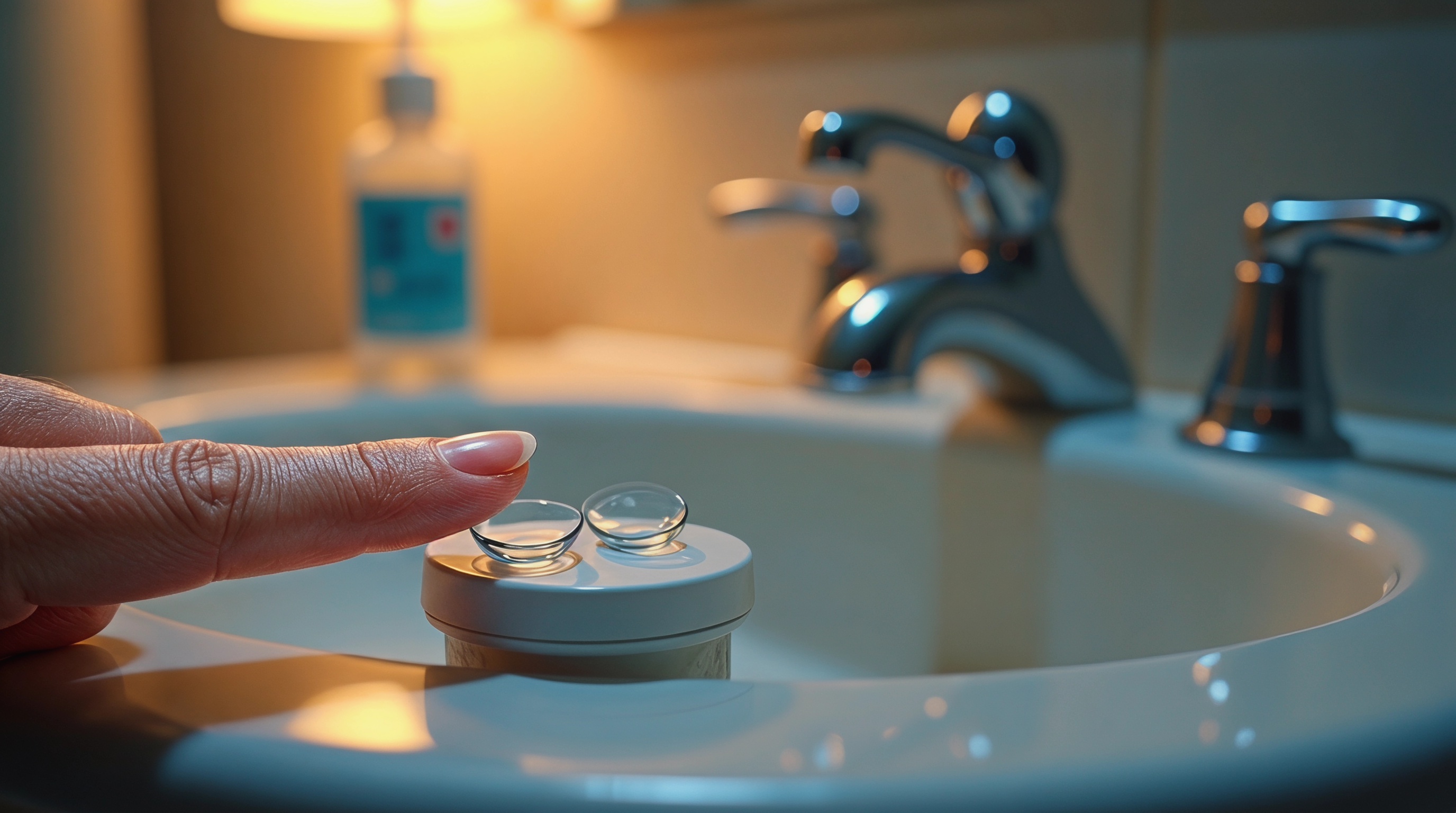
You're traveling or staying overnight somewhere unexpected, and you realize you don't have your contact lens case – knowing how to store contacts without case becomes essential for safety. Poor hygiene practices can lead to serious eye infections and permanent vision loss. This makes emergency storage critical. We need to clean your contacts daily to safeguard your lenses and protect your eyes from infection. This piece walks you through creating a makeshift contact lens case and learning about contact case alternatives. You'll understand what solutions work and how to clean contact lenses after emergency storage to maintain your eye health.
Why You Should Never Use Tap Water to Store Contacts
Tap water appears clear and safe for drinking, but its contact with your lenses creates a pathway for dangerous microorganisms to reach your eyes. Water exposure during contact lens wear transfers pathogenic microorganisms directly to your eye and causes severe ocular complications. Research shows that 17.5% of contact lens wearers use tap water to rinse storage cases, while 45% shower with lenses and 49.7% swim while wearing them. These common behaviors substantially increase your risk of serious infections.
Microorganisms and Eye Infections
Your tap water harbors bacteria, fungi and protozoa that thrive in moist environments. Pseudomonas aeruginosa ranks among the most common bacteria found in water supplies and can damage your cornea within 24 hours. Staphylococcus and Streptococcus species also live in plumbing systems and water fixtures, which creates constant exposure risks.
Studies reveal alarming contamination levels in contact lens cases exposed to water. The average microbial bioburden of storage cases reached 3.10 log colony-forming unit/mL, with ranges from 1.09 to 5.94 log colony-forming unit/mL. Showering with lenses substantially increases the risk of higher storage case bioburden, while using wet hands to handle lenses doubles the risk of higher case endotoxin levels.
Water-borne gram-negative microorganisms such as Pseudomonas aeruginosa transfer to your lens storage case through water contact and cause inflammation that threatens your vision in severe cases. Fungi grow in pipes, shower heads and faucet aerators, while biofilms in plumbing harbor multiple microorganisms at once. Even treated municipal water contains low levels of bacteria.
Risk of Acanthamoeba Keratitis
Acanthamoeba presents the most dangerous threat to contact lens wearers exposed to water. This microscopic ameba appears in tap water, lakes, well water, chlorinated swimming pools, hot tubs and bottled water. The organism feeds on bacteria and thrives in water sources you encounter daily.
Acanthamoeba attaches to your lens surface and transfers to your cornea when it reaches your eye. The ameba then burrows into the tissue and causes Acanthamoeba keratitis, a severe infection that proves very painful and difficult to treat. These organisms adhere to contact lenses and thrive in lens cases and biofilms, where they become trapped against your cornea during lens wear.
Contact lens-associated Acanthamoeba keratitis continues as a substantial cause of visual morbidity in the United States. The infection often requires a year or more of treatment and can result in permanent vision loss or the need for a corneal transplant. Water causes soft contact lenses to change shape, swell and stick to your eye, which scratches the cornea and makes it easier for germs to enter and cause infection.
Chlorine and Chemical Damage
Tap water contains chlorine, fluoride and other chemicals that bind to your contact lens material and create rough spots or deposits. Your lenses absorb minerals like calcium and magnesium, which alters their shape and prevents proper fit on your eye. This poor fit scratches your cornea and creates tiny openings where microorganisms enter.
Hypotonic tap water causes soft contact lenses to swell abnormally, which further disrupts fit and potentially compromises your corneal surface. Many people believe filtering or boiling water makes it safe for contacts, but this assumption proves false. Home water filters remove some contaminants but do not eliminate Acanthamoeba cysts, which have hard protective shells resistant to many filtration systems. Boiled water still contains minerals that damage lenses, and cooled boiled water becomes recontaminated and lacks the isotonic disinfecting properties required for safe lens storage.
How to Make a Makeshift Contact Lens Case
Creating a makeshift contact lens case requires careful attention to cleanliness and proper technique. Emergency situations just need you to prioritize safety over convenience. Follow specific steps to minimize infection risks while preserving your lenses until you can access proper storage equipment.
Step 1: Find a Clean Container
Shot glasses work well as makeshift contact lens cases because they're made of non-porous glass, easy to clean, and the perfect size for individual lenses. Glass containers provide superior safety compared to plastic alternatives due to their non-porous surface that resists bacterial growth. You need two separate containers, one for each eye, to prevent cross-contamination between lenses.
Shot glasses aren't always available. Think about new bottle caps from beverages you've just opened. Metal caps are preferable to plastic ones because of their non-porous surface. Small glass containers, unused plastic cups, and clean medicine cups can also serve as temporary storage. Small zip-seal bags represent an option if sealed properly and filled with the correct solution, though their porous nature makes them less ideal than glass. Use these only as a last resort.
Avoid tall containers where lenses might stick to the sides. Smaller glasses work better because you'll need to reach inside to retrieve your lenses. The container must hold enough solution to submerge your lenses without risk of them drying out or sticking to surfaces.
Step 2: Sterilize the Container
Wash both containers with hot, soapy water before use. Scrub all interior and exterior surfaces to remove any residue or potential contaminants. Rinse under running water to eliminate all soap traces, which can irritate your eyes if they remain on the container's surface.
Dry the containers with a clean paper towel or allow them to air dry[92]. Never allow any water to remain in contact with your contacts. Water harbors dangerous microorganisms that transfer to your lenses. Complete drying becomes mandatory before adding solution.
Label one container 'L' for left eye and one 'R' for right eye using a permanent marker or piece of tape[92]. This labeling prevents you from mixing up your lenses and helps you maintain proper hygiene for each eye.
Step 3: Fill with Contact Lens Solution
Fill each container about three-quarters full with fresh multi-purpose disinfecting solution. Never reuse old solution or mix different types of solutions, as contaminated solution becomes a breeding ground for bacteria. The solution your eye care professional recommends provides the disinfection your lenses need during storage.
A simple saline solution can keep lenses hydrated temporarily if you don't have proper contact lens solution, although it won't disinfect them. But never make your own saline solution, as homemade versions contain fine grains of salt that harm contact lenses.
Step 4: Store Your Lenses Safely
Wash your hands with soap and warm water. Remove each lens and place it into the correct labeled container. Make sure each lens sits submerged in solution. Add more solution if necessary until the lens is covered.
Cover each container with plastic wrap and secure with rubber bands. You can also use paper sanitation caps, plastic lids, or paper towels secured with hair ties to create an airtight seal. This covering prevents the contact lens solution from evaporating and keeps airborne bacteria from contaminating your lenses.
Place the sealed containers in a safe location away from heat, direct sunlight, and potential contamination sources like bathroom sinks.
Contact Case Alternatives When You Have Solution
If you have contact lens solution but no proper case, several household items can serve as safe temporary storage options. Each method requires attention to cleanliness and proper sealing to maintain lens safety overnight.
Small Glass or Shot Glass Method
Shot glasses rank among the best alternatives to store contacts in an emergency due to their ideal size and glass composition. Smaller glasses work better than larger ones because you can reach inside to retrieve your lenses without risk of them sticking to deep sides. You'll need two separate shot glasses, one for each lens, to prevent cross-contamination.
Wash both glasses really well with soap and hot water. Pat the surface dry inside and out with a paper towel and ensure no water contacts your lenses. Label one glass 'L' and the other 'R' using tape or a marker so you can identify which lens belongs in which glass without your contacts in.
Fill each glass with enough solution to submerge your lenses. Drop them into the correct glass at the time you remove your lenses. Take care to prevent the lens from sticking to the side if using taller glasses. Add more solution if needed until each lens sits covered.
Cover the tops of both glasses to prevent solution evaporation and airborne bacterial contamination. Hotel rooms often have paper sanitation caps over drinking glasses that work as makeshift lids. You can also secure plastic wrap, paper towels, or any clean covering around the glass tops with rubber bands or hair ties.
Clean Medicine Cup Option
Medicine cups from over-the-counter medications provide another contact case alternative once properly sterilized. These small plastic cups come with lids and create an airtight seal. Wash the cup and lid well with soap and warm water, then air dry or pat dry with a paper towel. Fill with solution, submerge your lenses, and seal with the lid.
Sterilized Spoon Method
Clean spoons can hold contact lenses temporarily like the cup method at the time other containers aren't available. Use two separate spoons, one for each lens, and sterilize them with hot soapy water. Place each spoon in a clean area and fill the bowl portion with solution until it creates a small pool. Gently place your lens in the solution. Cover both spoons with plastic wrap to prevent contamination and evaporation.
How to Store Contacts Without Case or Solution
Running out of both your contact case and solution creates a more challenging situation. The decisions you make next affect your eye health and vision safety directly.
Option 1: Discard and Replace Tomorrow
You should throw away your lenses when you lack proper storage equipment. This represents the safest choice. A pair of contacts costs nowhere near as much as treating a sight-threatening infection. Daily disposable lens wearers should remove them with clean hands and discard them without attempting to save them to use later. Reusable lens wearers should switch to glasses and wait until they can access a proper case and fresh disinfecting solution.
Option 2: Store in Saline Solution for Contacts
Sterile saline solution can keep your lenses hydrated for a short time, but it lacks disinfecting properties. Saline works as purified, pH-balanced saltwater that prevents drying without introducing dangerous bacteria. It won't kill existing bacteria, fungi, or Acanthamoeba on your lens surface, though. You must discard lenses stored in saline overnight rather than wearing them again. The bacterial and fungal load grows too large to eliminate with standard cleaning. Never create homemade saline solutions. DIY versions have caused serious corneal infections.
Option 3: Keep Lenses in Your Eyes (Short-Term Only)
Keeping soft lenses in your eyes for a brief period proves safer than storing them in unsafe liquids. This option works only when your lenses feel comfortable and you cannot remove them. Limit wear time and never sleep in lenses not approved to use overnight.
What Never to Use as Alternatives
Saliva teems with bacteria that cause serious infections when transferred to your eyes. Homemade saltwater lacks proper pH balance and sterility. This makes it dangerous for lens contact. Bottled and distilled water appear cleaner than tap water but still harbor microorganisms capable of causing devastating infections like Acanthamoeba keratitis. Similarly, rewetting drops and regular eye drops contain no disinfecting agents and cannot replace proper storage solutions. Discard your lenses without delay if you must remove them and lack safe storage options.
What to Do the Next Morning After Emergency Storage
Morning arrives and your lenses need attention before they touch your eyes again. The storage method you used overnight determines your next steps, but inspection remains mandatory whatever the circumstances.
Inspect Your Contacts Before Wearing
Hold each lens on your fingertip and examine it under good lighting. Watch for rips, tears, or any defects in the lens material. Cloudy appearance, discoloration, or deposits on the surface signal deterioration. Check whether the lens edges curve inward like a bowl, which suggests correct positioning. If the edges flare outward like a saucer, the lens sits inside out and needs flipping before insertion.
Discard the lens right away when you notice any damage. Even minuscule tears or cracks can scratch your corneal surface and cause irritation. Missing fragments mean you must flush your eye with preservative-free saline and check under your eyelids for remaining pieces.
Clean Contact Lenses Properly
Wash your hands with soap and water, then dry them with a lint-free towel. Place one lens in your palm, apply fresh contact lens solution, and rub the lens for 10-20 seconds on both sides. Rinse with additional solution to eliminate loosened debris. This rub and rinse method works best even with "no-rub" solutions. Store the cleaned lens in fresh solution and repeat for the other lens.
When to Discard Your Lenses
Throw away lenses stored in tap water, saliva, or homemade saline. Red, itchy, or watery eyes after insertion suggest something has gone wrong. Persistent discomfort, reduced clarity, or any unusual sensation means removal and disposal becomes the work to be done.
Get a New Contact Lenses Case
Replace your contact lens case every three months at minimum. Biofilm formation occurs even with proper cleaning, and up to 81% of lens cases become contaminated. Cases aged nine months or more show the highest contamination rates. Cracked or discolored cases require replacement right away.
Conclusion
Emergency contact lens storage requires careful attention to safety practices. Preventing eye infections matters much more than saving a pair of lenses, without doubt. Use sterilized glass containers and proper solution whenever possible if you find yourself without a case. Note that tap water, saliva and homemade solutions pose serious risks to your vision.
Your safest option remains discarding lenses when you lack appropriate storage materials, by and large. Your eyes deserve protection. Replacement contacts cost substantially less than treating infections. Keep a spare case in your bag or car so you're never caught unprepared again.
FAQs
Q1. What can I use to store my contact lenses overnight if I don't have a case? In an emergency, you can use a sterilized shot glass, small glass container, or clean medicine cup. Wash the container thoroughly with hot soapy water, dry it completely, fill it with multipurpose contact lens solution, and ensure your lenses are fully submerged. Cover the container with plastic wrap or a clean lid to prevent contamination and evaporation.
Q2. Is it safe to store contact lenses in water overnight? No, never store contact lenses in any type of water, including tap water, distilled water, or boiled water. Water contains dangerous microorganisms like Acanthamoeba, bacteria, and fungi that can cause severe eye infections and potentially permanent vision loss. Water also causes lenses to swell and change shape, which can scratch your cornea.
Q3. What should I do if I have no case and no contact lens solution? The safest option is to discard your lenses and replace them the next day. If you must remove them, you can temporarily store them in sterile saline solution to keep them hydrated, but you'll need to throw them away afterward since saline doesn't disinfect. Never use saliva, homemade saltwater, or regular eye drops as alternatives.
Q4. Can I sleep in my contact lenses if I forgot my case? Only if your lenses are specifically approved for overnight wear. For regular soft lenses, keeping them in your eyes for a brief period is safer than storing them in unsafe liquids, but you should never sleep in lenses not designed for extended wear. Remove them as soon as you have access to proper storage equipment.
Q5. How do I know if my contacts are safe to wear after emergency storage? Inspect your lenses carefully under good lighting for any tears, rips, cloudiness, or discoloration. If you stored them in tap water, saliva, or plain saline solution, discard them immediately. If you experience redness, itching, discomfort, or reduced clarity after insertion, remove the lenses right away and throw them out.