
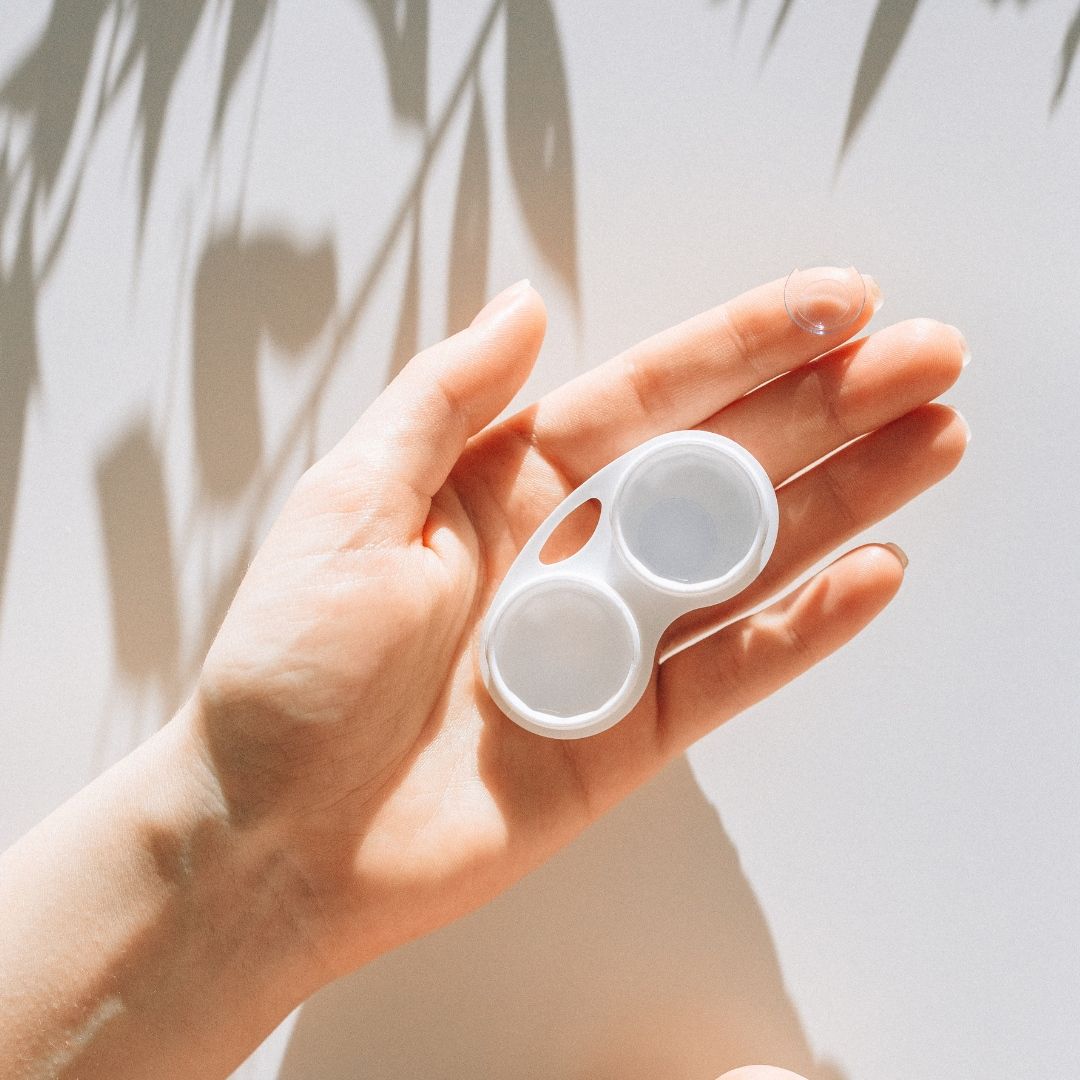
Your contact lens storage temperature can affect your vision and eye health by a lot. Improper storage isn't just an inconvenience but a serious health concern that can lead to painful eye infections. You might wonder whether refrigeration helps preserve your lenses, what happens if you left contacts in hot car, or will contacts freeze in the mail during winter deliveries. You need to understand how to store contact lenses the right way, focusing on temperature requirements for contact solution and your lenses themselves. This piece covers refrigeration myths and protecting your contact lenses storage from extreme temperatures.
The Truth About Refrigerating Your Contact Lenses
Safety of refrigerating sealed contacts
You might think refrigerating your contact lenses will extend their shelf life, but no ophthalmologist journal recommends this practice. Your refrigerator creates an unsuitable environment for contact lens storage due to sterility concerns. Refrigerators harbor bacteria from food and other items that can contaminate your lens packaging.
The sealed packaging on your contacts maintains sterility at room temperature. Cold environments offer no additional protection. You might think lower temperatures prevent bacterial growth, but the non-sterile refrigerator environment increases contamination risks.
Why refrigeration doesn't benefit most wearers
Contact solution is developed to work at room temperature. The chemical compounds in your disinfecting solution perform best within normal household temperature ranges. Cold temperatures can alter how these compounds function and reduce the solution's effectiveness in cleaning and disinfecting your lenses.
Room temperature storage away from heat, freezing temperatures and direct sunlight provides the best conditions for your contacts. Your lenses and solution maintain their integrity without refrigeration. The disinfectant properties in multipurpose solutions are designed for room temperature use, and excessive cold may affect the disinfection ability.
Refrigeration creates unnecessary complications. You need to remember where you stored your lenses, and the cold temperature provides no measurable benefit to lens preservation or eye health.
When cold contacts might cause discomfort
Cold contact lenses cause immediate discomfort when you insert them into your eyes. Your cornea maintains a temperature of about 95°F, which means a refrigerated lens feels jarring against your eye tissue. This temperature shock can trigger reflexive tearing and make lens insertion difficult.
Contacts can freeze if the solution temperature drops to about 5°F. If your lenses do freeze, you can leave them at room temperature for a few hours to thaw, provided the packaging remains intact. Damaged packaging after freezing indicates potential contamination, and you should discard those lenses.
Studies have tested extreme temperatures and humidity on contact lenses and solutions. The results showed that contacts and solutions remain usable after exposure to very high or low temperatures, but only if packaging stays undamaged. This research also confirms that your contact lenses cannot freeze while on your eyes. Even at temperatures as cold as minus 60°F, your cornea and tear film maintain sufficient warmth to prevent freezing.
Your body temperature and tear film warm the lens above freezing temperature. The tear film temperature of about 95°F protects lenses even in extreme cold outdoor conditions. This natural warming mechanism allows you to wear contacts in winter weather without worrying about freezing.
Store your lenses in a proper lens storage case at room temperature instead. This practice ensures optimal solution performance and lens comfort without the risks associated with refrigeration.
Understanding Contact Lens Solution Storage Temperature
How temperature affects solution performance
Contact solution chemistry changes when exposed to temperature extremes. Storage at fridge temperature reduces the antimicrobial activity of all multipurpose solutions. This means your solution becomes less effective at killing harmful bacteria when kept too cold.
Research on multipurpose solutions stored at different temperatures revealed most important performance differences. OPTI-FREE Express managed to keep the best activity against Pseudomonas aeruginosa at all temperatures, while ReNu MultiPlus performed well at 25 degrees Celsius. SOLO-care managed to keep its activity best against this bacteria at 30 degrees Celsius. Activities of all solutions against Staphylococcus aureus decreased markedly by two months, whatever the storage temperature.
Heat exposure creates different problems. Prolonged temperature elevation at 60 degrees Celsius (140 degrees Fahrenheit) for four weeks reduced antifungal activity in contact lens solutions severely. ReNu with MoistureLoc showed the greatest decline in antifungal activity after this heat exposure, while Clear Care and ReNu MultiPlus performed better. ReNu with MoistureLoc allowed fungal growth in 27 of 84 test combinations when stored at room temperature, compared with 67 of 84 combinations for bottles stored at 140 degrees Fahrenheit.
Your solution works best within a narrow temperature range. Manufacturers design these products for optimal performance at normal household temperatures, not refrigerated or overheated conditions.
Sterile saline solution contact lenses storage
Saline solutions have specific freezing thresholds you need to know. Keep your contacts out of environments colder than 32 degrees Fahrenheit. Contact lens solution can freeze in temperatures around -15 degrees Celsius. Room temperature around 20 to 25 degrees Celsius (68 to 77 degrees Fahrenheit) is recommended for proper storage.
Check your solution for changes in color, clarity, or odor after exposure to extreme temperatures. Discard the solution and use a new one if you observe any abnormalities. Store your contact lens solution in a cool, dry place away from windows and external doors that create drafts.
Multipurpose solution temperature needs
Multipurpose solutions maintain specifications after temperature extremes under accelerated testing conditions. Solutions exposed to 40 degrees Celsius (104 degrees Fahrenheit) with 75% relative humidity for a minimum of 72 hours, and -18 degrees Celsius (-0.4 degrees Fahrenheit) with uncontrolled humidity for the same duration, still met specifications for pH, disinfection efficacy and preservative efficacy.
These results confirm your multipurpose solution remains effective if exposed to heat or cold during shipping by accident, provided the packaging stays intact.
Hydrogen peroxide system temperature requirements
Hydrogen peroxide systems show resilience across temperature ranges. These formulations kept their disinfection and preservative properties under extreme testing conditions of 40 degrees Celsius (104 degrees Fahrenheit) and -18 degrees Celsius.
Contact lenses in sealed primary packaging went through exposure to 45 degrees Celsius (113 degrees Fahrenheit) for three months and -50 degrees Celsius (-58 degrees Fahrenheit) for 72 hours, then thawed at room temperature. All lenses evaluated remained within approved tolerances for base curve, water content and power after these exposures.
Store hydrogen peroxide systems at room temperature for consistent neutralization timing and effectiveness.
Temperature Dangers: Heat and Cold Exposure
Left contacts in hot car: what happens
Leaving contact lenses in hot car won't cause them to melt into puddles, despite common fears. Your contact lenses cannot melt in your eyes, in your car, or on your porch, whatever the heat intensity. Modern contact lens materials withstand temperatures way beyond what you'd encounter in a parked vehicle.
Heat exposure does create legitimate concerns, though. Contacts exposed to high temperatures may degrade or harbor bacteria, which raises infection risk. The elevated temperature can alter lens shape or reduce solution effectiveness and lead to discomfort or eye irritation. Studies testing lenses at 45 degrees Celsius (113 degrees Fahrenheit) for three months showed they remained within approved tolerances for base curve, diameter, water content and power. Research confirms contacts and solutions stay usable after exposure to very high temperatures, provided packaging remains undamaged.
Your storage solution faces greater risk than the lenses themselves. High temperatures can cause the solution to evaporate and leave your lenses dry and stiff. Heat can trigger protein denaturation and accumulation on contact lenses, which raises infection risk or corneal damage.
Will contacts freeze in the mail
Contact lenses stored in solution freeze at temperatures around -15 degrees Celsius or below. This happens during winter shipping when packages sit in unheated delivery trucks overnight or in outdoor mailboxes. Your lenses can freeze in several scenarios: outdoor temperatures below -10 degrees Celsius, prolonged mailbox exposure during winter, luggage left on airport tarmacs, or car glove compartments overnight.
The saline solution in blister packs contains sodium chloride (salt), which lowers the freezing point below 32 degrees Fahrenheit. Testing at -50 degrees Celsius (-58 degrees Fahrenheit) for 72 hours showed all contact lenses retained their approved parameters for base curve, diameter, water content and power. Solutions maintained specifications for pH, osmolality, disinfection efficacy and preservative efficacy after exposure.
Manufacturers recommend storing lenses within -5 degrees Celsius to +30 degrees Celsius. When frozen lenses arrive, allow them to thaw at room temperature for several hours. Avoid microwaves, hot water, radiators and hair dryers, as these warp lens structure. Replace the frozen solution with fresh solution and clean lenses before use.
Heat-related lens damage signs
Watch for specific indicators that heat has compromised your lenses. Physical changes include warped appearance, dried-out texture and cloudy discoloration. Your eyes signal problems through redness, blurry vision and a gritty sensation. Discomfort when inserting heat-exposed lenses warrants immediate replacement.
Cold weather shipping concerns
Cargo holds in planes may expose luggage to -20 degrees Celsius or lower before takeoff. Metal mailboxes equalize quickly with outside temperatures and expose lenses to subzero conditions for hours. Check packaging for tears, cracks and damage after winter delivery. Damaged blister packs signal potential contamination, whatever happened to the lenses. Discard contacts showing shape changes, cracks and irregularities after thawing.
Best Practices for Contact Lenses Storage
Where to store contact lenses at home
Store your contact lenses in a medicine cabinet in your washroom at room temperature. This location provides consistent temperature control away from direct sunlight and extreme temperature swings. Your lenses and solution need to stay in a cool, dry place away from windows and external doors that create drafts.
Room temperature around 20 to 25 degrees Celsius (68 to 77 degrees Fahrenheit) is what you should aim for when storing your lenses. Unopened contacts should remain in this environment, sealed in their original packaging until you're ready to use them. Never place lenses on a sunny windowsill or near a heater. These spots create heat exposure that degrades solution and can warp lens shape.
Your storage location matters just as much as your cleaning routine. Store reusable lenses in a proper lens storage case and cover them with fresh contact lens disinfecting solution. The case should sit in a stable location where temperature doesn't fluctuate throughout the day.
How to store contacts while traveling
Carry your lenses, solution, and eyeglasses in your personal bag or carry-on luggage. Luggage sometimes gets lost or misrouted, so keeping your contact lens essentials with you prevents vision emergencies at your destination. Air travel creates additional things to think over. Contact solution qualifies as a medical liquid under TSA regulations, which means you can bring more than the standard 3-ounce maximum allowance for liquids. Declare your solution at the security checkpoint to avoid complications.
Squeeze half-used solution bottles before air travel to remove excess air. Air expands with pressure changes. This simple step helps prevent leakage caused by increased cabin pressure. Keep your contact lens solution in a sealed zip-lock bag in your luggage as an extra precaution.
Travel-size solution bottles eliminate the need to transfer solution into smaller containers, which affects sterility. Most drug stores sell travel kits that include a small mirror in the case for convenient lens management on the go. Think over daily disposables for your trip, even if you wear reusable lenses. Daily lenses eliminate the need to carry solution bottles and lens cases. This reduces both weight and hassle.
Protecting lenses from temperature fluctuations
Avoid leaving lenses or solution in a parked car, even for a short time. Your vehicle's interior can reach extreme temperatures within minutes. Gym bags that sit in heat for hours create unsuitable storage conditions too. Keep solution in your main bag rather than the trunk.
Winter brings its own challenges. Do not leave solution in a car overnight or store lenses in an outside pocket where they can freeze. Store your lens kit in an inside coat pocket where body heat maintains moderate temperature during outdoor events. Pack a travel-size bottle and keep it sealed until needed to maintain solution integrity.
Contact lenses cleaning and storage routine
Wash your hands with soap and water, then dry with a clean lint-free towel before handling your lenses. Remove one lens and place it in your palm. Add a few drops of solution and gently rub the lens as directed on your solution label. Store both lenses in fresh solution. Never reuse or top off old solution in the case.
Empty your case every morning and rinse it with fresh contact lens solution, not tap water. Leave the case upside down on a clean tissue with caps off to air-dry. This four-step hygiene routine prevents germ buildup. Replace your contact lens case at least every three months. A new case comes with each solution bottle you purchase.
Change the solution in your case if you don't wear lenses within 72 hours of storage. This avoids protein buildup and removes bacteria. Some multipurpose solutions allow storage for up to one month in a tightly closed case, while hydrogen peroxide systems may only permit 24 hours to seven days before re-disinfection becomes what you need to do.
Recognizing and Preventing Temperature Damage
Temperature damage often goes unnoticed until you experience discomfort or vision changes. You protect your eye health and avoid complications from compromised lenses when you know the warning signs.
Signs your lenses have been affected
Heat can warp or deform your lenses' shape, making them uncomfortable to wear or causing blurry vision. Cold temperatures make lenses stiff and brittle, increasing the risk of breakage or tearing. Replace your lenses right away if they feel dry or uncomfortable, or if they appear warped.
You should watch for redness, blurry vision, or a gritty sensation in your eyes. Some people notice dryness or a gritty feeling after lenses have been in heated rooms or exposed to cold conditions. Vision may blur for a moment until you blink a few times. High and low temperatures can affect even the contact lens boxes and damage the lens material if not stored the right way.
What to do if lenses were exposed to extreme temperatures
You should check the packaging first. Research shows contact lenses and solutions stay viable after temperature extremes during transit, provided the primary packaging is not compromised. Discard any lenses with damaged packaging in that case, whatever their appearance.
For frozen lenses, leave them at room temperature for a few hours to thaw if packaging remains intact. Never use heat sources to speed thawing.
Preventing storage problems
You should clean and store your contact lenses the right way, whatever the weather conditions. A clean, fresh pair lowers the risks of eye discomfort and irritation.
Conclusion
Temperature extremes can compromise your contact lenses and solution, but proper storage is straightforward. Room temperature between 68 and 77 degrees Fahrenheit provides the ideal environment for your lenses and solution. Refrigeration offers no benefits and can reduce solution effectiveness. Heat exposure risks bacterial growth and lens degradation similarly.
Store your contacts in a medicine cabinet away from windows and heat sources. Check packaging after winter deliveries or summer heat exposure, and discard any lenses showing warping or cloudiness. These precautions protect your eye health and ensure your lenses perform as intended. Replace your lenses immediately if you experience any discomfort or vision changes.