
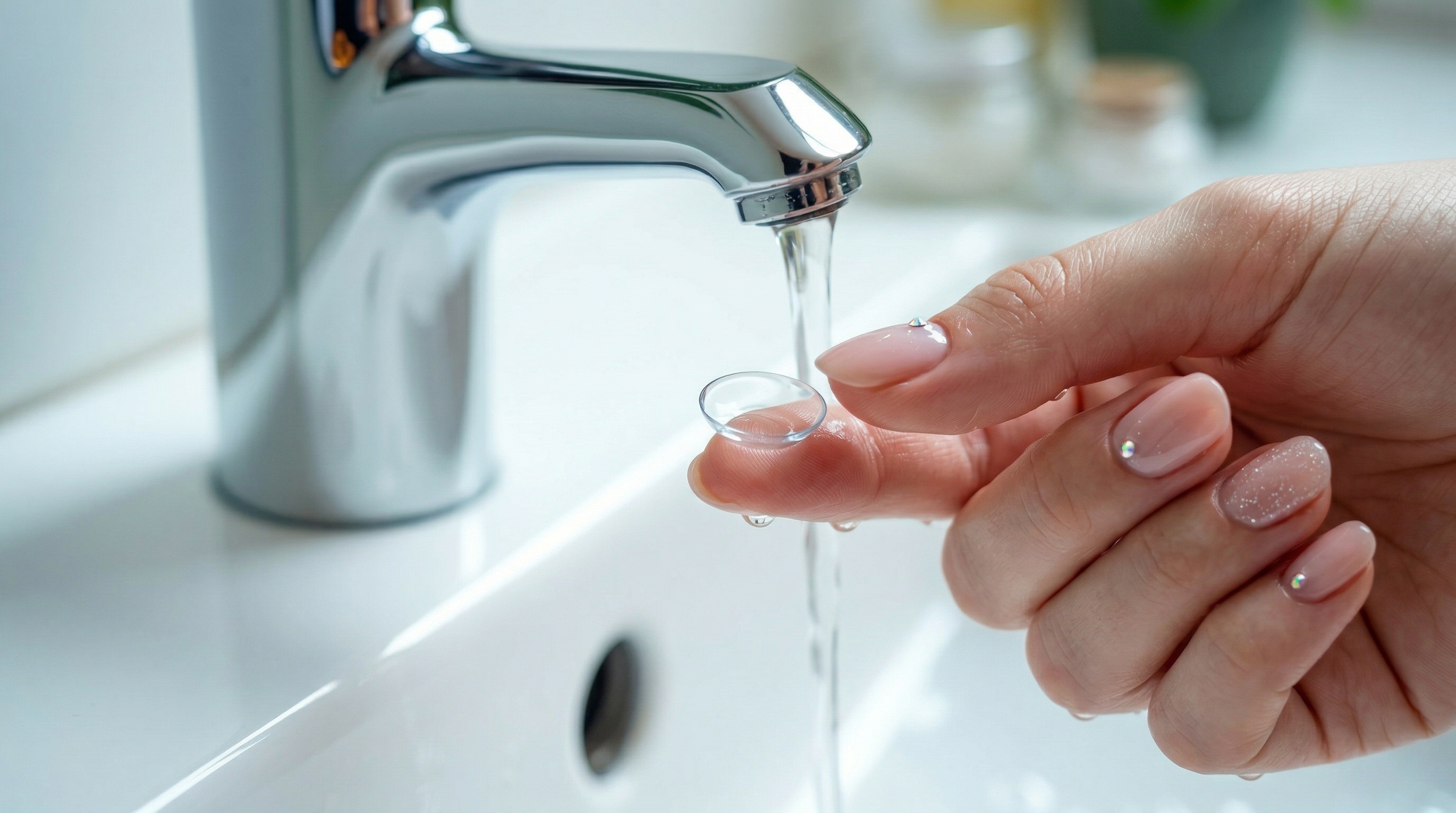
You might wonder "can I put contacts in water" because you forgot your solution. The answer is no. Water from any source, whether tap or bottled, contains dangerous microorganisms like Acanthamoeba that can cause serious eye infections. Contact lens wearers account for approximately 85% of Acanthamoeba keratitis cases. Treatment for this infection can take up to a year. Blindness or the need for a corneal transplant may result. This piece covers what to do if you don't have contact solution, safe alternatives, and how to protect your eyes in water-related situations.
The Dangers of Storing Contacts in Water
Microbial Contamination in Tap Water
Tap water harbors many microorganisms that pose serious risks to your eyes when combined with contact lenses. Water treatment plants remove many harmful pathogens, but eliminating all microorganisms is impossible, especially those present in smaller amounts. Your tap water can contain bacteria, fungi, viruses, and the especially dangerous Acanthamoeba organism.
The main concern involves how these contaminants interact with your lenses. Contact lenses create a moist environment against your cornea and trap microorganisms between the lens and your eye's surface. This bypasses many of your eye's natural defense mechanisms. Water exposure during lens wear increases contamination risk by a lot. Showering with lenses increased the risk of higher storage case bioburden by a lot, while using wet hands doubled the risk of higher case endotoxin levels.
Chlorine and other chemicals used to treat tap water can also irritate your eyes. These substances weaken your eye's natural defenses and make you more susceptible to infections once contaminants reach your cornea. Older plumbing infrastructure may introduce additional contaminants like rust and heavy metals into your water supply, which elevates infection risks further.
Distilled and Bottled Water Aren't Safe Either
You might assume distilled or bottled water provides a safer alternative to store contacts temporarily, but research proves otherwise. A study that analyzed bottled water available in stores found that 37% of 46 samples contained viable microorganisms. More concerning, 48% of the 23 brands tested had contamination issues.
The contamination types varied. Bacteria, including coliforms, were recovered from 12 samples representing 8 different brands. Yeasts or molds appeared in seven samples from five brands. Free-living amebae were isolated from two samples, and freshwater algae contaminated both samples of one brand. Twenty percent of all samples representing 30% of the brands contained more than 500 colony-forming units per milliliter or had coliform contamination.
The speed of contamination is alarming. Sterile contact lenses became contaminated when exposed for just 1 minute to water from which microorganisms were recovered. This means even brief exposure to bottled or distilled water can transfer dangerous pathogens to your lenses. Water quality varies based on geographic location, source, and storage conditions, which makes any type of water unsafe to care for lenses.
How Water Damages Soft Contact Lenses
Beyond microbial risks, water damages soft contact lenses through osmotic pressure. Your tears contain salt, but tap water does not match this composition. The lenses absorb water and swell because of this osmotic imbalance when you put contacts in water. They hold onto this excess water, and the lens shape changes.
This swelling alters how your lenses fit on your eye. Waterlogged lenses become too soft and may stick to your cornea. Removal becomes difficult. The distorted shape can blur your vision and fail to provide proper correction. Your lenses may never return to their original form once they absorb water and change shape. This makes them unsafe for continued use.
Water exposure also creates microscopic breaks in your cornea. These tiny abrasions provide entry points to let microorganisms penetrate deeper into your eye tissue. These corneal breaks increase your infection risk when combined with the bacteria and amoebae present in water. Contact lens cases can act as surrogates for bacterial contamination and lead to serious infections, as proven in studies.
Understanding Acanthamoeba and Eye Infections
What Is Acanthamoeba Keratitis?
Acanthamoeba keratitis is a rare but severe infection caused by a microscopic, single-celled organism called Acanthamoeba. This free-living amoeba exists in nearly all water sources, including tap water, swimming pools, hot tubs, lakes, oceans, and even soil and air. Acanthamoeba poses no threat to human health in most situations. It becomes dangerous when it contacts your eye, especially through a compromised cornea.
The amoeba invades the cornea through physical openings such as minor abrasions in the corneal epithelium, the outermost layer of your eye. Contact lens wear causes these microscopic corneal abrasions, which serve as entry points for the organism. CDC data shows that about 85% of Acanthamoeba keratitis cases occur in contact lens wearers. Globally, over 23,000 people are estimated to be diagnosed with this infection each year.
The organism can form cysts, which makes it very resilient. These cysts can remain viable almost indefinitely in very harsh conditions. They resist treatment and remain dormant in your eye for up to two to three years. A cyst could reinfect a patient's eyes when they receive corneal transplants.
Symptoms of Contact Lens-Related Infections
Acanthamoeba keratitis symptoms often mimic those of more common eye infections, which leads to misdiagnosis. Healthcare providers sometimes mistakenly diagnose cases as viral or bacterial keratitis. They prescribe antiviral or antibacterial eye drops that provide no relief. This confusion can delay proper treatment for weeks or months.
A classic feature of Acanthamoeba keratitis is pain that is disproportionate to clinical findings. Your photophobia and pain levels will seem much worse than what appears during a clinical examination, especially when you have this infection. Symptoms can differ from person to person and last several weeks or months. You may experience severe eye pain, eye redness, blurred or decreased vision, and sensitivity to light. Additional signs include excessive tearing, a sensation of having something in your eye, and unusual discharge.
Red, irritated eyes that persist for an unusually long time after removing your contacts should raise concern. Similarly, you need to see your eye doctor right away if you develop a red, painful eye infection that doesn't improve with traditional treatment. Early evaluation becomes critical if symptoms persist or intensify. Delayed diagnosis increases the risk of corneal scarring and long-term vision impairment.
Treatment Duration and Vision Loss Risks
Treatment for Acanthamoeba keratitis can be lengthy and challenging. The infection requires a prolonged course of topical antimicrobial medications, with therapy often lasting 6 to 12 months or longer. The original treatment involves hourly application of prescription eye drops around the clock for the first 48 to 72 hours, followed by gradual tapering.
So a quarter of Acanthamoeba keratitis cases require corneal transplants. The current treatment involves eye drops containing chemicals called biguanides, which are found in pool sanitizers. Patients must apply these drops every hour at first, which can be painful and may cause damage to the eye. Some patients experience lasting visual effects despite aggressive treatment. The infection can result in permanent scarring, permanent corneal irregularities, and vision loss. The infected eye may need to be removed in severe cases.
Recovery varies among patients. Some regain good vision, while others face permanent vision loss despite months of continued topical therapy. Acanthamoeba keratitis can cause severe pain and permanent vision loss if left untreated. Early diagnosis and treatment are essential to preserve your sight.
Water Exposure Scenarios: When to Remove Your Contacts
The FDA recommends removing contact lenses before any water exposure, yet many people overlook this guidance during routine activities. Specific scenarios help you protect your eyes from preventable infections.
Before You Shower
Remove your contacts before stepping into the shower. Soft contact lenses have a higher risk than hard contacts because they're more porous and create the perfect breeding ground for bacteria. Water exposure can cause your soft contact lens to stick to your eye and lead to corneal damage. Water can still get trapped under your contact lens even if you close your eyes during your shower.
Contacts in the shower increase your risk of keratitis, conjunctivitis and corneal ulcers. The heat and steam can cause your lenses to dry out or warp and lose their shape or clarity. Water can also make your lenses become dislodged or damaged, which can be uncomfortable or painful. Microbes in shower water can adhere to your lenses and find their way into your eyes, and the risk intensifies if your cornea has been scratched.
Swimming Pool and Ocean Safety
Contacts are dangerous whatever the water type. Chlorine in pools kills many bacteria but not all of them. Pool chemicals offer some protection against organisms, but this doesn't make it safe to wear contact lenses while swimming. Chlorine itself creates problems as contact lenses absorb the chemical and cause eye irritation and make your lenses difficult to remove.
Ocean, lake and river swimming pose even greater risks. Natural bodies of water contain more bacteria, viruses and harmful organisms than treated pools. Contact lenses absorb water while submerged and trap dangerous pathogens against your eye. Lakes, rivers and oceans are riskier than pool swimming with contacts.
Wear tight-fitting waterproof swim goggles if you must swim with vision correction. Daily disposable contacts paired with goggles offer the safest approach, as you can discard them right after swimming. Prescription swim goggles provide a better alternative.
Daily Activities That Involve Water
Remove your lenses before washing your face, taking baths, using hot tubs or running through sprinklers. Hot tubs introduce microorganisms that latch onto lenses in warm, wet settings. Washing your face poses risks even with closed eyes, as water can seep in and become trapped under your lens.
Emergency Steps If Contacts Get Wet
Act quickly if water touches your contacts. Remove the lenses using clean, dry hands. Discard daily disposables right away. Clean and disinfect reusable lenses by rubbing, rinsing and soaking in fresh solution overnight. Never rinse lenses with water to clean them after exposure. Use preservative-free artificial tears to flush debris or irritants. Monitor for redness, pain, light sensitivity, excessive tearing or blurred vision. Contact an eye care professional if symptoms appear.
What to Do If You Don't Have Contact Solution
Can You Use Water Instead of Contact Solution?
The short answer remains firm: you cannot use water instead of contact solution, not even temporarily. This applies to tap water, bottled water, and distilled water. Previous sections covered the infection risks, but here's the practical reality: nearly 17% of contact lens wearers have stored their lenses in tap water. An estimated 99% of contact lens wearers do at least one risky hygiene behavior. These statistics reveal how common this dangerous practice is, despite the risks.
Safe Alternatives for Temporary Storage
Sterile saline solution designed for ophthalmic use stands as your only acceptable emergency option. This must be an unopened, sterile bottle made for eye use, not nasal spray or wound wash saline. Saline keeps your lenses hydrated and matches the pH balance of your natural tears. Saline does not disinfect your lenses, though. You can use it for storage up to 24 hours maximum. You must then clean and disinfect with proper multipurpose solution before wearing the lenses again.
You can also store your lenses dry, which offers a safer choice than using contaminated liquids. Clean your lenses with any remaining solution. Let them dry in a clean, open case. You must rehydrate them by soaking in multipurpose solution for at least four to six hours before wearing. Discard the lenses if more than 12 hours pass without proper disinfection.
Never attempt homemade saline solutions, saliva, or eye drops as substitutes. Your mouth teems with bacteria that cause serious infections. Eye drops lack disinfecting properties and create breeding grounds for bacteria.
Wearing Glasses as a Backup Option
Prescription glasses eliminate the whole problem. Glasses allow your eyes to recover from constant contact wear while keeping clear vision. Keep glasses at multiple locations: your home, car, and workplace. Switching to glasses prevents further irritation and promotes healing when dealing with eye allergies, dry eyes, or infections.
Emergency Supplies On Hand
Pack travel-sized multipurpose solution in your backpack, purse, or car. These bottles meet TSA requirements and ensure you're never caught unprepared. Daily disposable lenses work well for travel, as they remove the need for solutions and cases. Stock an extra unopened bottle at home so you never run out unexpectedly.
Best Practices for Contact Lens Safety
Proper maintenance habits protect your eyes much better than any emergency solution substitute.
Daily Disposable vs Reusable Lenses
Most wearers find daily disposable lenses the healthiest choice because they minimize infection risks and make lens care simple. These lenses eliminate the need for cleaning solutions and storage cases. This reduces the risk of conditions like keratitis or conjunctivitis by a lot. You wear a fresh pair each morning and discard them at night. Reusable lenses require nightly cleaning and proper storage but cost less each year. Both types increase infection risk versus glasses. Daily disposables generally follow recommended use guidelines and rarely experience problems when used as directed.
Proper Lens Case Maintenance
Your case needs cleaning each day. Do these four steps: empty old solution completely, rinse with fresh contact lens solution, air-dry upside down on a clean towel, and replace every three months. Tap water should never touch your case or lenses. Over 80% of contact lens wearers use their cases longer than recommended.
Never Extend Your Replacement Schedule
Daily lenses need replacement after one day, biweekly lenses after 14 days, and monthly lenses after 30 calendar days from opening. Your risk of eye infections, redness, dryness, and reduced oxygen to the eye increases when you extend wear.
When to See Your Eye Doctor
Annual contact lens exams matter even if you only wear contacts occasionally. Your eye doctor needs to see you right away if you experience pain, redness, light sensitivity, blurred vision, or discharge.
Conclusion
Your eye health depends on smart decisions about contact lens care above all else. Water and contacts don't mix, whatever type you're thinking about—tap or bottled. The risk of serious infections like Acanthamoeba keratitis is nowhere near worth any temporary convenience.
Keep backup glasses available and stock emergency supplies. Remove your lenses before any water exposure. If you expose your contacts to water by accident, discard daily lenses right away or disinfect reusables. Choose to protect your vision when in doubt. A few minutes of inconvenience beats months of painful treatment and permanent vision loss.