
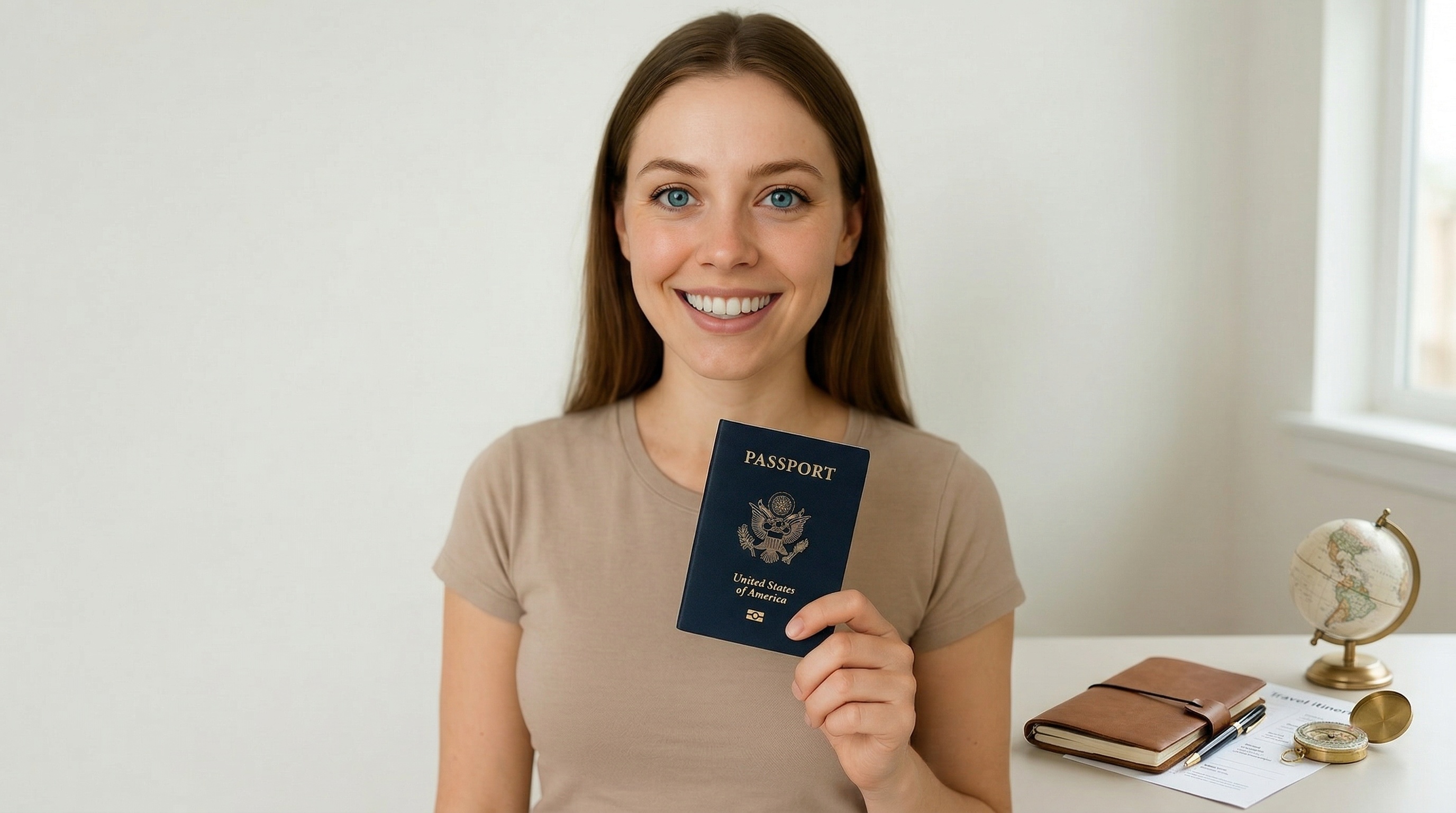
Colored contacts are not allowed in passport photos. The U.S. Department of State strictly prohibits contact lenses that change your natural eye color in official passport photographs. This policy ensures your passport photo matches your actual appearance to maintain security and proper identification.
Your passport application faces rejection if you wear colored contact lenses in the photo. These lenses can create glare or red-eye effects in photographs and delay your application processing. The U.S. State Department's website doesn't specifically mention colored contacts, but their guidelines clearly prohibit appearance alterations. People with brown eyes cannot wear blue contacts, just as with the 2016 ban on eyeglasses in passport photos.
Why people love colored contacts—and why it’s a problem for passport photos
Colored contacts have become incredibly popular in the last decade. They give wearers a quick and dramatic way to change their looks. But this appeal creates big problems for official identification documents. Let's look at why these fashion accessories are both loved and problematic in passport photography.
The appeal of colored lenses
People can't resist the allure of colored contact lenses. These lenses let you transform your look temporarily - you can go subtle or bold based on what you want. Here's why many people choose colored contacts:
- Enhancing natural eye color - Some people pick lenses that make their eye color pop
- Complete color transformation - Others go for bold changes, switching from brown to blue eyes
- Creating unique looks - Special effect lenses work great for cosplay, Halloween, or fashion statements
- Boosting confidence - Many people feel more attractive with a different eye color
The psychology makes perfect sense - our eyes define us and people often call them "the windows to the soul." A new eye color lets you change your look without any permanent changes.
How they change your appearance
Colored contacts do more than just change your eye color. On top of that, these lenses change how people see you, which makes them a problem for identification documents.
These lenses change your look in several ways. They can really shift the contrast between your iris and eye whites. They also make your pupils look different in size or shape, especially in photos.
Your natural eye color helps identify who you are - it's a physical trait that verifies your identity. Changes to this feature alter one of your most recognizable characteristics. Dark-eyed people who switch to light colors see the biggest change, as the contrast completely changes how their face looks.
Why passport photos require natural features
Passport photos come with strict rules for a vital reason - they need to show exactly what you look like. These documents stay valid for 10 years, which makes accuracy even more important.
A passport's main job is to prove who you are at international borders. Security staff and border agents need to match your face to your passport photo. Any major changes to your natural features can cause problems with identification.
Passport photos now work with facial recognition and biometric systems. These automated systems look at specific features - including eye color patterns - to confirm identity. Colored contacts mess with these systems by changing a key biometric marker.
Wearing colored contacts in passport photos might seem like a small fashion choice, but it goes against what the document needs to do - prove who you are. That's why passport offices worldwide want photos showing your natural eye color without changes.
Can colored contacts show up in passport photo and cause issues?
Colored contacts create several technical problems in passport photos beyond just regulatory issues. These challenges substantially affect identification systems at borders and security checkpoints worldwide.
How cameras detect eye color
Digital cameras capture eye color differently than our eyes see it. The camera's sensor records visible light reflected from your iris when you take a passport photo. This creates a unique pattern that becomes part of your identification profile.
Colored contact lenses change this pattern by putting an artificial layer over your natural iris. This layer changes how light interacts with your eye and creates a substantially different digital signature compared to your natural iris. The camera ends up capturing a manufactured pattern designed to mimic eye coloration instead of your actual eye.
High-resolution cameras at passport processing centers can detect even subtle color changes. This happens because the artificial pattern doesn't have the intricate details and unique characteristics of a natural iris. To name just one example, see how dramatic color changes from brown to blue make these differences more noticeable to human examiners and automated systems.
Glare and red-eye effects
Unwanted reflections are one of the biggest problems with colored contacts in passport photos. Without doubt, colored lenses often create glare or red-eye effects that make photos unusable for official documents.
These problems come from several factors:
- The artificial surface of colored contacts reflects light differently than natural eye tissue
- Colored lens pigments can interact unpredictably with camera flash
- Contact lenses' curved surface can create unexpected reflections
The U.S. Department's State rejects photos with glare or reflections that hide the eyes. Photos showing red-eye effects don't meet technical requirements for passport images. These issues usually stay hidden until after photo processing, which leads to rejections and delays.
Impact on biometric systems
Colored contacts' interference with sophisticated biometric identification systems raises serious concerns. Border security now relies heavily on these automated systems to verify travelers' identities.
Scientific research in reputable journals confirms that colored contacts substantially affect iris recognition performance. A study in the Journal of Computer Vision showed that cosmetic lenses could help someone on a watch list avoid detection. More research proves that even prescription contact lenses create artifacts in iris images, which increases false non-matches.
This affects more than just passport processing. Facial recognition systems at airports and border checkpoints analyze key features, including eye patterns. Colored lenses distort these patterns and could compromise security protocols. This issue grows more important as biometric technology becomes common.
Technical evidence shows that the best biometric identification results come from using no lenses or just transparent corrective lenses. Colored lenses create verification problems whatever their shade.
Passport authorities maintain strict requirements about natural appearance because of these technical challenges. The rules about colored contacts might seem random, but they're based on solid technical and security considerations that protect international identification systems' integrity.
What officials won’t tell you about colored contacts in passport photos
The rules say no colored contacts in passport photos, but real-life practice tells a different story. You'll find unspoken policies, rules that change by country, and enforcement that varies - though officials rarely talk about it.
Unwritten rules and gray areas
While the rules look straightforward on paper, passport officers often work in a gray zone. Subtle color changes sometimes go unnoticed during the verification process. Small tints that don't change your look too much might pass through - especially if they just boost your natural eye color rather than changing it completely.
There's another reason why some photos make it through: enforcement depends on how fake your contacts look. Dark brown eyes with light blue lenses stand out so much they'll get rejected right away. But light brown lenses on medium brown eyes might not catch anyone's attention.
Your chances also depend on when you apply. During busy seasons, officers process hundreds of applications each day, which might lead to less careful checks of borderline cases.
How different countries interpret the guidelines
Rules about colored contacts in passport photos are different from one country to another. Here's what you need to know:
- European Union countries use advanced verification technology and have stricter rules for biometric photos
- Southeast Asian nations look more closely at eye appearance because eye color matters more as an identifying feature there
- Middle Eastern countries have some of the strictest photo standards and might need extra verification steps
Some countries spell out rules about colored contacts while others just say you can't "alter natural appearance." This makes things tough for people with multiple passports who need to follow different rules for each one.
Most immigration staff won't tell you how their office handles these guidelines unless you ask directly. When photos get rejected without clear reasons, applications get delayed needlessly.
Why some photos get accepted and others don't
One of the most frustrating things about passport photo rules is how random approvals can seem. Similar photos with colored contacts might pass in one case but fail in another.
Several things affect whether a photo passes:
- Individual reviewer discretion - Each officer interprets rules differently
- Photo quality - Better photos make fake lenses easier to spot
- Application context - New passports face tougher checks than renewals
Sometimes photos with colored contacts slip through initial checks only to cause trouble later. Border agents or facial recognition systems might spot the difference during international travel. Getting caught then leads to bigger problems than just having your application rejected at first.
The smart move? Skip colored contacts for passport photos. Trying to work around these unclear rules just isn't worth the hassle.
What happens if you wear colored contacts in your passport photo?
Wearing colored contacts in your passport photo can lead to serious problems that go way beyond the reach and influence of simple application issues. You might save time, money, and frustration by knowing what happens when you ignore these guidelines.
Rejected applications
Your passport photo submission with colored contact lenses will face immediate rejection. The U.S. Department of State's rules are clear - passport photos must show your natural eye color. Any change to your natural appearance breaks the basic rules for identification documents.
The application denial happens for several reasons:
- Colored contacts change your natural eye color's appearance too much
- Lenses create glare or red-eye effects that make photos unusable
- Contact lenses that change your iris size violate guidelines
A rejection means starting over with new photos. This doubles your work and adds unnecessary waiting time to the process.
Delays in processing
Your application can face long delays even with subtle colored contacts. Passport processors usually flag suspicious photos and send them for extra review. This adds days or weeks to your timeline. The review happens because staff must check if the lenses change your appearance or just help with vision.
Sometimes, the Department of State asks for extra documents or medical statements. Your application stays on hold until you provide new photos that follow all rules.
These delays create real problems when time matters. Many people need their passports right before international trips. Any hold-up in processing can ruin travel plans and lead to canceled flights and hotel bookings.
Problems during international travel
Let's say your passport photo with colored contacts gets approved - you might still face issues later. Airport facial recognition systems look for differences between your actual face and ID photo. These systems check your nose, eyes, and mouth features to confirm your identity.
Border protection officers often take a closer look when your passport shows blue eyes but you travel with natural brown eyes (or the other way around). This mismatch might lead to extra screening or time in secondary inspection rooms.
Some countries have turned away travelers after spotting differences between their current look and passport photo. Of course, once your file gets flagged for these issues, you'll face extra checks on all future international trips - this hassle lasts throughout your passport's validity.
What to do instead: safe alternatives and smart tips
You now know why colored contacts create problems in passport photos. Let's explore some practical alternatives that will help you look great while meeting official requirements.
Use clear lenses or go without
Clear contact lenses work perfectly for passport photos since they don't change your eye appearance. If you use prescription contacts, pick transparent ones without color tints. You might want to think over taking your photo without any lenses. This gives the clearest view of your natural iris pattern and works best for biometric systems.
Boost your look with natural makeup
Natural makeup can work better than colored contacts to improve your features:
- Apply light foundation and neutral concealer for a smooth complexion
- Choose matte finish products to avoid unwanted shine under flash
- Use neutral eye makeup and light mascara to define eyes
- Select a natural lip color close to your normal shade
You want makeup that looks like a "no-makeup" approach. This helps boost your features naturally without dramatic changes to your appearance.
How to prepare for your photo session
The right preparation will help you get the best passport photo. Your hair should be neat and away from your face. Practice keeping a neutral expression with both eyes open and mouth closed. You should end up wearing regular clothes that you'd travel in, staying away from uniforms or camouflage.
Conclusion
Colored contacts might boost your daily look, but they have no place in passport photos. These fashion accessories create problems with proper identification and cause technical issues for biometric systems. They can also make your travels much harder. Different countries handle this issue differently, but the risks are nowhere near worth any benefits you might see.
Passport photos have one job - to show what you naturally look like when crossing borders. Using colored contacts in these photos could lead to rejected applications, delayed processing, and travel problems that might follow you for your passport's entire ten-year validity.
The solution is simple: use clear contacts or take them out completely for passport photos. A light touch of natural makeup that highlights your features works best. This approach will help your application move forward quickly while letting you look presentable within the rules.
Your passport photo doesn't need to be your most stylish shot. Its real purpose is to get you safely across borders without any hassle. A temporary change in eye color isn't worth years of travel headaches. Keep those colored contacts for your social media posts and daily life, where they won't get in the way of your world travels.
Key Takeaways
Understanding the rules around colored contacts in passport photos can save you from costly delays and travel complications that most officials won't openly discuss.
• Colored contacts are strictly prohibited - They alter your natural eye color, violating passport photo requirements and risking immediate application rejection.
• Technical issues cause processing delays - Colored lenses create glare, red-eye effects, and interfere with biometric systems used for identification verification.
• Enforcement varies unpredictably - Some photos slip through while others get rejected, but complications can arise later during international travel when facial recognition systems detect discrepancies.
• Travel problems persist for years - Even if approved, mismatched eye colors between your passport photo and current appearance can trigger additional screening and border complications throughout your passport's 10-year validity.
• Safe alternatives exist - Use clear contacts or go without lenses, enhance your look with natural makeup, and prepare properly for your photo session to ensure smooth processing.
The bottom line: Save colored contacts for everyday wear and stick to your natural eye color in passport photos to avoid unnecessary headaches that could last a decade.