
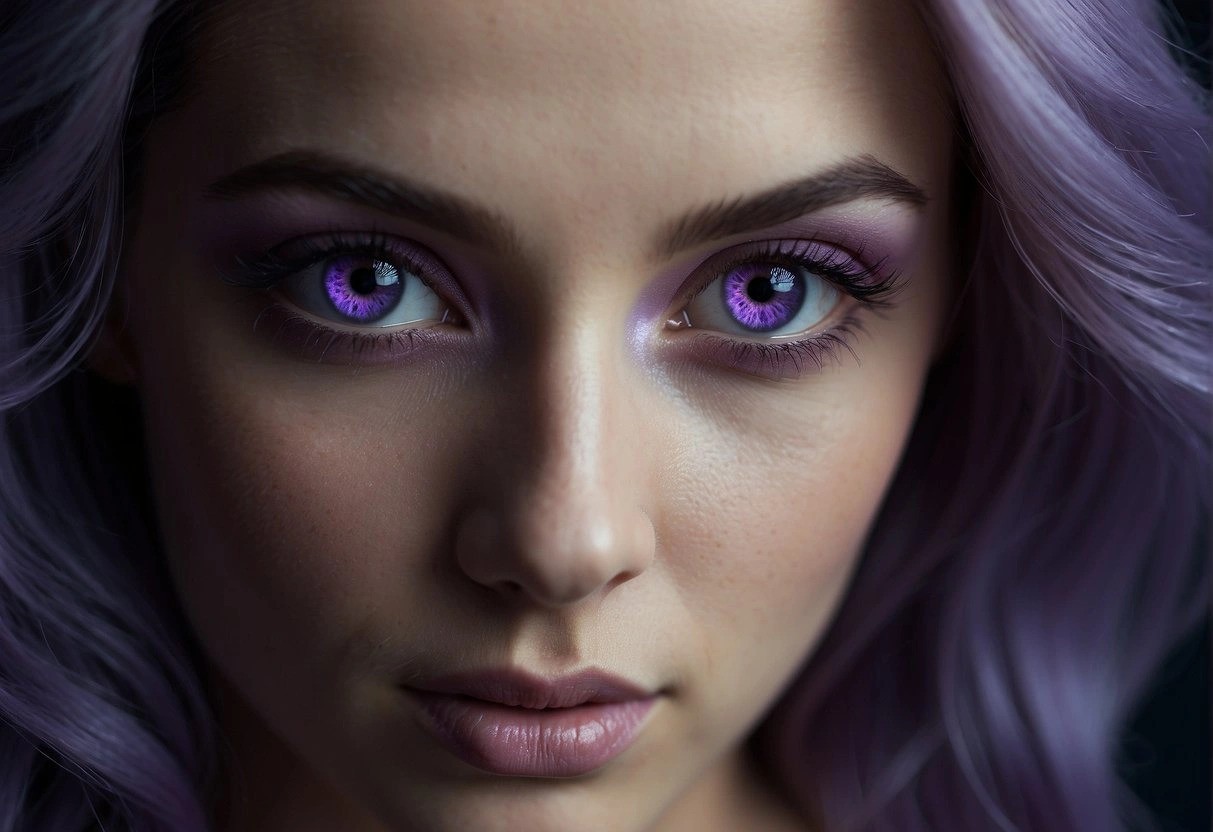
You might have wondered about people with purple eyes - are they wearing contacts, or is it their natural eye color? Purple eyes are the rarest eye color in the world. Less than 1% of people have this unique trait. Natural purplish tones, which usually come from albinism or very light blue eyes, are even more uncommon. The chances of having them are one in a million - maybe even more rare.
Brown eyes make up about 79% of the world's population. Blue eyes come in at 8-10%, while green eyes are found in just 2% of people. Natural violet or purple-looking eyes are incredibly rare - less than 0.01% of people worldwide have them. Purple eyes aren't just made up - they're real, but many photos you've seen probably show colored contacts or edited images. People are fascinated by this unique eye color and often try to get this look with colored contact lenses. This piece will tell you everything about purple eyes, from why they happen to how you can safely try this beautiful shade with quality contacts.
Are Purple Eyes Real or Just a Myth?
People often wonder if purple eyes really exist when they look for unique eye colors or think about natural purple colored contacts. The answer isn't simple - it falls somewhere between myth and science.
What science says about purple eyes
Science tells us that purple or violet eyes are very rare but possible. These eyes happen when there's little to no melanin in the iris. Something interesting happens with almost no melanin - red color from blood vessels behind the iris shines through the clear stroma while blue light scatters outward. Red reflection plus scattered blue creates what looks like violet or light purple.
Research shows that less than 1% of people worldwide have purple eyes. This makes many doubt they exist at all. People with purple eyes sometimes have a genetic mutation that might link to albinism, a condition where the body makes very little melanin.
The story of Alexandria's Genesis - a genetic mutation that supposedly causes purple eyes and "perfect" traits like longer life and perfect health - is just fiction. Doctors say no evidence supports this condition. A fiction writer made it up in 1998, and it became one of the most shared stories on the internet.
Why lighting and perception matter
Light makes a big difference in how we notice eye color. Scientists at the National Institute of Standards and Technology showed that lighting changes how we see colors by a lot. This explains why many people think they see "purple eyes."
Elizabeth Taylor's eyes offer a great example. People knew her for her "violet" eyes. Yet looking closer shows they were actually deep blue that looked purple in certain lights. You'll find just as many photos showing her eyes as blue as those showing them violet. Her eye color seemed different based on her clothes, the room's lighting, and other things around her.
People who have very light blue eyes might look like they have violet or lavender eyes when specific lighting hits them. This happens because light bounces around differently in eyes that don't have much melanin. It's more of an optical trick than a real eye color.
The truth behind 'real purple eyes'
After looking at all the science, here's what we know about purple eyes. They do exist, but not quite like most people think. Most "purple eyes" fit into three groups:
-
Optical illusions: Light-colored eyes (especially blue ones) that look purple in certain lighting or with certain colored clothes.
-
Medical conditions: Real violet-looking eyes usually come from conditions like albinism, where very low melanin lets blood vessels create a purple look.
-
Colored contacts: Many purple eyes you see in photos or on social media come from colored contact lenses made to look rare and exotic.
Natural purple eyes are so rare that getting exact numbers is tough. Only about 1 in 20,000 Americans have albinism, and not all of them have violet eyes. This makes natural purple eyes one of the rarest eye colors you can find.
If you're thinking about getting natural purple colored contacts, note that even famous people known for their "purple eyes" probably didn't have truly purple irises. They just had the right mix of genes, lighting, and sometimes, smart photography.
What Causes Purple Eye Color?
The science behind purple eye color shows a captivating mix of genetics, pigmentation, and light reflection. These factors help explain why natural purple eyes rank among the world's rarest eye colors.
1. Genetics and melanin levels
Your eye color comes from the amount and spread of melanin in your iris. This is the same pigment that gives color to your skin and hair. The way eye color passes down through families is complex, with multiple genes working together to control pigmentation levels. Two genes, OCA2 and HERC2, play a key role by managing how melanin forms and spreads.
Brown eyes have high melanin levels, while blue eyes have much less. Purple eyes need a very rare melanin profile. The iris stroma (front layer) must have almost no melanin to appear purple. Less than 1% of people worldwide have this unique trait.
Purple eye color doesn't come from actual purple pigment. Light enters an almost colorless iris that has very little melanin and interacts with eye structures in a special way. Blue light scatters outward through Rayleigh scattering, while red light from blood vessels at the back of the iris reflects forward. These effects combine to create what we see as violet or purple.
2. Albinism and light reflection
Albinism stands out as one of the main genetic reasons for purple-looking eyes. This condition affects how the body makes and uses melanin. Two types of albinism can change eye color:
- Ocular albinism: This type mainly affects the eyes and reduces melanin, which leads to light-colored irises
- Oculocutaneous albinism: This affects skin, hair, and eye pigmentation
People with albinism have very low melanin levels in their iris, which makes blood vessels in the eye more visible. Many people with ocular albinism also face other vision challenges. These include poor visual acuity, light sensitivity, and involuntary eye movements called nystagmus.
In stark comparison to this, most people with albinism don't have red eyes. Their eyes are usually light gray, blue, or rarely, violet-colored. The purple look happens when a tiny bit of blue from light scattering mixes with red reflections from eye blood vessels.
3. Eye inflammation and rare conditions
Several medical conditions can make eyes appear purple:
- Waardenburg syndrome: A genetic disorder that affects how melanocytes develop and can lead to unusual eye colors
- Fuchs uveitis syndrome: Eye inflammation that affects the uvea layer and can cause pigment loss, making eyes look blue or purple
- Horner's syndrome: Nerve damage on one side of the face that can reduce melanin in one eye
- Pigment dispersion syndrome: A condition where iris pigment flakes off and spreads to other parts of the eye
Some people have heterochromia, which means different colored sections in one eye or different colored eyes. Parts of these eyes might look purple in certain light. These conditions can change how light moves through the eye, especially when they cause inflammation or change the iris structure, creating a purple appearance.
Natural purple colored contacts are a great way to get this distinctive eye color if you weren't born with these rare genetic conditions. These special lenses can create natural-looking violet eyes without the vision problems that often come with genetic conditions causing naturally purple eyes.
How Rare Are Purple Eyes?
Purple-eyed people stand out in a world dominated by brown eyes. This rare eye color fascinates many people who want to learn about natural purple colored contacts or real purple irises.
Global statistics on eye color
The numbers paint an interesting picture of eye color distribution worldwide. Brown eyes lead by a big margin - about 70-80% of people worldwide have this common shade. Blue eyes come in second, showing up in 27% of Americans. Hazel eyes make up roughly 18%, while green eyes appear in just 9% of the U.S. population.
These numbers change by a lot across different regions. Brown eyes rule in Africa and Asia, while European countries show more variety. Green eyes are already quite rare - only 2% of people worldwide have them. Among all these common colors, just 1% of people have different shades like amber, gray, and the super-rare purple.
Why purple is the rarest natural shade
Purple eyes are likely the rarest color, and science explains why. Unlike regular brown or blue eyes that come from common genetic variations, purple eyes only show up under very specific biological conditions.
Purple eyes are so rare because they're linked to albinism, a genetic condition that limits or stops melanin production. Even among people with albinism (which affects just 1 in 20,000 Americans), violet eyes are hard to find. Yes, it is true that most people with albinism have blue, hazel, green, or brown eyes instead.
The science behind true violet-colored eyes involves an iris with almost no pigment. These eyes look violet when light bounces off blood vessels in the barely pigmented iris - this works nothing like normal eye coloring.
How many people have purple eyes?
Nobody knows the exact count of people with natural purple eyes. All the same, researchers agree that less than 1% of people worldwide have this eye color. Some experts say it's even rarer - less than 0.01% of the global population.
A popular story claims only 600 people worldwide have purple eyes. While nobody has proven this number scientifically, it shows just how rare these eyes are.
The math makes sense - albinism affects just 1 in 20,000 Americans, and not everyone with albinism gets violet eyes. This means natural purple eyes are without doubt super rare. So if you see someone with striking purple eyes, they're either one of the rarest people alive or - much more likely - they're wearing natural purple colored contacts.
Famous Cases and Cultural Fascination
Purple eyes have become a cultural phenomenon that fascinates people well beyond their biological rarity. The public's imagination has been captured by these mysterious irises throughout history.
Elizabeth Taylor's iconic violet eyes
Elizabeth Taylor stands as the most famous person linked to purple eyes, though her eyes weren't actually violet. People originally thought she had natural purple irises, but her eyes were a deep blue that looked violet under certain conditions. This eye color illusion came from several factors working together: the right lighting, her choice of clothing colors, and makeup techniques that made her blue eyes stand out.
Taylor set the record straight in recorded interviews. She called her eyes "dark blue" and dismissed the violet description as "some romantic journalist's idea". Photographers would often make her eyes look more violet than they really were, which added to her mysterious appeal. Her eye color became such a big part of her image that she launched a fragrance called "Violet Eyes" in 2010.
The myth of Alexandria's Genesis
A compelling Internet legend about purple eyes started in 1998. Fiction writer Cameron Aubernon created "Alexandria's Genesis" as part of a fan story for the TV show 'Daria'. This made-up genetic condition supposedly turned blue eyes purple and gave people amazing traits like perfect health, longer lives, and minimal body waste.
The story grew to include a tale about Alexandria Augustine, a girl in 1329 England whose eyes mysteriously changed from blue to violet. The fictional story became so popular online that Aubernon had to publicly announce in 2011 that she made up the whole thing.
Purple eyes in pop culture and anime
People of all cultures sometimes see those with purple eyes as having special powers or blessed qualities. This belief has made purple-eyed characters a hit in anime, manga, literature, and fantasy works like "Game of Thrones." These characters often have magical powers or come from royal families.
Stories often use purple eyes as symbols of wisdom, mystery, or supernatural qualities. These fascinating portrayals help explain why natural purple colored contacts remain popular with people who want this unique look.
How to Get Purple Eyes with Contacts
You can achieve the rare and captivating look of purple eyes without genetic mutations by using colored contact lenses designed specifically for this purpose.
Types of purple eye contact lenses
Purple contact lenses come in three main varieties:
- Enhancement tints: These add a subtle violet tinge to boost your natural eye color
- Opaque tints: These change your eye color to purple completely, whatever your natural shade
- Special effect lenses: These create dramatic, supernatural-looking purple eyes
Different technologies make these lenses possible. They use dot-matrix patterns and sandwich technology that places color between two clear layers to ensure comfort and a natural look.
Natural purple contact lenses vs. cosplay
Natural purple contacts give you a subtle boost with realistic-looking violet tones for daily use. They usually include limbal rings (darker outlines) that add definition and depth. On the flip side, cosplay purple lenses pack vivid, attention-grabbing colors that are perfect for costume events, photoshoots, and theatrical use.
Purple contacts are nowhere near as common as red or bright green lenses, which means you'll definitely stand out in crowds.
Prescription and safety tips for colored contacts
The FDA classifies all contacts as medical devices, so you need a valid prescription from an eye doctor - even for non-prescription ones. Here's what you should know about buying purple contacts:
- Get them only from trusted sellers who ask for prescriptions
- Keep your contacts to yourself - never share them
- Clean them really well with multipurpose solution (not water)
- Get new cases every three months
- Stick to recommended wearing schedules
Note that proper care helps you avoid serious issues like infections or corneal scratches.
Conclusion
Purple eyes are one of nature's most intriguing mysteries. You now know that real purple eyes exist but they're nowhere near common - they affect less than 0.01% of people worldwide. Light blue eyes under specific lighting or certain medical conditions like albinism often create what people mistake for purple eyes.
Take Elizabeth Taylor, who was known for her "violet eyes." Her eyes were actually deep blue but looked purple in certain light. On top of that, stories like Alexandria's Genesis have been proven false, though they still engage people's imagination.
The distinctive purple look fascinates many people. Colored contacts are a great way to get this appearance without winning the genetic lottery. Purple contacts can safely change your look as long as you get them properly prescribed and manage to keep them clean.
You'll now spot the truth when someone claims to have natural purple eyes. You understand the science behind this unusual trait and maybe even why this eye color has sparked so much creativity in art, literature, and film. Natural purple eyes might be incredibly rare, but their appeal remains powerful, whatever their source - be it genetics or a well-chosen pair of contacts.